About zkDatabase
zkDatabase Applied RWA | How Can zkDatabase Be Applied to Real‑World Assets (RWA)?
October 23, 2026
7 mins read
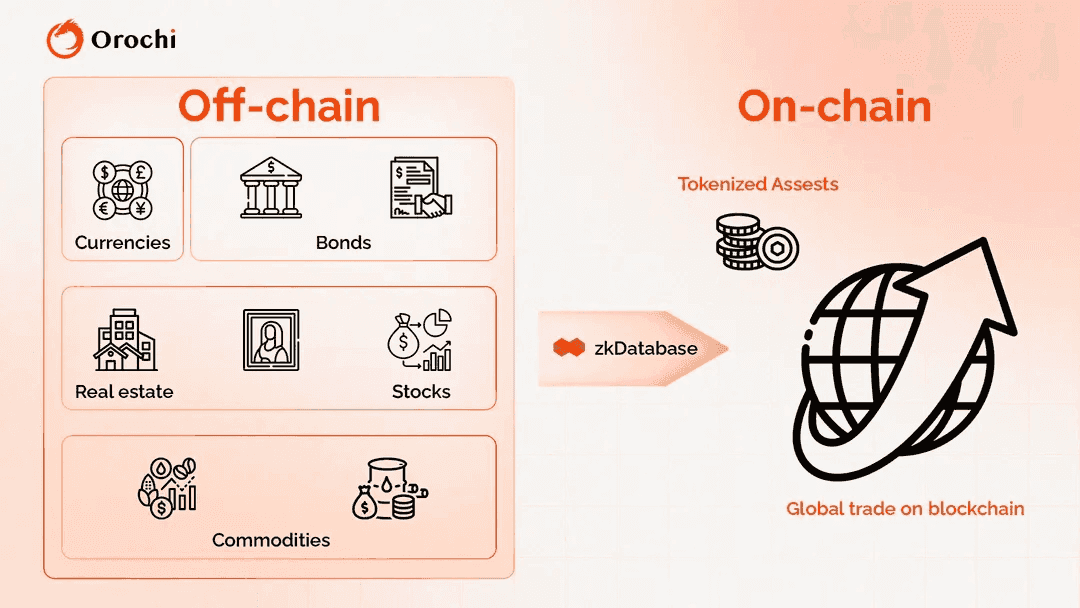
zkDatabase enables verifiable real-world asset (RWA) systems by proving off-chain ownership, compliance, and collateral data on-chain using zero-knowledge proofs (ZKP) without relying on trust-based reporting.


zkDatabase applied RWA addresses one of the major challenges in real-world asset tokenization: how to bring off-chain assets on-chain without relying on trust-based reporting mechanisms. By integrating with zkDatabase as a verifiable data infrastructure, RWA systems can cryptographically verify ownership, compliance, and collateral conditions while preserving scalability and privacy.
What is a Real‑World Asset ?
Real‑World Asset (RWA) refers to physical or legal assets like real estate, commodities, artwork, loans, or other financial instruments that are represented on blockchain networks. Tokenizing these RWAs brings liquidity, fractional ownership, and wider market access, blending traditional finance (Web2) with emerging digital ecosystems (Web3).
Across industries such as real estate, art, and supply chain, RWAs are reshaping how value is represented, traded, and managed—ushering in a new era of on‑chain assetization.
As RWA systems grow in complexity and scale, approaches such as zkDatabase applied with RWA are emerging to address the challenge of verifying off-chain asset data on-chain without relying on trust-based reporting.
The Status of Real-World Assets
The RWA ecosystem has grown rapidly, driven by tokenized private credit, treasuries, real estate, and commodities. Recent industry reports estimate the total value of tokenized real-world assets in the tens of billions of dollars, reflecting increasing institutional interest in bringing real-world value on-chain.
However, growth alone does not solve the core challenges of RWA systems.
- According to Coin World, the total value of tokenized real-world assets surpassed $24 billion as of June 2025—a significant increase from around $10 billion in early 2025.
- Blockthink reports that as of May 2025, the RWA market stood at approximately $22–25 billion, driven largely by tokenized private credit, treasuries, real estate, and commodities.
- While the sector marked milestones like $10 billion in TVL earlier in 2025, forecasts suggest tokenized assets—including real estate and bonds—could hit $50 billion by end‑2025, and even $2 trillion by 2030.
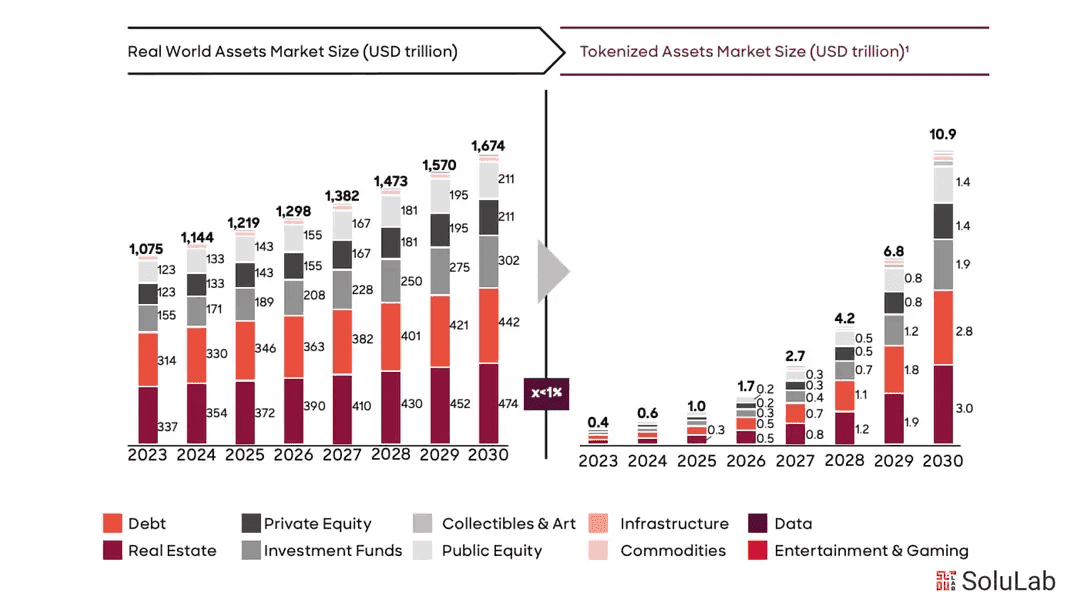 Source from SoluLab
Link with relevant market:
- The tokenized real estate segment alone accounted for roughly $30 billion of the total tokenized assets as of early 2025.
- Deloitte forecasts that $4 trillion worth of real estate could be tokenized by 2035—up from less than $300 billion in 2024, representing a CAGR near 27%.
Despite strong adoption momentum, RWA platforms continue to face fundamental limitations:
- Compliance and privacy: Tokenizing real-world assets often requires handling sensitive legal, identity, and ownership data that cannot be exposed on public blockchains.
- Data integrity and auditability: On-chain tokens depend on off-chain data such as valuations, legal approvals, and collateral conditions, which are difficult to verify continuously and objectively.
- Trust-based infrastructure: Many RWA systems still rely on custodians, manual audits, or oracle-based reporting, reintroducing centralized trust assumptions into otherwise decentralized environments.
Why Real-World Assets Require Verifiable Data Infrastructure
Orochi Network provides a Verifiable Data Infrastructure built on Zero-Knowledge Proofs (ZKPs), designed to support high-performance blockchain systems with strong guarantees around interoperability, confidentiality, and transaction integrity.
Its core objective is to enable decentralized applications—and data-intensive systems such as AI and machine learning—to operate on continuously verified data pipelines at scale.
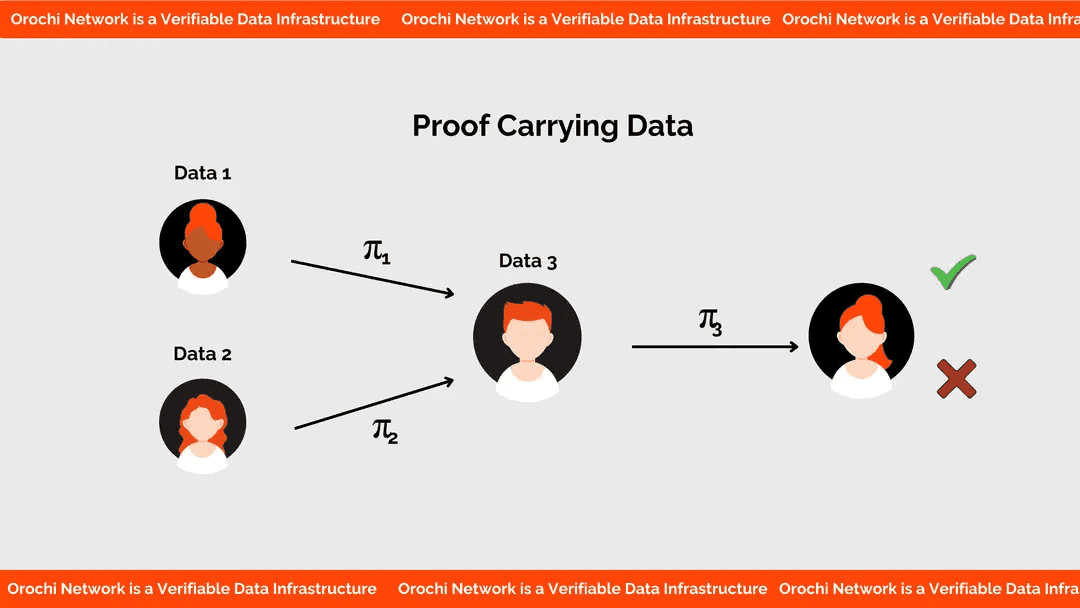
 For Real-World Assets (RWAs), this capability is critical. The lifecycle of an asset depends on constantly changing off-chain data such as ownership status, valuation, compliance, and collateral conditions. Trust-based reporting and periodic attestations cannot scale to institutional requirements, where accuracy, timeliness, and auditability must be enforced continuously rather than assumed.
To address this, Orochi Network introduces ZK-data-Rollups, which compress large volumes of off-chain data into succinct cryptographic proofs that can be efficiently verified on-chain. This approach enables RWA systems to maintain real-time verifiability without exposing sensitive data, laying the foundation for scalable, interoperable, and institution-grade tokenized asset infrastructure.
What Is zkDatabase & Why Does It Matter for RWA?
zkDatabase is a pioneering Zero-Knowledge Database (zkDatabase) solution from Orochi Network, integrating modern database architecture with advanced cryptographic techniques. It leverages Zero-Knowledge Proofs (ZKP) particularly zkSNARKs, to enable data queries and transactions to be proved without revealing the underlying data. This is achieved through a Zero-Knowledge Circuit, ensuring cryptographic verification of all data transactions.
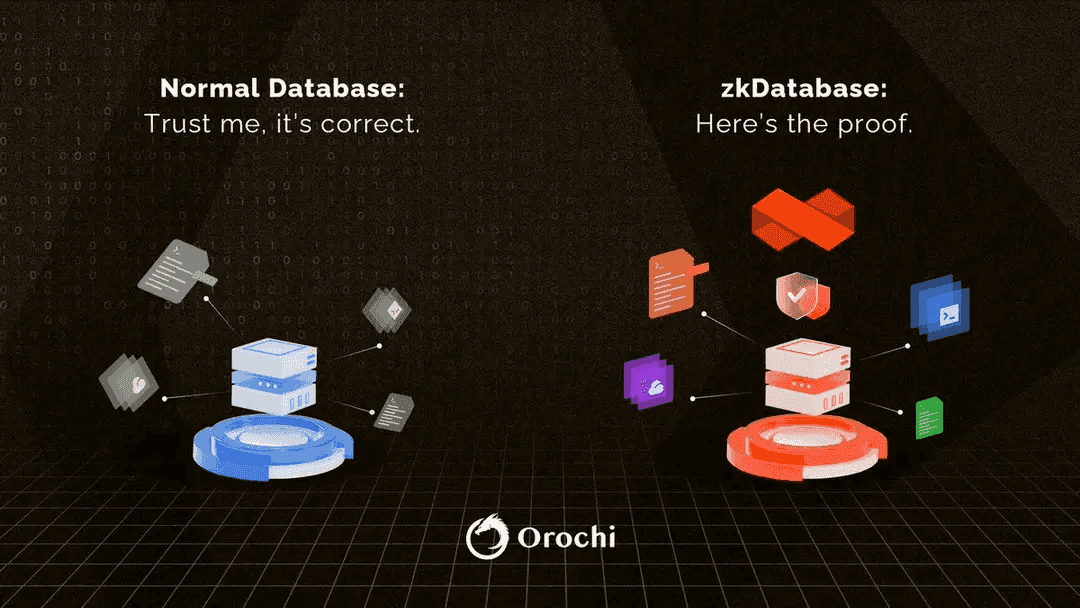
 This is especially important for Real-World Assets (RWA). RWA systems rely on off-chain information such as ownership records, valuations, and compliance status, all of which change over time. Trust-based reporting does not scale well for these assets. zkDatabase solves this by turning off-chain RWA data into cryptographic proofs that smart contracts can verify on-chain, enabling RWA applications to remain accurate, private, and scalable without relying on intermediaries.
Read more about zkDatabase applied RWA : What is zkDatabase 101 | Full Guide For Beginners
How zkDatabase Is Applied to RWA
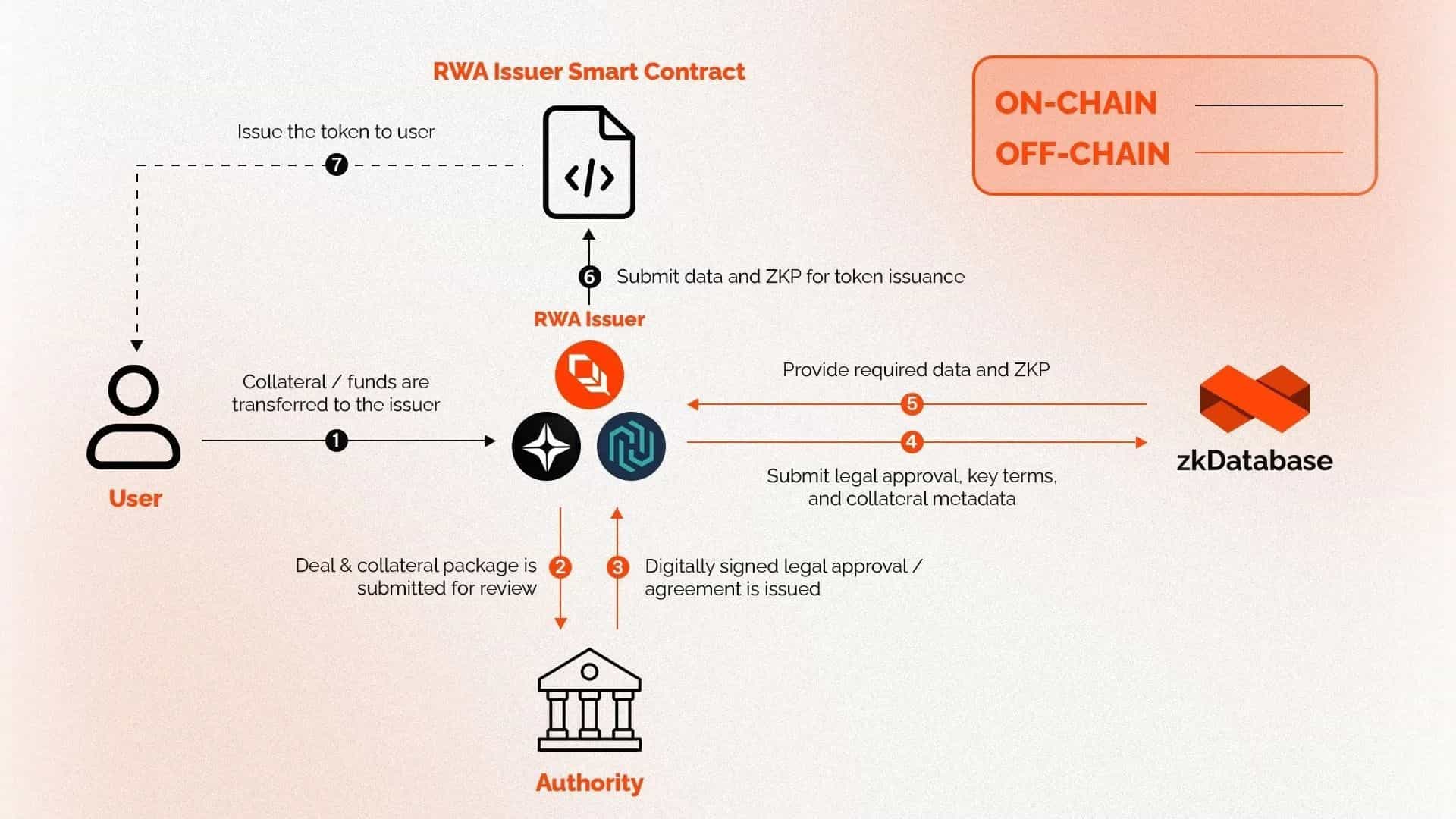
 In zkDatabase applied with RWA architectures, off-chain asset data is transformed into cryptographic proofs that on-chain systems can verify without relying on trust-based intermediaries. This approach allows different stakeholders across the RWA ecosystem to leverage verifiable data while preserving privacy and scalability.
Here’s how different stakeholders can leverage zkDatabase applied with RWA in practice:
Web3 Integration
- Supports dApps and smart contracts built for RWA systems.
- Enables on‑chain verification of off‑chain data via ZK proofs, a core component of zkDatabase applied with RWA.
- Enables compliance checks, audit trails, and decentralized asset listings without revealing sensitive data.
Enterprise Applications
- Financial Services: Secure KYC/AML verification, private loan data validation, and proof-of-ownership for RWA-backed financial products.
- Healthcare: Maintain patient confidentiality while validating asset‑related health certifications.
- Supply Chain: RWA-linked goods (e.g., rare metals) can be traced and authenticated without exposing supplier contracts.
Data Privacy & Security
- ZK proofs separate confidentiality from verifiability.
- You can prove “I own a token representing a property worth >$1 M” without revealing who you are or where the property is.
The following use cases illustrate how this model works in practice.
Real‑World Showcase - Lumia and Orochi Network
Lumia is a fintech startup focused on tokenizing private credit investments, a fast-growing segment within the RWAecosystem. To support secure and compliant on-chain credit products, Lumia has partnered with Orochi Network to integrate zkDatabase applied with RWA as its verifiable data backbone.
Within this zkDatabase applied with RWA architecture, Lumia stores sensitive borrower information and transaction history off-chain. When audits, compliance checks, or investor verification are required, the system generates cryptographic proofs using zkDatabase to demonstrate:
- Asset validity (e.g., outstanding principal, maturity dates)
- Borrower compliance (KYC/AML)
- Funds provenance
All while keeping private data encrypted and inaccessible to auditors or counterparties. This validates the use of zkDatabase as a practical RWA. Moreover, Orochi’s partnerships with 80+ projects, including Lumia, highlight its growing adoption for RWA, DeFi, AI, and more.
Real‑World Showcase - Lumia and Orochi Network
Lumia is a fintech startup that tokenizes private credit investments. Lumia has partnered with us to integrate zkDatabase as their secure data backbone.
They store sensitive borrower info and transaction history off‑chain. When required—for audits or compliance—they generate cryptographic proofs to demonstrate:
- Asset validity (e.g., outstanding principal, maturity dates)
- Borrower compliance (KYC/AML)
- Funds provenance
All while keeping private data encrypted and inaccessible to auditors or counterparties. This validates the use of zkDatabase as a practical RWA. Moreover, Orochi’s partnerships with 80+ projects, including Lumia, highlight its growing adoption for RWA, DeFi, AI, and more.
Metrics of zkDatabase Adoption
Though currently in testnet, zkDatabase has gained strong traction:
- Over 9,700 downloads by B2B enterprises—a sign of high developer engagement.
- As it moves toward mainnet, Orochi is adding enterprise-grade RWA, DeFi infrastructure, and AI/ML use cases where verifiable and private data is mission-critical.
Conclusion
As tokenization of Real-World Assets (RWA) accelerates across finance and regulated industries, the demand for a trust-minimized, verifiable data foundation becomes unavoidable. zkDatabase applied with RWA addresses this challenge by enabling on-chain systems to verify ownership, compliance, and collateral conditions using cryptographic proof—without exposing sensitive off-chain data.
The strong interest with over 11,000 downloads to date, underscores how zkDatabase enables secure tokenization of private assets, transparent supply‑chain validation, and confidential ownership verification . As it moves toward mainnet, this pioneering platform not only bridges Web2 and Web3—it sets the foundation for a new era of trust, scalability, and innovation in asset management and data verification.
Related toAbout zkDatabase