Research
Fiat On-Ramp Off-Ramp Security in 2026: How zkDatabase Solves the KYC Data Crisis
March 3, 2026
15 mins read
$4.88M average breach cost, fiat on-ramp off-ramp platforms need better KYC architecture. Orochi Network's zkDatabase delivers it.


The Infrastructure Layer That Became a Liability
Fiat on-ramp and off-ramp infrastructure is no longer a peripheral utility in the digital asset stack. It is the critical gateway through which hundreds of millions of users and billions of dollars in institutional capital enter and exit the crypto ecosystem every day. The stakes at this layer are not abstract — they are operational, regulatory, and existential for any protocol or institution that depends on it.
Yet this same layer carries a structural contradiction that no conventional architecture has resolved. Regulatory mandates require ramps to collect and store the most sensitive data in all of fintech — government-issued IDs, biometric selfies, home addresses, and financial records — while simultaneously making them the most persistently targeted systems across the entire industry.
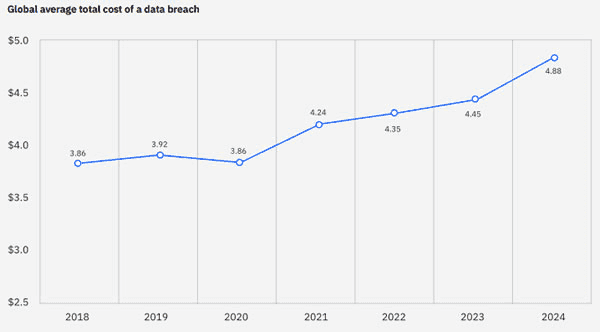
The numbers confirm what the architecture already implies. The average cost of a financial services breach reached $4.88 million in 2024 — the year finance overtook healthcare as the most-hacked sector globally. That figure does not capture the reputational damage, the regulatory exposure, or the years of identity recovery that fall on the users whose data was compromised.
What Is a Fiat On-Ramp?
A fiat on-ramp converts traditional currency (such as USD, EUR, or GBP) into digital assets, while a fiat off-ramp converts crypto back into fiat and settles it into a bank account.
OpenPayd provides embedded banking infrastructure that enables businesses to integrate SEPA, SWIFT, Faster Payments, and multi-currency accounts directly into their platforms. This allows regulated crypto companies, fintechs, and institutions to move funds between traditional banking rails and digital asset ecosystems in a compliant and scalable way.
How Does a Fiat On-Ramp Work?
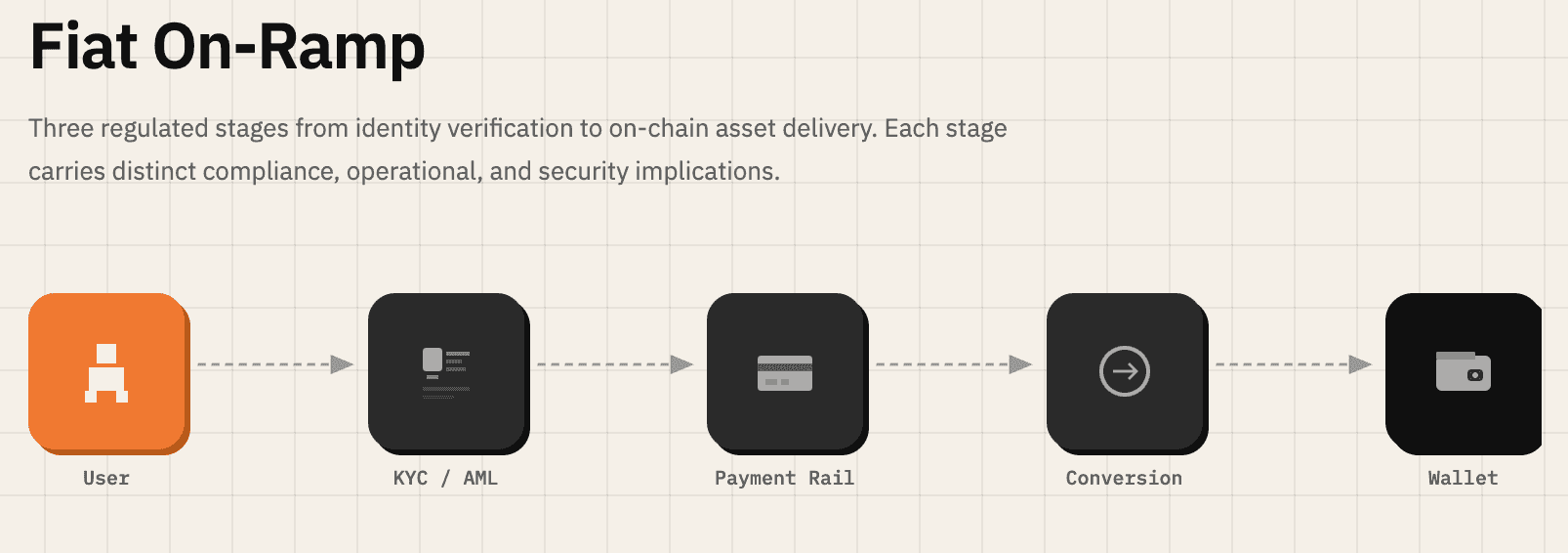
A fiat on-ramp follows a structured three-stage process designed to satisfy regulatory compliance, banking settlement rules, and blockchain finality. Before any crypto is issued, the platform must verify identity, clear fiat funds through traditional payment rails, and only then deliver digital assets on-chain. Each stage carries distinct compliance, operational, and security implications.
1. KYC & AML Verification
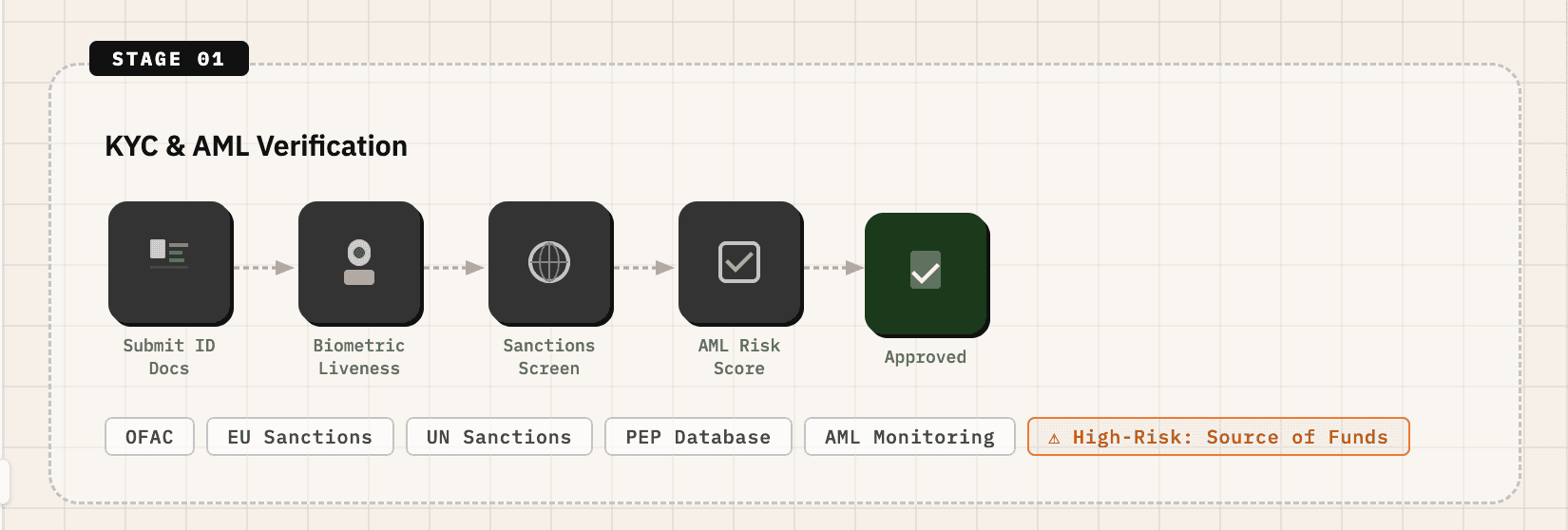
No conversion can begin until the user’s identity has been verified. This stage typically requires:
- Government-issued identification (passport, national ID, or driver’s license)
- A biometric selfie to confirm liveness
- Proof of residential address
- Source-of-funds documentation in higher-risk cases
Submitted data is screened against global sanctions and compliance databases, including:
- Office of Foreign Assets Control (OFAC)
- European Union sanctions lists
- United Nations sanctions lists
- Politically Exposed Person (PEP) databases
- AML risk monitoring systems
This verification step is mandatory under financial regulations. It is also where the platform collects its most sensitive data , making identity storage architecture one of the most critical security decisions for any on-ramp provider.
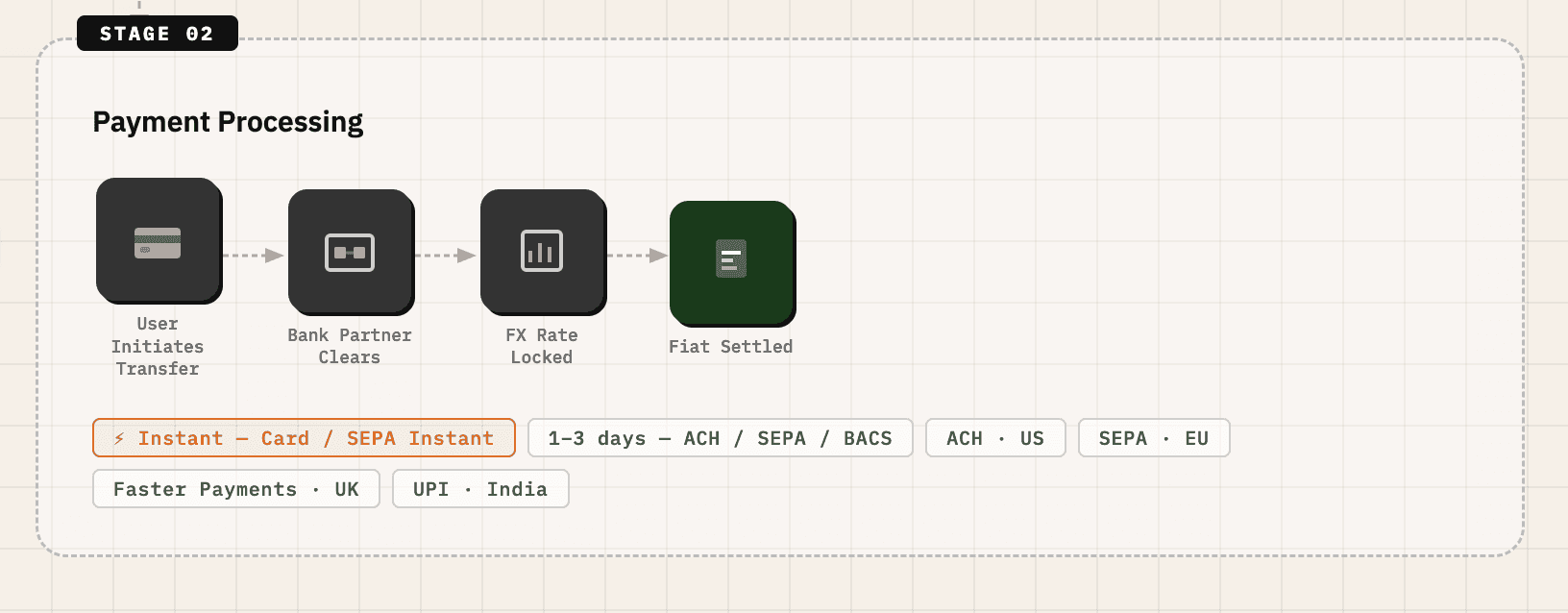
2. Payment Processing
Once identity checks are completed, the user transfers fiat through an approved payment rail, such as:
- ACH (United States)
- SEPA or SEPA Instant (European Union)
- Faster Payments (United Kingdom)
- UPI (India)
- Credit or debit card
The on-ramp clears the incoming fiat through its banking partners and confirms receipt before locking in the exchange rate.
Settlement speed varies:
- Near-instant for card payments or SEPA Instant
- Typically 1–3 business days for standard bank transfers At this stage, the provider manages banking integrations, liquidity, FX exposure, and reconciliation.
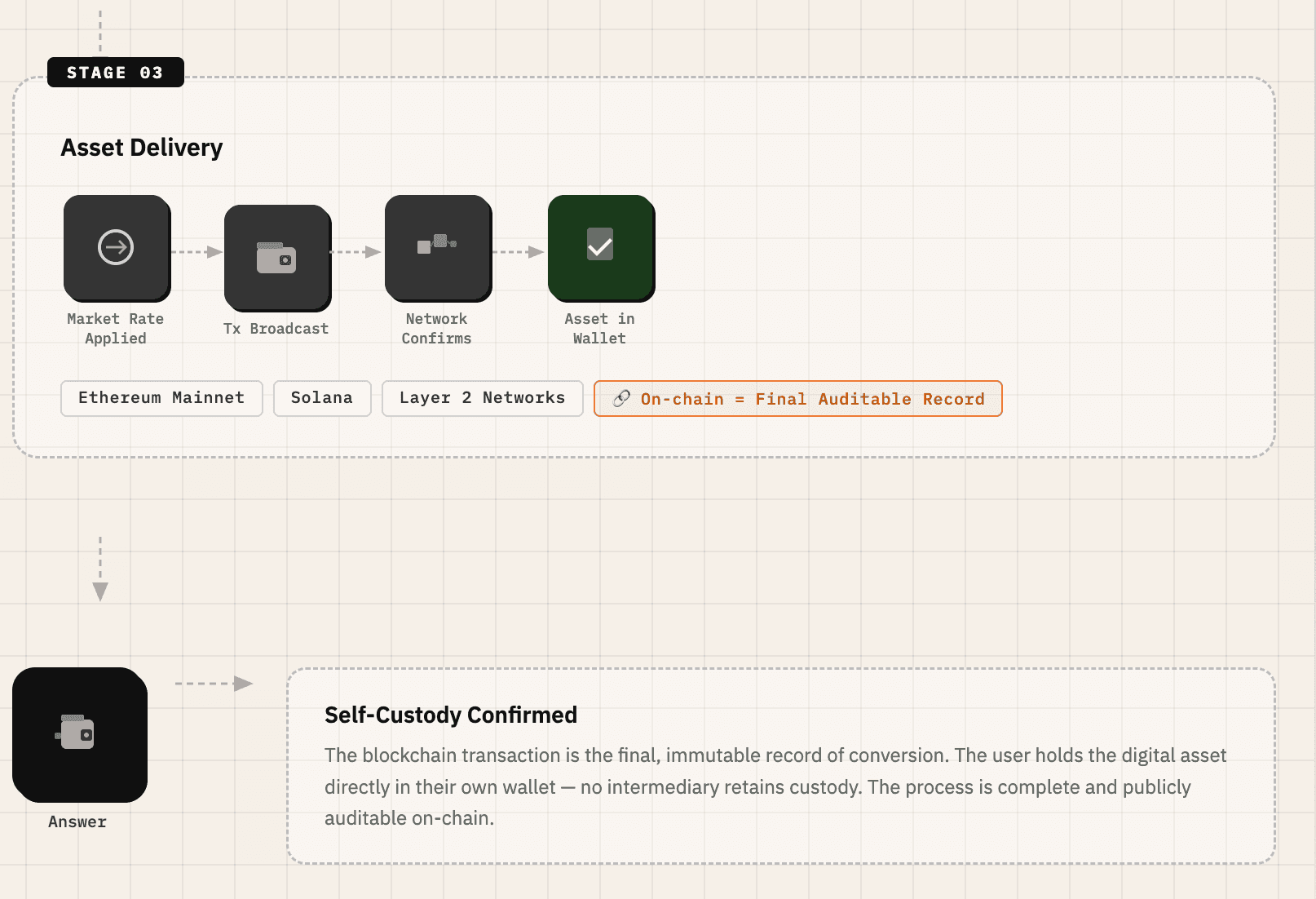
3. Asset Delivery
After fiat funds have settled, the platform converts the amount at the prevailing market rate and transfers the selected digital asset to the user’s wallet.
Delivery timing depends on the confirmation speed of the target network, such as:
- Ethereum mainnet
- Solana
- Various Layer 2 networks The resulting blockchain transaction becomes the final, auditable record of the conversion. Once confirmed, the user holds the asset directly in their wallet under self-custody.
Why Are Fiat On-Ramp and Off-Ramp Platforms the Most Targeted Layer in Crypto?
Fiat on-ramp and off-ramp platforms sit at the intersection of traditional finance and blockchain , and that position makes them uniquely vulnerable. Unlike payment processors that mainly handle transaction metadata, or custodians that secure private keys, ramps are legally required to collect, verify, and retain full identity documentation for every user.
Who Uses a Fiat On-Ramp , and for What?
A fiat on-ramp serves multiple stakeholder groups, each with distinct transaction volumes, compliance obligations, and infrastructure expectations. Understanding these user segments is critical for protocol teams, compliance officers, and infrastructure architects evaluating integration decisions.

What Are the Main Types of Fiat On-Ramp Infrastructure?
The fiat on-ramp market has stratified into distinct infrastructure models, each suited to different deployment contexts, compliance postures, and scale requirements. Selecting the appropriate model is an architectural decision with long-term compliance and operational consequences.
- Aggregator Ramps: Platforms such as Onramper route a single API integration through 30 or more underlying ramp providers, selecting the optimal conversion path based on geography, payment method, fee structure, speed, and availability. Aggregators are the preferred choice for protocols that need broad geographic coverage without the operational overhead of managing multiple bilateral provider relationships. The compliance responsibility for KYC and AML sits with each individual underlying ramp , though the aggregator layer introduces its own data handling obligations that must be reviewed carefully.
-
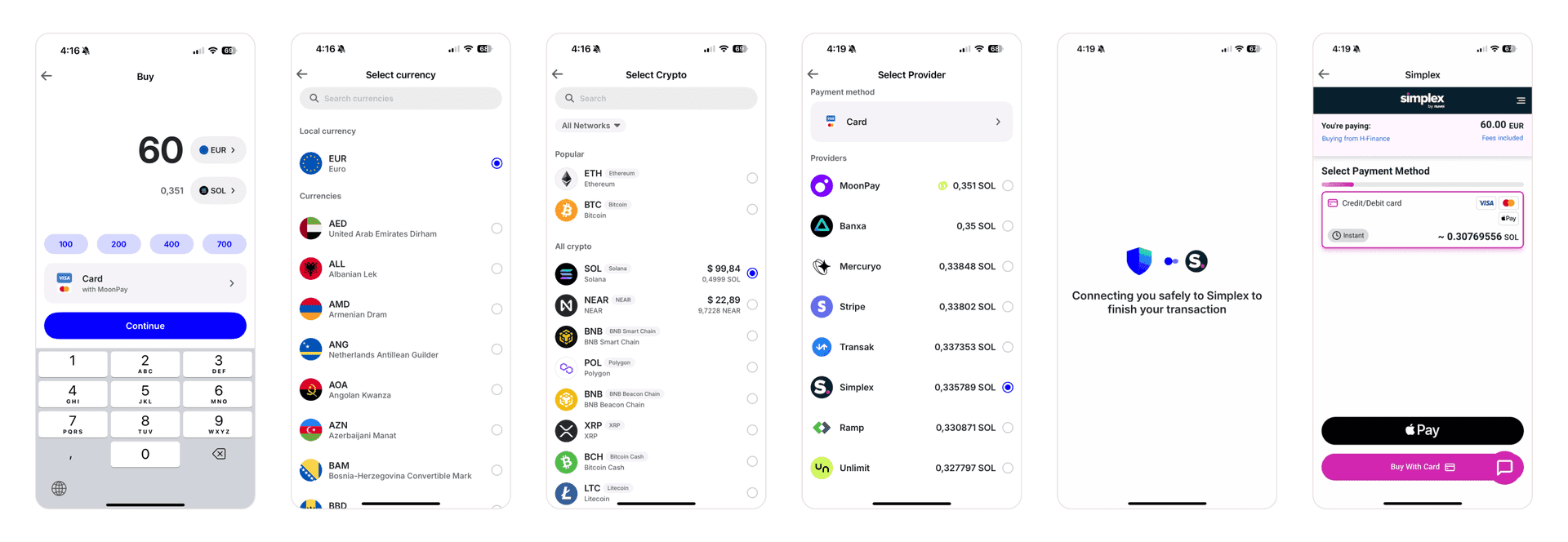
Developer-Focused Embedded APIs: Providers including Transak (64+ countries, 136+ cryptocurrencies), MoonPay (160+ countries, NY BitLicense and MiCA authorized), Coinbase Onramp, and Ramp Network offer embeddable SDKs and APIs that integrate directly into dApp front-ends. These providers handle the full compliance stack , KYC, AML screening, payment processing, and asset delivery , within a customizable widget or API flow. They are the dominant choice for DeFi protocols and consumer crypto applications that want conversion capability without building ramp infrastructure in-house.
-
Enterprise and Institutional Ramps: Providers such as OpenPayd (processing €130 billion or more annually for 800+ enterprise clients) and WhiteBIT serve corporate clients with institutional payment rail access , SEPA Instant, SWIFT, Faster Payments , combined with enterprise-grade AML/KYC programs, higher transaction limits, dedicated compliance support, and SLA-backed settlement. This tier is the appropriate choice for stablecoin issuers, asset managers, and institutions running treasury operations on-chain.
-
Self-Hosted Ramp Infrastructure: Larger protocols, stablecoin issuers, and financial institutions sometimes build proprietary ramp infrastructure to maintain complete control over the KYC data pipeline, compliance architecture, banking relationships, and fee structure. This model carries the highest regulatory and operational burden , licensing across multiple jurisdictions, direct banking relationships, and full AML program ownership , but eliminates third-party data exposure risk and provides maximum customization over the compliance and user experience layer.
-
Traditional Finance Integrations: Established financial platforms including Mastercard (integrated with MetaMask, Crypto.com, OKX, and Kraken across 150 million or more merchant locations), PayPal, Revolut, and Robinhood now embed fiat-to-crypto conversion directly into consumer-facing products. These integrations leverage existing payment infrastructure and KYC databases to offer on-ramp capability to hundreds of millions of existing users without requiring a separate account or verification flow.
What Is a Fiat Off-Ramp?
A fiat off-ramp is the reverse of an on-ramp: it converts cryptocurrency or digital assets back into traditional fiat currency and delivers the proceeds to a bank account, payment wallet, or card — returning on-chain value to the conventional financial system through a compliant, auditable transaction.
The exit point from the blockchain economy, converts on-chain assets into fiat currency. Enables real-world financial obligations:
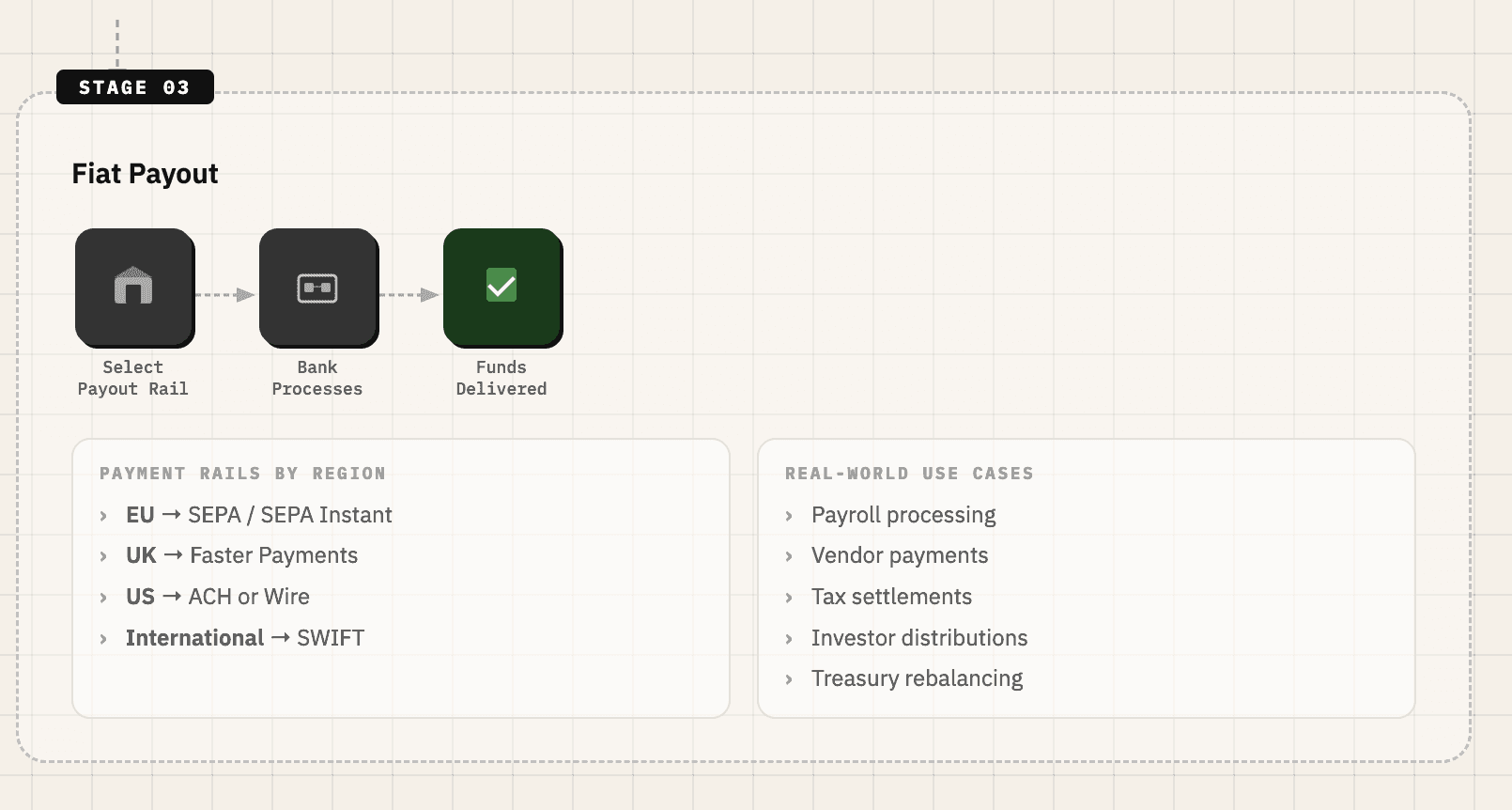
- Payroll processing
- Vendor payments
- Tax settlements
- Investor distributions
- Treasury rebalancing
Without a compliant off-ramp, on-chain capital becomes operationally illiquid — held in digital form but unable to meet conventional financial commitments. According to 2025 industry research, 41% of crypto users cite faster off-ramps as their single biggest unmet need - ranking ahead of fees, KYC complexity, and asset selection as the most commonly cited friction point in the fiat-crypto experience.
How Does a Fiat Off-Ramp Work?
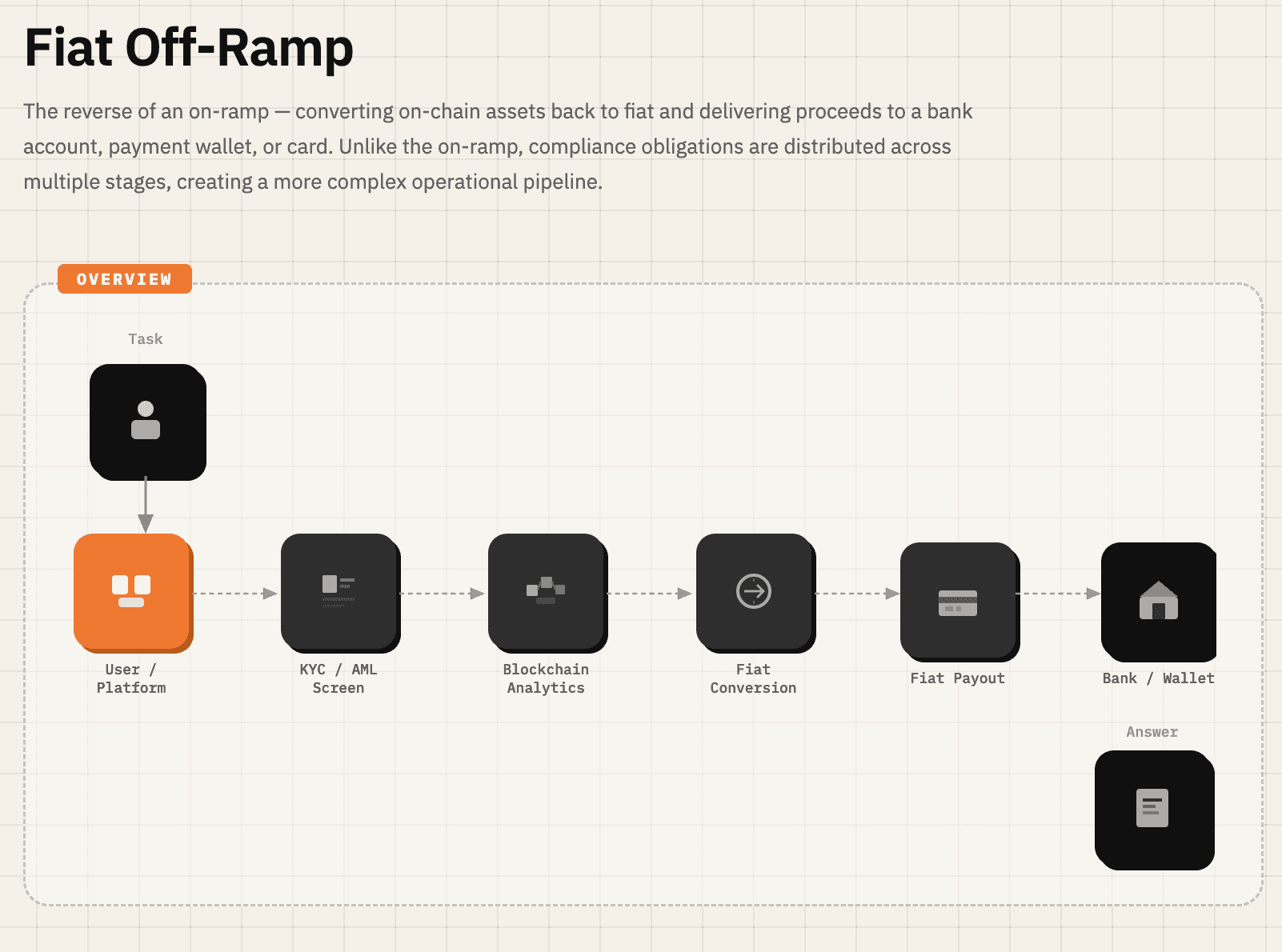
The off-ramp process runs through four stages , AML screening is where most delays and rejections occur.
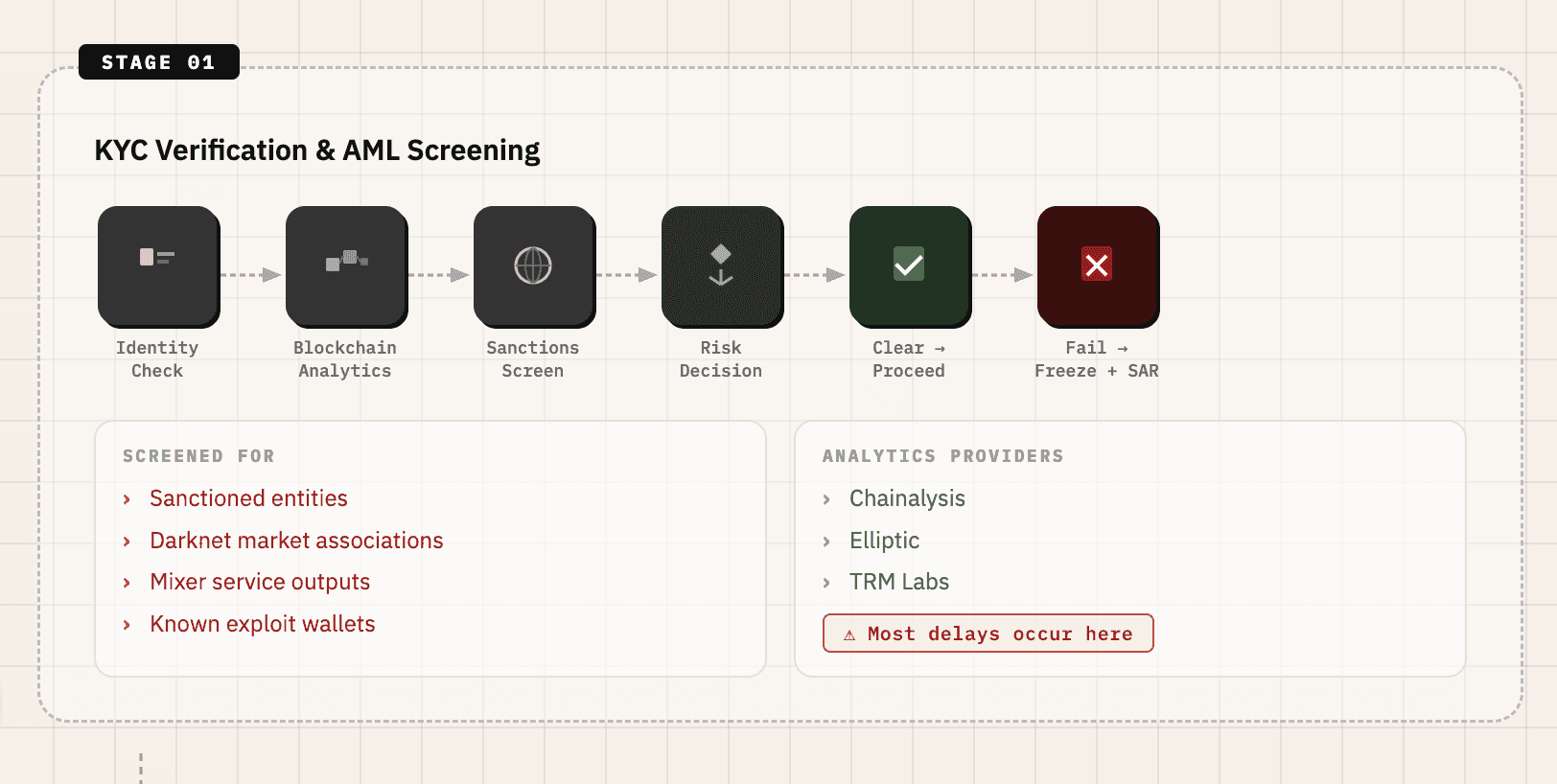
1. KYC Verification & AML Screening
- Identity verified if not already on file
- Every incoming transaction screened via blockchain analytics (ChainalysisZero-Knowledge ProofEllipticZero-Knowledge ProofTRM Labs) for:
- Sanctioned entities
- Darknet market associations
- Mixer service outputs
- Known exploit wallets
- Failed transactions → frozen + SAR filed
2. Fiat Conversion
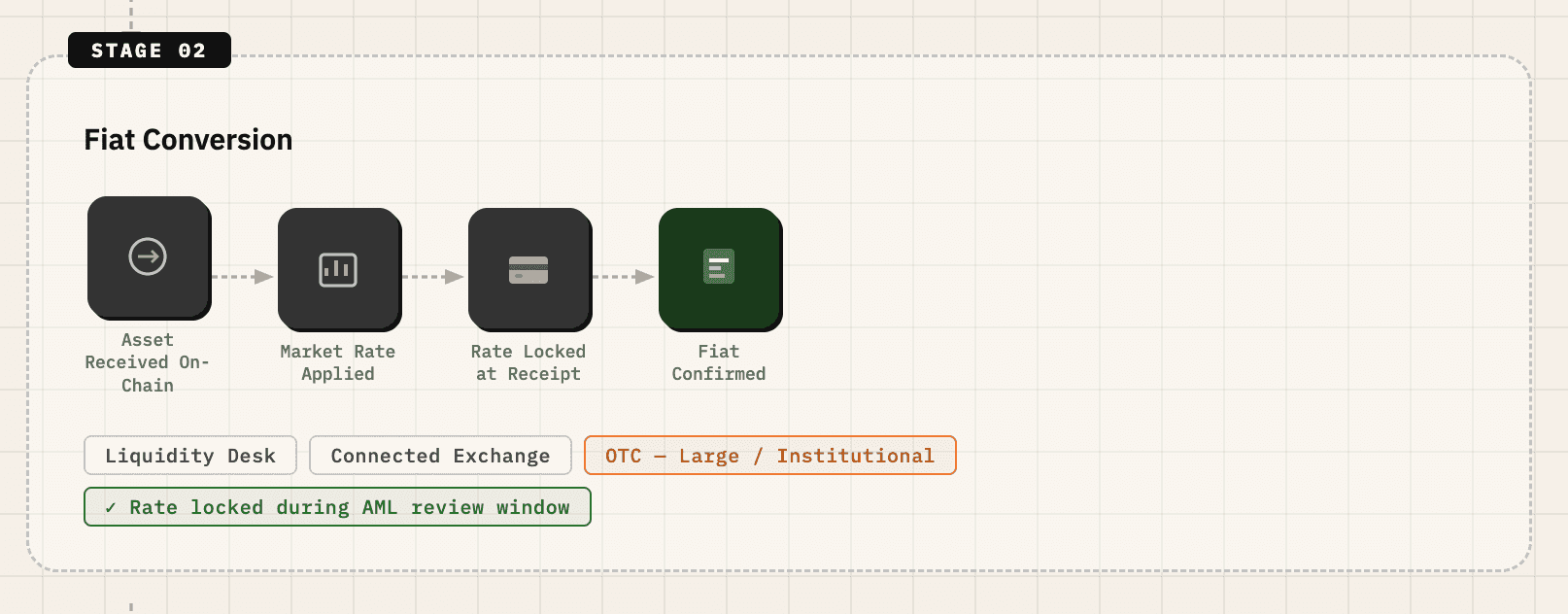
- Asset converted at market rate (less fees) via:
- Ramp's own liquidity desk
- Connected exchange
- OTC (preferred for large institutional volumes)
- Rate locked at receipt , protects user during AML review window
3. Fiat Payout
- Proceeds disbursed via applicable rail:
- EU → SEPA / SEPA Instant
- UK → Faster Payments
- US → ACH or wire
- International → SWIFT
- Settlement speed depends on both the rail and the receiving bank's processing schedule
What Data Do Ramps Collect , and Why Is It So Dangerous?
Under current AML and KYC regulatory frameworks, every fiat on-ramp and off-ramp is legally required to collect and verify a comprehensive set of personal identity documents before any transaction can be processed. This obligation applies universally across providers, regardless of size or geography.
- Identity and Biometric Data: Ramps collect government-issued IDs, passport scans, facial biometric selfies, and dates of birth-creating a permanent biometric profile tied directly to a user's real-world identity.
- Residential and Financial Records: Beyond identity, users must also submit residential addresses and, in many jurisdictions, source-of-funds documentation and financial statements — exposing both where they live and the full picture of their financial standing.
- The Transak Breach (October 2024): A phishing attack combined with a malicious script on a single employee laptop exposed government IDs, selfies, dates of birth, and passport data for 92,554 users — roughly 1.14% of Transak's entire user base.
- The Attack Was Not Sophisticated: The breach required no advanced cryptographic exploit. One compromised endpoint with access to a centralized data store was sufficient to expose the personal records of nearly 100,000 people.
On-Ramp vs. Off-Ramp, Key Differences at a Glance
For CTOs, compliance leads, and infrastructure architects evaluating ramp integration or build decisions, the comparison below surfaces the dimensions where on-ramp and off-ramp requirements diverge most materially. These differences carry direct implications for system design, vendor selection, compliance team sizing, and banking relationship strategy.

The directional asymmetry in regulatory burden is significant. Off-ramp operations carry higher scrutiny, more complex AML requirements, harder banking relationships, and greater FATF Travel Rule complexity than on-ramp alone. Building or operating institutional-grade off-ramp capability therefore requires a fundamentally different compliance architecture. Teams that underestimate this gap encounter it operationally — typically at the point where a key banking partner withdraws access or a regulator requests documentation the team cannot produce.
For protocols and infrastructure teams evaluating fiat gateway strategy, the practical implication is clear: on-ramp capability is table stakes; off-ramp capability at institutional scale is the differentiator. The data security architecture underlying both functions — how KYC records are stored, how audit trails are maintained, and how compliance proofs are transmitted to counterparties under the Travel Rule — is the infrastructure decision that determines long-term regulatory viability.
Why Do Traditional Storage Architectures Fail at Institutional Scale?
The centralized database model that underlies most ramp KYC systems is not simply outdated — it is structurally incompatible with institutional-scale operations. Three compounding failure modes explain why no amount of incremental security investment resolves the core problem.
-
Single Point of Catastrophic Failure: Centralized storage means a single compromised access point exposes every record the system holds simultaneously. There is no blast radius containment, no partial breach, and no graceful degradation. The Transak breach demonstrated this precisely — one malicious script on one employee laptop was sufficient to expose government IDs, passport scans, facial biometrics, and personal data for 92,554 users in a single event.
-
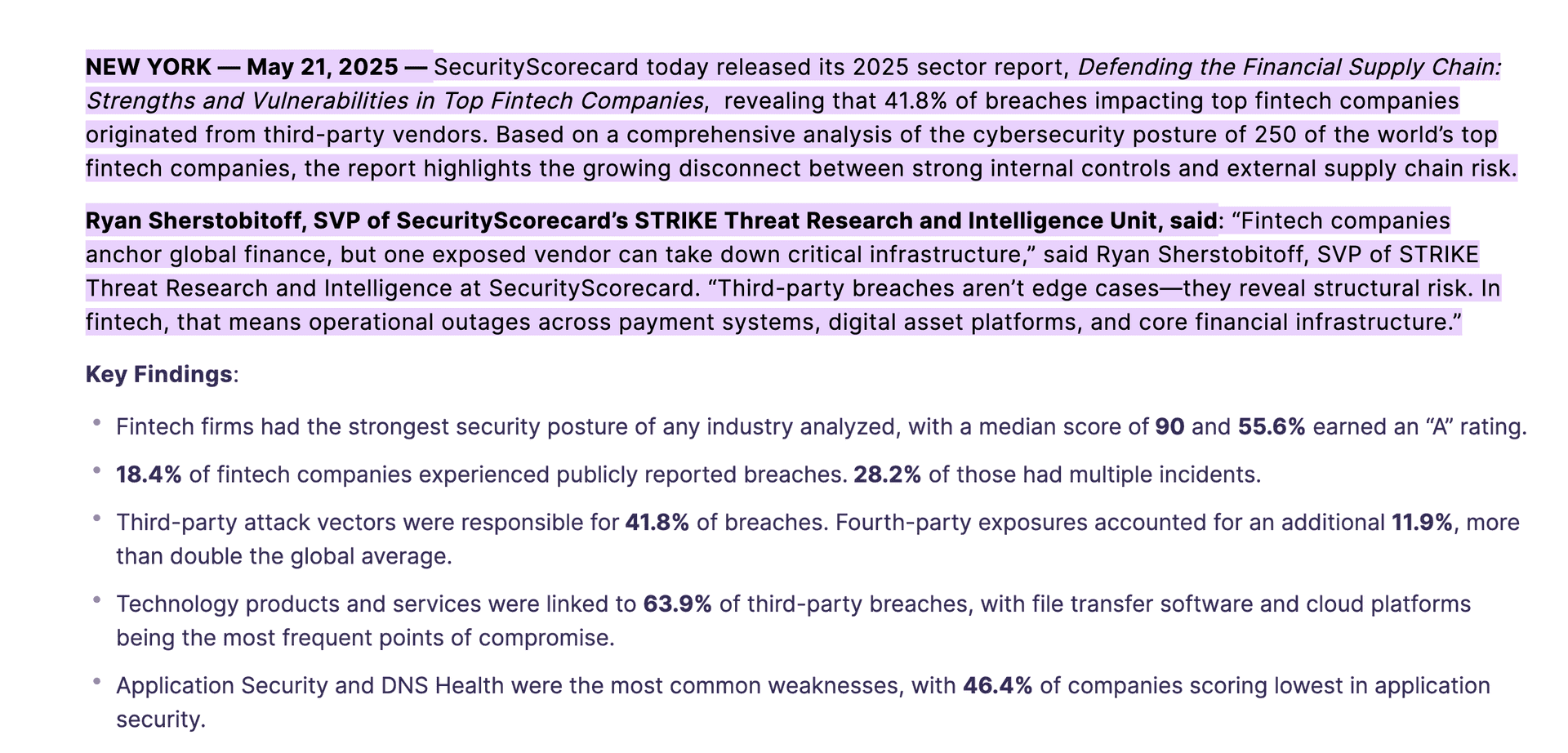
Third-Party Vendors Multiply the Attack Surface: Outsourcing identity verification to external KYC providers does not reduce risk — it redistributes it across a supply chain the ramp operator cannot directly control. According to SecurityScorecard, 41.8% of fintech breaches originate from third-party vendors. Every external provider added to the compliance stack extends the security perimeter to include that vendor's infrastructure, their subcontractors, and every vulnerability across their entire supply chain.
- Public Blockchain Is Not a Valid Alternative: Recording KYC data on a public blockchain resolves the centralization problem but creates a worse one. Broadcasting identity documents on a public ledger directly violates GDPR's data minimization and right-to-erasure requirements, conflicts with MiCA's privacy obligations, and permanently exposes private identity data to anyone with access to the chain — which is everyone. It does not replace centralized risk; it simply makes the breach permanent and irreversible.
How Does zkDatabase Change What Is Possible for Fiat Ramp Infrastructure?
zkDatabase is not a database with Zero-Knowledge Proofs bolted on as a feature. We built it from the ground up as verifiable data infrastructure — a system where every single data operation generates a cryptographic proof of correctness, so that the integrity of any data can be independently verified by anyone, without ever exposing the underlying data itself.
What Is zkDatabase's Verifiable Off-Chain Data Model?
The fundamental problem with every database powering KYC infrastructure today is that storage and verification are coupled. If you can access the storage, you can access the data. We broke that coupling entirely. In zkDatabase, data lives off-chain. Proofs of data state are verified on-chain. The integrity of any record is mathematically provable — permanently — without the record ever being exposed.
- Every Operation Is Cryptographically Attested: Every insert, update, and query in zkDatabase generates a zero-knowledge proof of correctness. From the moment a KYC document enters our system — through verification, storage, and downstream audit — every state transition is provably correct. There are no gaps in the chain of custody. There are no trust assumptions.
- Compliance Verification Without Raw Data Access: We designed zkDatabase so that an auditor never needs to touch raw KYC records to confirm that a compliance process was followed correctly. The proof record is sufficient. It is immutable. It is independently verifiable by any party with access to the chain — and it tells them everything they need to know without exposing anything they should not see.
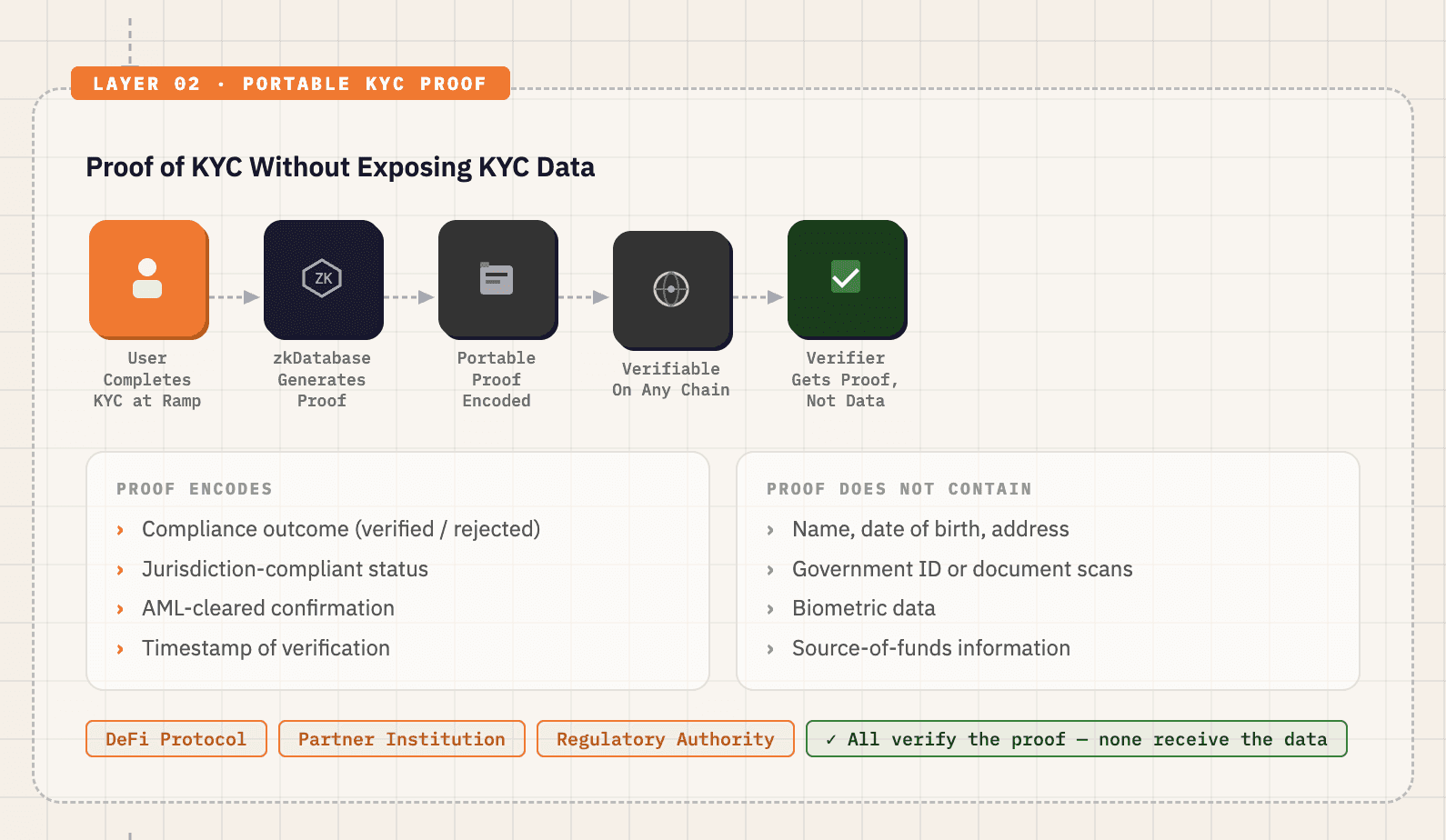
How Does zkDatabase Enable Proof of KYC Without Exposing KYC Data?
We built zkDatabase around one principle that the industry had accepted as impossible: a ramp should be able to prove a user passed KYC without ever transmitting that user's data to anyone. That is exactly what we deliver.
When a user completes KYC on a ramp platform, zkDatabase generates a portable proof encoding the compliance outcome — verified, jurisdiction-compliant, AML-cleared. That proof can be verified by any DeFi protocol, partner institution, or regulatory authority on any chain. The verifying party receives the proof.
The result is clean: compliance stays at the ramp layer where it belongs, DeFi protocols enforce access control without becoming data custodians, and the composability of the ecosystem is fully preserved.
Conclusion
The centralized KYC storage model powering most fiat on-ramp and off-ramp infrastructure today is not a regulatory requirement. It is a legacy architectural pattern that predates the existence of verifiable data infrastructure — and it carries a structural liability that compounds with every new user, every new jurisdiction, and every new regulatory obligation added to the stack.
The question for CTOs and compliance teams is no longer whether to move toward privacy-preserving, verifiable data infrastructure. That direction is inevitable. The only question is whether the transition happens by design or in response to a breach that forces it.
MiCA enforcement is tightening. FATF Travel Rule implementation is expanding. Institutional capital increasingly treats compliance-grade verifiability not as a differentiator but as a baseline condition of deployment. The ramps that have already built on cryptographically verifiable infrastructure will hold a durable, compounding competitive advantage over those still managing centralized liability at scale.
We built zkDatabase to be that infrastructure layer — not as a compliance workaround, not as a bolt-on privacy feature, but as a production-ready architectural foundation for regulated digital finance. The ramps that move first will not just be more secure. They will be structurally better positioned for every regulatory development that follows.
FAQs
1. What is the difference between a fiat on-ramp and a fiat off-ramp?
A fiat on-ramp converts traditional currency — such as USD, EUR, or GBP — into digital assets, allowing users to enter the crypto ecosystem from conventional banking. A fiat off-ramp does the reverse: it converts cryptocurrency back into fiat currency and settles the proceeds into a bank account, payment wallet, or card.
2. Why is KYC data collected by fiat ramps so much more dangerous than standard payment data?
Unlike a compromised credit card number — which can be cancelled and reissued within hours — a leaked KYC record contains passport scans, facial biometrics, residential addresses, and financial history
3. How does zkDatabase allow ramps to prove KYC compliance without exposing user data?
zkDatabase generates a portable, cryptographic proof encoding the compliance outcome of a user's KYC process — verified, jurisdiction-compliant, and AML-cleared — without ever transmitting the underlying identity data to any counterparty. That proof can be verified by a DeFi protocol, a partner institution, or a regulatory authority on any chain. The verifying party receives confirmation of compliance.
Related toResearch