
Research
Hedging Strategies: A Deep Dive into Methods in the Web3 Market
October 13, 2025
6 mins read
This article delves into the world of hedging in the realm of cryptocurrencies, exploring its underlying principles, strategies, and risks.


In the strategy landscape of investment, risk management plays a pivotal role in safeguarding capital and optimizing returns. One essential tool that both individuals and institutions employ to achieve this delicate balance is hedging. Drawing parallels to the concept of insurance, hedging offers a mechanism to counteract potential losses that may arise from market volatility. This article delves into the world of hedging in the realm of cryptocurrencies, exploring its underlying principles, strategies, and risks.
I. Understanding Hedging

- Comparison with Insurance
At its core, hedging mirrors the protective nature of insurance. In a scenario where a homeowner seeks to shield their property from flood-related risks, insurance coverage serves as a shield against potential damages. Similarly, in the financial sphere, hedging involves strategic investments to mitigate adverse price fluctuations.
- Concept of Risk Management
Hedging embodies the principle of risk management. It allows investors to preemptively prepare for the uncertainties inherent in market movements. Through calculated decisions, investors aim not to generate profits directly but rather to shield themselves from potential losses.
- Role of Hedging in Investment
Hedging aligns seamlessly with the broader strategy of prudent investment. By employing strategic counter positions, investors can navigate volatile markets with a degree of security. This approach complements traditional investment avenues by offering a safety net against unexpected downturns.
II. Principles of Hedging
- Primary Position Establishment
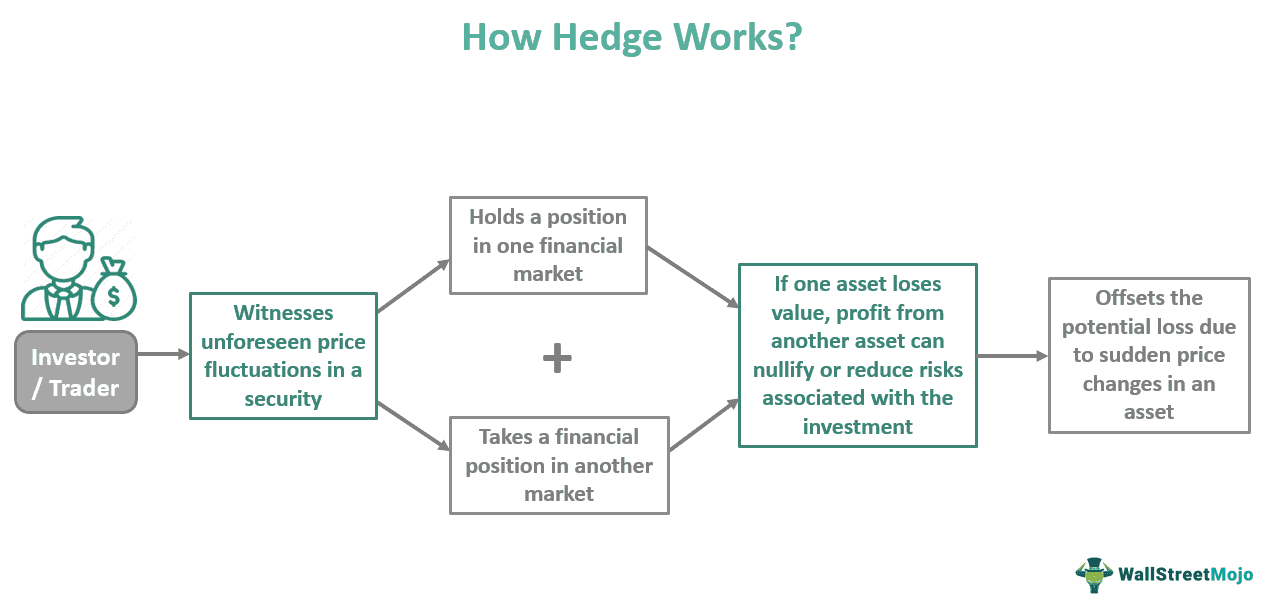
The foundation of hedging rests on an existing primary investment, such as a cryptocurrency holding. This primary position forms the basis for which risk mitigation strategies are devised.
- Identifying Risks
To effectively hedge, it's essential to identify the specific risks associated with the primary position. For instance, a Bitcoin investor might anticipate potential price declines as a primary risk.
- Counterposition for Risk Mitigation
Hedging involves strategically adopting counterpositions. These positions are taken in related instruments that are anticipated to move in the opposite direction of the identified risk. The overarching aim is to offset potential losses.
III. Hedging in Crypto: Fundamentals
- Similarity to Traditional Markets
Hedging principles are transferrable from traditional financial markets to the world of cryptocurrencies. Just as in conventional finance, crypto hedging seeks to protect investments from market volatility.
- Application of Hedging to Cryptocurrencies
The inherent volatility of cryptocurrencies necessitates risk management strategies. Hedging in the crypto sphere involves similar principles as in traditional markets, albeit tailored to the unique attributes of digital assets.
- Regulatory Compliance in Crypto Hedging
Navigating the regulatory landscape is critical when implementing hedging strategies in the crypto domain. Adherence to local regulations ensures the legitimacy and effectiveness of chosen hedging mechanisms.
IV. Hedging Strategies in Crypto
- Futures Contracts
Crypto futures enable investors to prearrange the purchase or sale of a cryptocurrency at a predetermined price on a specified future date.
Suppose an investor holds Bitcoin and anticipates a price drop. By selling a Bitcoin futures contract, potential losses in the Bitcoin holding could be offset by gains from the contract if the price indeed declines.
- Options Contracts
Crypto options provide holders the choice (but not obligation) to buy (call option) or sell (put option) an underlying cryptocurrency at a set price within a defined timeframe.
Consider an investor concerned about a Bitcoin price decline. By acquiring a put option, potential losses can be mitigated through increased value of the option if Bitcoin's price drops.
- Contracts for Difference (CFDs)
CFDs facilitate hedging exposure to cryptocurrencies without direct ownership. These derivatives allow traders to speculate on price movements without owning the asset.
An investor, holding Bitcoin, can enter a short position on a Bitcoin CFD to hedge against price decreases. Profit on the CFD offsets potential losses in the Bitcoin holding.
- Perpetual Swap Contracts
Perpetual swap contracts mirror the price of an underlying asset, offering continuous trading without expiration. Leverage is often used for larger positions with a smaller margin requirement.
If an investor foresees a Bitcoin price decrease, opening a short position on a Bitcoin perpetual swap contract can counter potential losses in the Bitcoin holding.
- Short Selling
Some platforms enable short selling, where investors borrow a cryptocurrency, sell it, and later buy it back at a lower price to return it. Profit from the sale can offset losses.
An investor anticipating a drop in a particular cryptocurrency's value can engage in short selling, potentially offsetting losses in their overall portfolio.
- Stablecoins
Stablecoins are pegged to a reserve of assets, often fiat currency, offering a more stable value. Converting volatile crypto assets into stablecoins protects against market downturns.
If an investor is wary of market fluctuations, converting cryptocurrencies into stablecoins can safeguard against potential downturns, albeit at the cost of foregoing upswings.
- Diversification
Holding a variety of cryptocurrencies diversifies risk, as different assets can respond differently to market changes. Losses in one asset may be balanced by gains in another.
An investor with diverse cryptocurrency holdings might see one asset's drop offset by another's rise, reducing the overall impact of market fluctuations.
V. Implementing Hedging in Crypto
- Practical Example: Hedging Your Bitcoin Position
- Utilizing Put Options
An investor, holding $10,000 worth of BTC, can hedge against a potential price decrease by acquiring a put option to sell Bitcoin at a predetermined price.
- Engaging in Futures Contracts
Alternatively, the investor could sell a futures contract agreeing to sell Bitcoin at a fixed price in the future, protecting against losses if the price drops.
- Risks and Considerations in the Example
While hedging provides valuable risk mitigation, it also introduces various risks, including costs, limited upside potential, counterparty risk, execution and liquidity risks, regulatory uncertainty, and the complexity of financial instruments.
Conclusion
Hedging in the cryptocurrency market offers a strategic approach to managing risk and protecting investments. By adopting a range of strategies such as futures contracts, options contracts, CFDs, perpetual swap contracts, short selling, stablecoins, and diversification, investors can navigate the volatile crypto landscape with a measure of security. However, these strategies are not without their own set of risks and complexities. Understanding the nuances, along with regulatory compliance, can empower investors to make informed decisions when implementing hedging strategies in the realm of cryptocurrencies.
Related toResearch