Research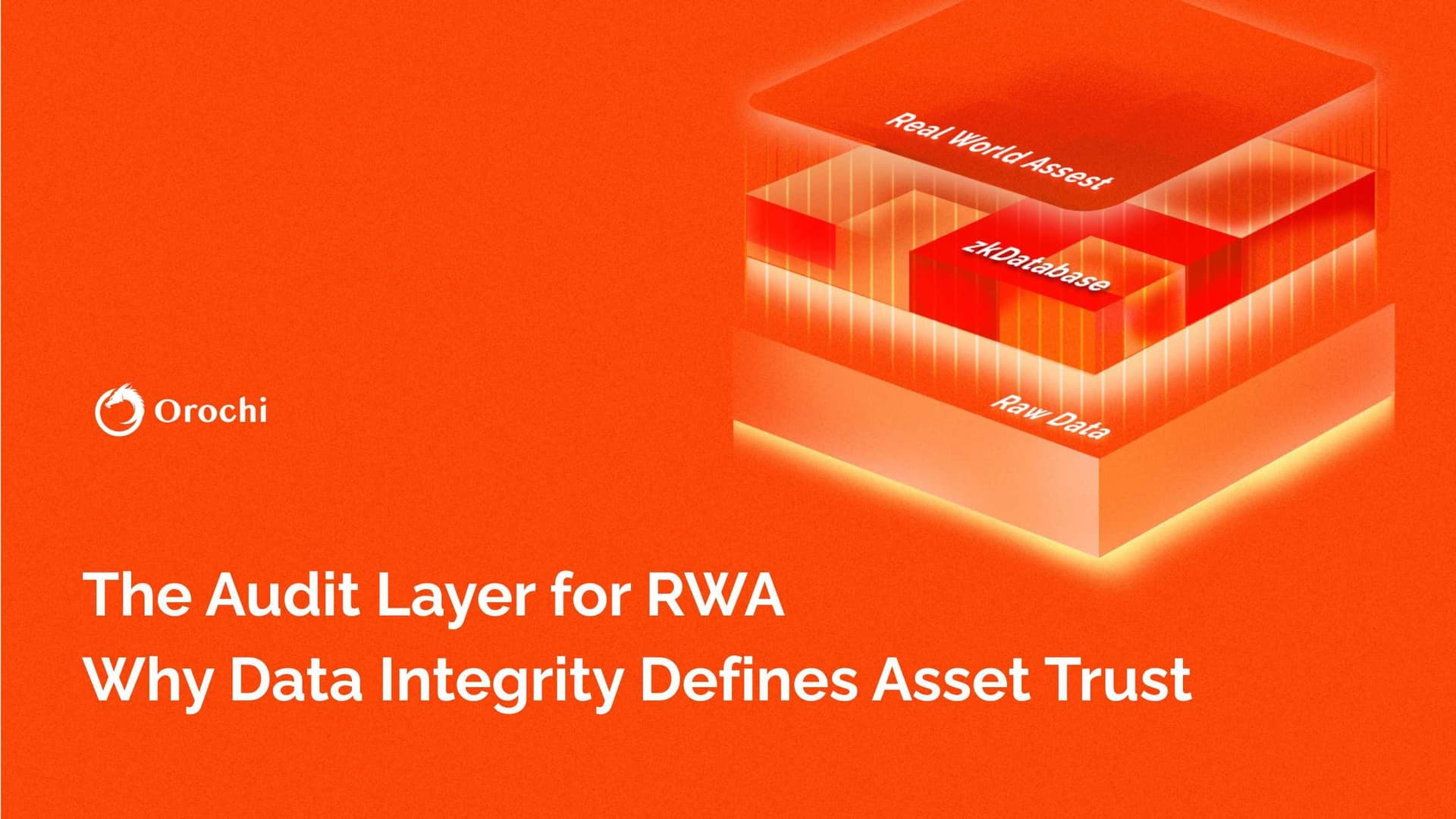
The Audit Layer for RWA: Why Data Integrity Defines Asset Trust
December 9, 2025
11 mins read
Learn why the RWA Audit Layer is essential for data integrity, compliance, and trust in RWA tokenization using verifiable data and cryptographic proofs


The** RWA Audit Layer** sits at the center of every trustworthy tokenization ecosystem because it determines whether digital assets truly represent the real-world assets backing them. It provides the cryptographic, procedural, and operational guarantees needed to prove authenticity, correctness, and compliance. In today’s RWA markets, data integrity, the assurance that data is accurate, complete, and tamper-proof, defines whether investors, regulators, and enterprises can trust on-chain representations of real assets.
A modern RWA Audit Layer ensures that every lifecycle event, issuance, valuation, compliance checks, collateralization, redemption is verifiable. Platforms now rely on verifiable data, unified audit frameworks, and a provable pipeline rather than manual reports. As a category leader, Orochi Network’s zkDatabase offers the infrastructure to cryptographically validate every operation in the RWA data lifecycle, setting a new standard for institutional trust.
What Is the RWA Audit Layer and Why Does It Matter for Asset Trust?
The RWA Audit Layer is a structured system of technical and procedural controls that ensures tokenized assets accurately reflect their real-world counterparts.
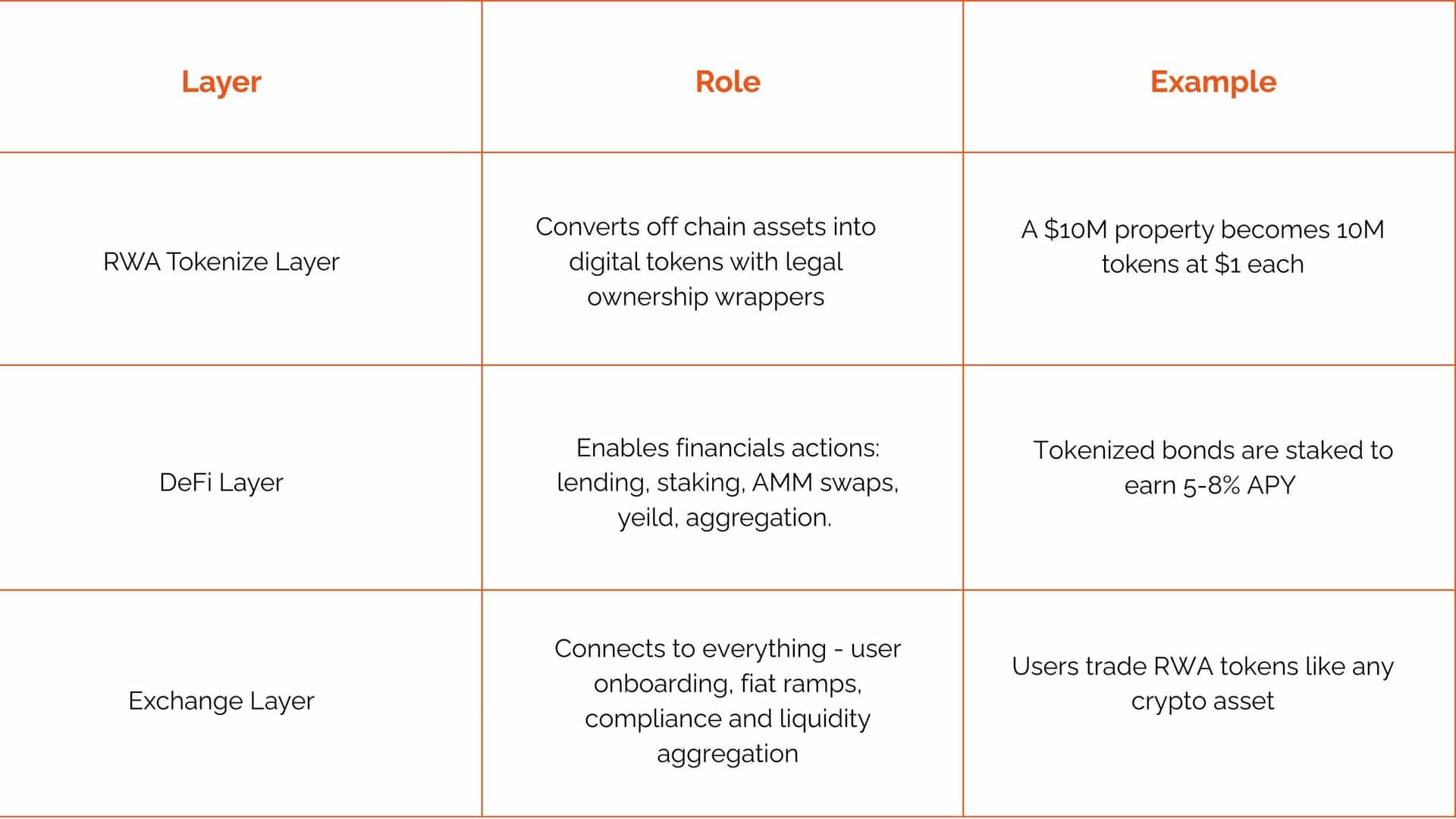
Built on modern Verifiable Data Infrastructure such as zkDatabase, the audit layer proves the integrity of documents, valuations, ownership rights, and compliance workflows.
Traditional audits rely on periodic human-led verification and static PDF reports. In contrast, crypto-native audits embed continuous, cryptographic guarantees into the asset lifecycle. Instead of trusting intermediaries, platforms rely on Zero-
Knowledge Proofs, commitment logs, and automated validation.
This shift matters because data integrity directly influences asset credibility and market trust. When every operation can be proven, not assumed, RWA systems become safer, more auditable, and institution-ready.
How Does the RWA Audit Layer Establish Data Integrity Across Off-Chain and On-Chain Systems?
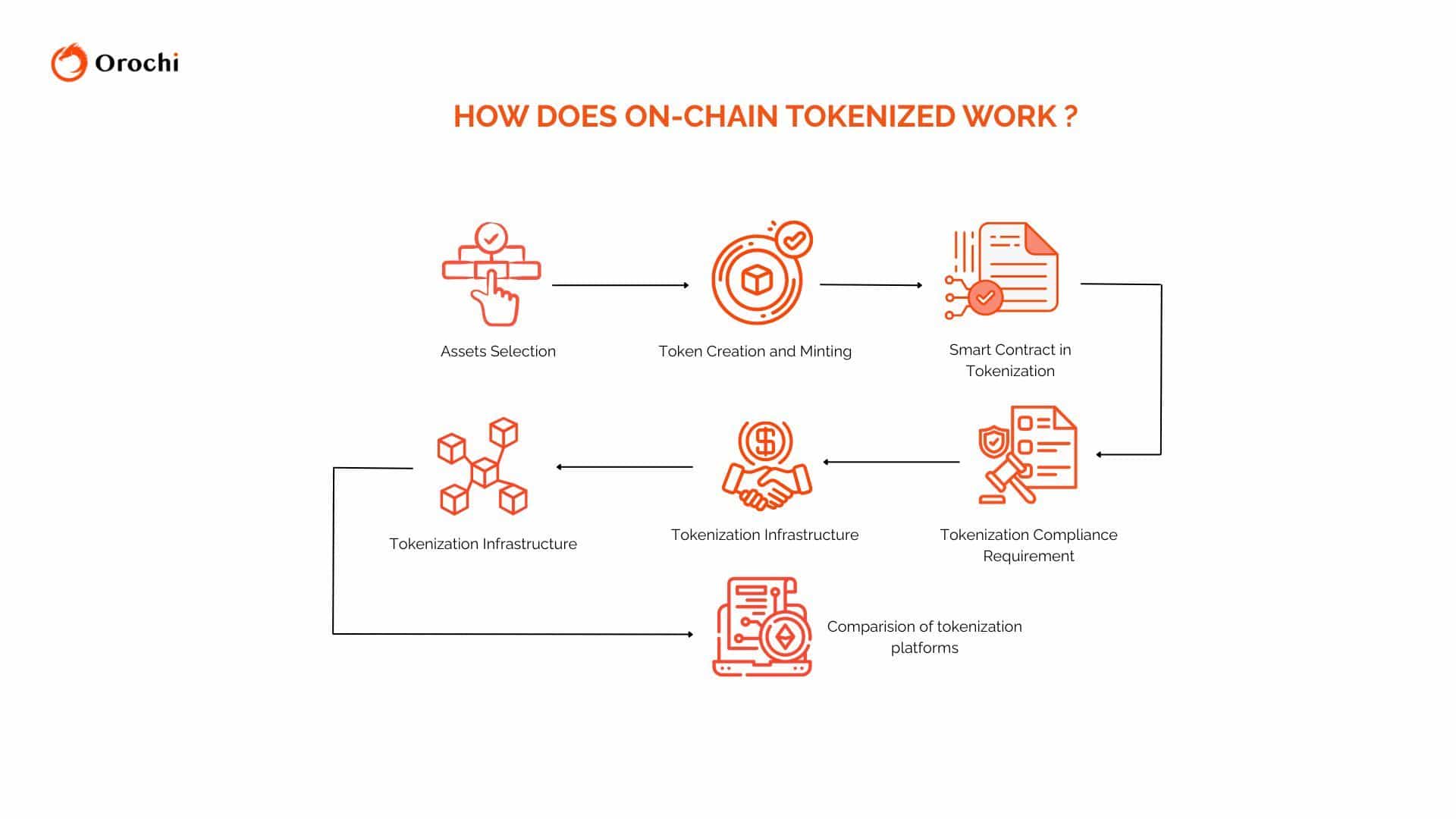
The biggest challenge in RWA tokenization lies in the off-chain → on-chain workflow.
Documents such as appraisals, legal deeds, KYC records, and custody reports originate off-chain. When these records are referenced on-chain, inconsistencies, omissions, or manual errors can introduce systemic risk.
A verifiable off-chain to on-chain workflow ensures that every off-chain document is hashed, committed, and provably linked to its on-chain representation. This prevents silent updates, unauthorized modifications, or mismatched valuations. This process underpins data integrity in tokenization.
Zero-Knowledge Proofs (ZKPs) serve as the backbone of this transformation. With ZKP systems such as Halo2 or Plonky3, a platform can reveal proof of correctness without disclosing private data.
For example: A property valuation firm can commit the appraisal data into zkDatabase.
- The platform generates a ZKP proving the valuation was performed under compliant criteria.
- The RWA protocol uses this proof to mint tokens backed by verified collateral, without exposing sensitive financial details.
- This applied ZKP use case removes the need for trust in intermediaries and replaces it with mathematically guaranteed verification.
What Are the Core Components of a Modern RWA Audit Layer?
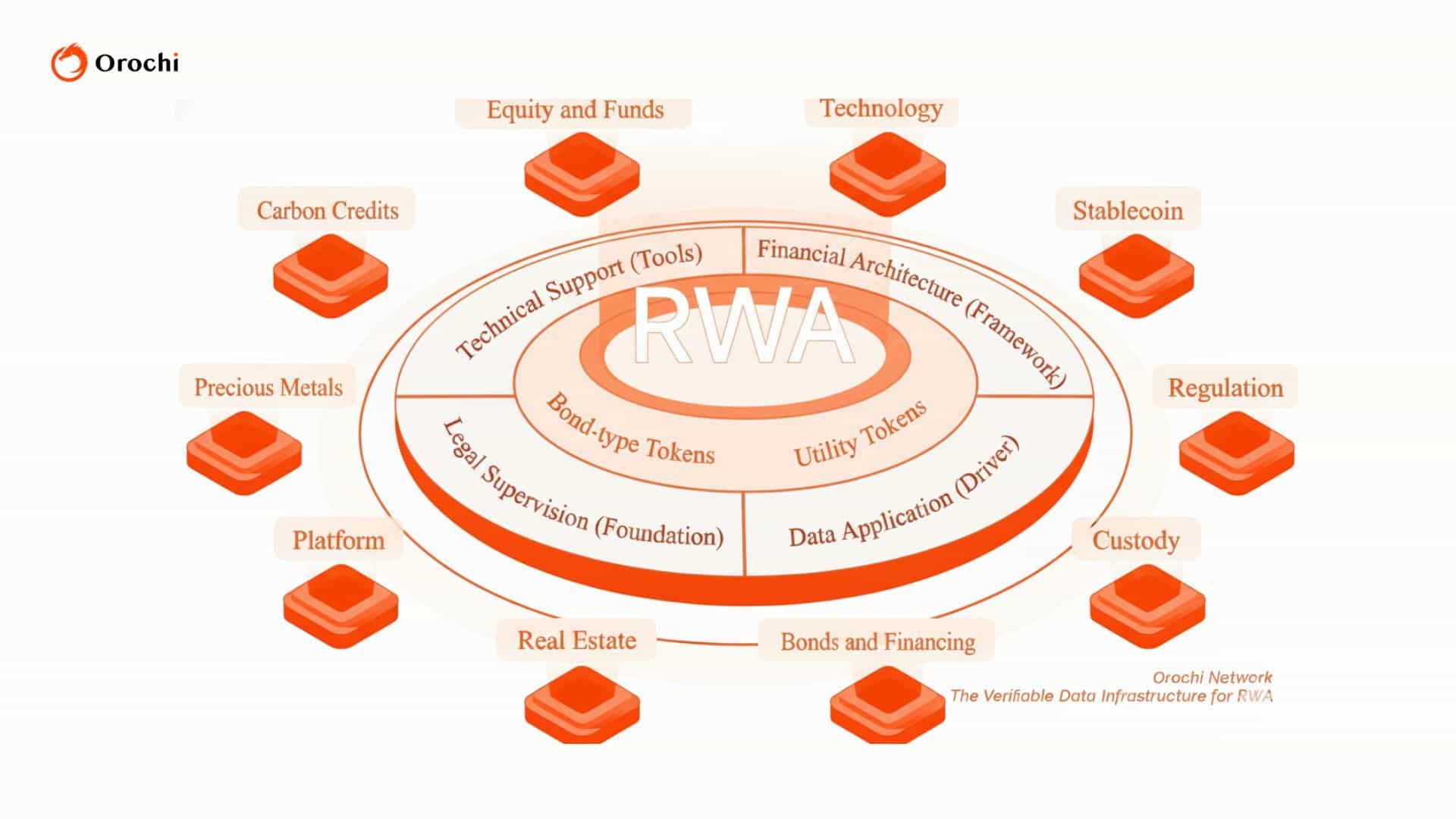
A fully developed RWA Audit Layer integrates four pillars: smart contract audit, asset attestation, cybersecurity, and data verification. These components work together to ensure the authenticity and safety of tokenized assets throughout their lifecycle.
Modern architectures incorporate RWA audit frameworks and cryptographic methods to avoid reliance on manual reports.
Why Is Smart Contract Logic Critical for RWA Lifecycle Assurance?
RWAs are governed by legal rights, ownership, yield distribution, liquidation rules. Smart contracts must accurately encode these rights, making smart contract audit essential. Any mismatch between legal agreements and programmatic logic exposes users to financial and regulatory risks.
Audits validate:
- Access control roles
- Minting and burning procedures
- Liquidation and redemption logic
- Upgradeability and governance risks
Without precise audit trails, RWA protocols cannot guarantee correct token behavior when market or legal conditions change.
How Does Asset Attestation and Proof-of-Reserve Strengthen Investor Trust?
Investors must know that tokenized assets have real, verifiable backing. Proof-of-reserve attestation for RWAs addresses this need.
Key mechanisms include:
- Merkle proofs: Verifying that asset records match on-chain commitments.
- Custodial verification: Validating that custodians physically or legally control the asset.
- Independent valuation: Ensuring that appraisal processes meet regulatory standards.
These proofs prevent over-issuance and guarantee the 1:1 relationship between tokens and underlying assets.
How Does Cybersecurity Fit into the RWA Audit Layer Architecture?
Because RWA platforms combine Web2 data systems with Web3 execution, they are vulnerable to hybrid Web2–Web3 audit pipeline attacks.
- Database manipulation (changing valuation files)
- API/Oracle interception
- Private key leaks
- User data breaches
- A cybersecurity-aware audit layer enforces authenticated data ingestion, encrypted off-chain storage, and proofs for every transformation. This ensures end-to-end verifiability rather than relying on trusted servers.
Why Is Data Integrity the Foundation of RWA Trust?
Data integrity represents the accuracy, consistency, completeness, and immutability of data throughout its lifecycle. In RWA tokenization, this means every fact, asset value, legal ownership, compliance status, must remain verifiable and tamper-resistant.
Global frameworks like MiCA, AICPA Trust Criteria, and Hong Kong’s SFC/HKMA guidelines increasingly require verifiable, audit-ready data. Without integrity, no compliance certificate, investor guarantee, or token valuation can be trusted.
What Are the Most Common Data Integrity Risks in RWA Tokenization?
RWA platforms face several risks that threaten verifiable data:
- Human error: Incorrect inputs, oversight, uncoordinated document updates.
- Oracle manipulation: Price feeds or API data becoming corrupted.
- Metadata injection: Off-chain documents being altered without updating commitments.
- Cross-chain inconsistencies: Asset state diverging across networks.
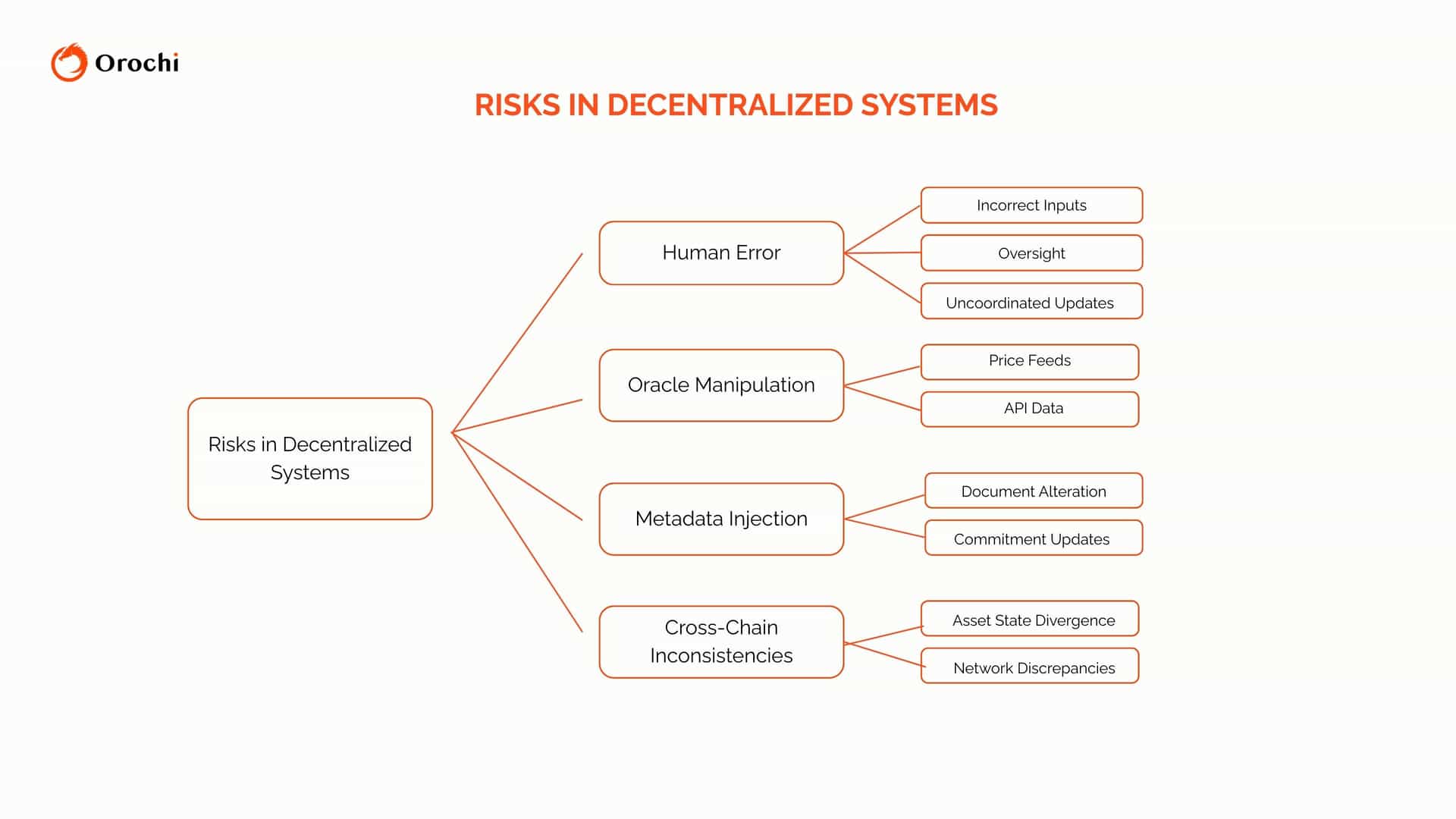
Each of these weak points can lead to mismatched valuations, non-compliant tokens, or regulatory breaches.
How Do Audit Trails, ZKPs, and Commitment Logs Resolve These Risks?
A provable pipeline ensures that every operation, insert, update, query, is accompanied by verifiable proofs.
Using zkDatabase:
- Commitment roots store immutable references.
- Proofs for insert/update/query confirm that operations happened correctly.
- Cross-chain verification ensures that commitments match across networks.

These cryptographic guardrails create an RWA system where integrity is guaranteed rather than assumed.
How Do Global Regulators Shape the RWA Audit Layer Requirements?
Regulators increasingly mandate verifiable audit mechanisms. A Hong Kong RWA compliance audit exemplifies this shift. Under the SFC and HKMA, tokenization platforms must demonstrate secure custody, correct valuation, continuous auditability, and transparent investor protection structures.
Worldwide forces shaping RWA standards include:
- SFC/HKMA: LEAP Framework, stablecoin licensing, AI risk governance
- MiCA: Asset-referenced tokens, reserve management, audit transparency
- AICPA: Real-time attestation requirements
- DORA: Operational resilience for financial systems
What Does the Hong Kong Regulatory Model Reveal About the Future of RWA Audits?
Hong Kong’s regulatory blueprint provides one of the clearest signals globally that the future of RWA tokenization will depend on continuous, cryptographically provable audit layers, not ad-hoc compliance checks.
The combination of the LEAP Framework, the Stablecoin Licensing Regime, and the AI Governance Mandate forms an integrated supervisory architecture where transparency, traceability, and verifiable risk controls are baseline expectations, not optional enhancements.
The LEAP Framework: A Unified, Risk-Based Governance Structure
Unveiled under the “Policy Statement 2.0 on the Development of Digital Assets” (June 26, 2025), the LEAP Framework (“Legal, Enhancement, Accreditation, and Protection”) centralizes oversight of digital asset service providers across exchanges, custodians, brokers, and RWA platforms.
Key implications for RWA audits:
- Mandatory lifecycle auditability: Platforms must demonstrate that valuation, ownership, custody, and compliance data can be validated at any point, not only during annual reviews.
- Full data lineage requirements: Regulators expect to see verifiable histories: who created data, who modified it, how it was used, and whether it aligns with licensing conditions.
- Intermediary accountability: Custodians, trustees, valuation firms, and tokenization issuers must all operate under transparent audit controls with defined responsibilities.
This pushes the industry toward immutable audit trails, cryptographic proofs of correctness, and tamper-resistant data models.
Stablecoin Licensing: Raising the Standard for Proof-of-Reserve
Hong Kong's new fiat-referenced stablecoin regime is a turning point for RWAs because it sets precedent for how tokenized financial instruments must be verified.
Under the rules issued by the HKMA:
- Reserves must be continuously attested, not just periodically checked.
- Proof of solvency and liquidity must be demonstrable in real time.
- Operational risk controls, including custody of backing assets, must follow audit-grade verification.
If stablecoins require real-time attestations and verifiable reserve data, RWA tokenization will inevitably be held to the same or higher standards, especially when representing property, credit, commodities, or securities.
This reinforces the shift toward proof-based audit layers, such as ZKP-backed verification of ownership, valuation, and reserve composition.
Why Are Enterprises Demanding Verifiable Data Infrastructure for RWAs?
Enterprises entering the RWA ecosystem, banks, custodians, asset managers, insurers, and regulated tokenization platforms, require cryptographic guarantees because traditional reporting frameworks no longer meet regulatory demands or operational risk thresholds. Institutions cannot rely on PDFs, spreadsheets, or internal attestations to validate asset ownership, valuation accuracy, or lifecycle compliance.
The shift is happening for three core reasons:
- Regulatory pressure for continuous auditability
- Rules from MiCA, HKMA, SFC, AICPA, and MAS require ongoing proof of reserve, proof of ownership, and proof of compliance rather than annual reporting. Enterprises need real-time, machine-verifiable evidence, not narrative summaries.
- Operational risk mitigation: Incorrect valuations, duplicated documents, or mismatched records expose institutions to legal liabilities and capital adequacy issues. A Verifiable Data Pipeline prevents unauthorized edits, ensures provenance, and reduces human-driven errors.
Cross-chain expansion and interoperability requirements: Institutions increasingly operate across Ethereum, Solana, Base, and private chains. To maintain a single source of truth, they require audit layers capable of cross-chain verification and unified data commitments.
Because of these needs, enterprises gravitate toward infrastructures that provide cryptographic proof of correctness across the entire asset lifecycle. Therefore, Orochi Network stands out by enabling audit-grade verifiability without exposing sensitive internal data, matching both institutional privacy requirements and regulatory expectations.
How Does a Verifiable Data Infrastructure Enable the RWA Audit Layer?
A verifiable data infrastructure is the backbone that transforms auditability from a manual, retrospective process into an automated, real-time guarantee. Instead of relying on centralized databases or custodial reports, RWA systems must ensure that every asset onboarding, valuation update, transfer, compliance check, and redemption request is recorded as a provable event.
A modern RWA Audit Layer relies on two structural elements:
-
Immutable Commitment Logs: All off-chain data, legal documents, appraisals, KYC/KYB files, compliance checks—is hashed and committed immutably. This prevents silent modifications and establishes a consistent truth reference across chains and applications.
-
Provable Operations: Every operation (insert, update, query) must be accompanied by cryptographic evidence proving the action was performed correctly and in compliance with predefined rules.
This architecture eliminates trust in internal systems and replaces it with verifiable integrity, making the audit layer fully reproducible, regulator-ready, and tamper-resistant.
zkDatabase directly enables this model by providing the ability to store commitments, generate proofs, and verify operations across chains, positioning it as foundational infrastructure for RWA auditability.
Why Is Proof-Agnostic, Chain-Agnostic Design Essential for Long-Term RWA Scalability?
The RWA market will not live on a single blockchain. Institutions already issue assets across:
- Ethereum (institutional settlement)
- Solana (high-performance tokenization)
- Layer-2s (scalability and cost efficiency)
- Permissioned chains (bank-grade environments)
- Interoperability networks (cross-chain liquidity)
Without chain-agnostic verification, audit layers fragment, creating inconsistent standards and incompatible compliance frameworks. Likewise, proof-agnostic design is essential because the ZKP landscape evolves quickly. Systems must support Halo2 today, Plonky3 or Nova tomorrow, and possibly entirely new backends in the future, without rewriting the entire application stack.
Conclusion
The RWA Audit Layer ultimately determines whether tokenized assets can earn long-term trust from investors, enterprises, and regulators. As RWA ecosystems scale, data integrity becomes the foundation that supports every valuation, ownership transfer, compliance check, and lifecycle event.
Without verifiable, tamper-proof data, RWAs cannot meet the demands of regulated markets or institutional-grade asset management. To achieve this standard, platforms must adopt audit layers built on cryptographic guarantees rather than traditional assumptions. This is where zkDatabase becomes essential—providing the verifiable data infrastructure that proves correctness, enforces compliance, and enables fully auditable workflows across chains and systems.
Start building with provable data and explore how zkDatabase can power secure, compliant, enterprise-ready RWA pipelines.
FAQs
What is the RWA Audit Layer and why is it essential?
The RWA Audit Layer is a set of technical and procedural controls that ensures tokenized assets accurately reflect their real-world counterparts. It embeds cryptographic guarantees, like commitment logs and Zero‑Knowledge Proofs.
How does zkDatabase improve data integrity for RWA platforms?
zkDatabase provides immutable commitments and provable operations (insert/update/query) with cryptographic proofs. This creates a verifiable pipeline across off‑chain and on‑chain systems, preventing silent edits, proving correctness, and enabling cross‑chain verification without exposing sensitive data, meeting MiCA, HKMA/SFC, and AICPA expectations.
Why must RWA audit layers be proof‑agnostic and chain‑agnostic?
The RWA market spans Ethereum, Solana, Layer‑2s, permissioned chains, and interoperability networks. A proof‑ and chain‑agnostic design avoids fragmented standards and future‑proofs systems as ZKP backends evolve (e.g., Halo2, Plonky3, Nova), ensuring consistent verification and compliance across ecosystems.
Related toResearch