Real - World Assets
How RWA Protocols Use zkDatabase for Document Integrity
January 12, 2026
9 mins read
RWA protocols need document integrity, not more PDFs. See how zkDatabase uses ZK proofs to verify custody, PoR, and NAV in real workflows without leaks.


RWA protocols are scaling fast, but the limiting factor is rarely blockspace. It is documentation. In real integration, the first request is not a contract address, it is the latest custodian statement.
Market data hints at the pace. RWA.xyz currently reports about $18.88B in distributed tokenized real-world assets and roughly $8.84B in tokenized U.S. Treasuries. On the private credit side, it shows active on-chain loans around $18.03B and total loans value around $29.09B. When value climbs, counterparties stop asking “is this on-chain?” and start asking “can I verify the paperwork behind it?”
This analysis explains why document integrity is the bottleneck, what “verifiable” should mean in practice, and how zkDatabase can turn document workflows into proof-backed pipelines that can be checked without exposing sensitive data.
What are RWA protocols and what documents do they depend on?
RWA protocols coordinate how real-world assets are represented, transferred, and constrained on public blockchains. The on-chain token is only the visible surface. The real trust layer is the document set that proves ownership, custody, valuation, and compliance.
Which off-chain documents typically sit behind RWAs?
- Custody statements and custodian reports
- Legal ownership docs (SPV or trust structure, titles, contracts)
- Valuation reports and NAV inputs
- Reserve reporting, including Proof of Reserves style attestations
- Compliance evidence (KYC and AML controls, audit artifacts)
- Cashflow and reconciliation reports
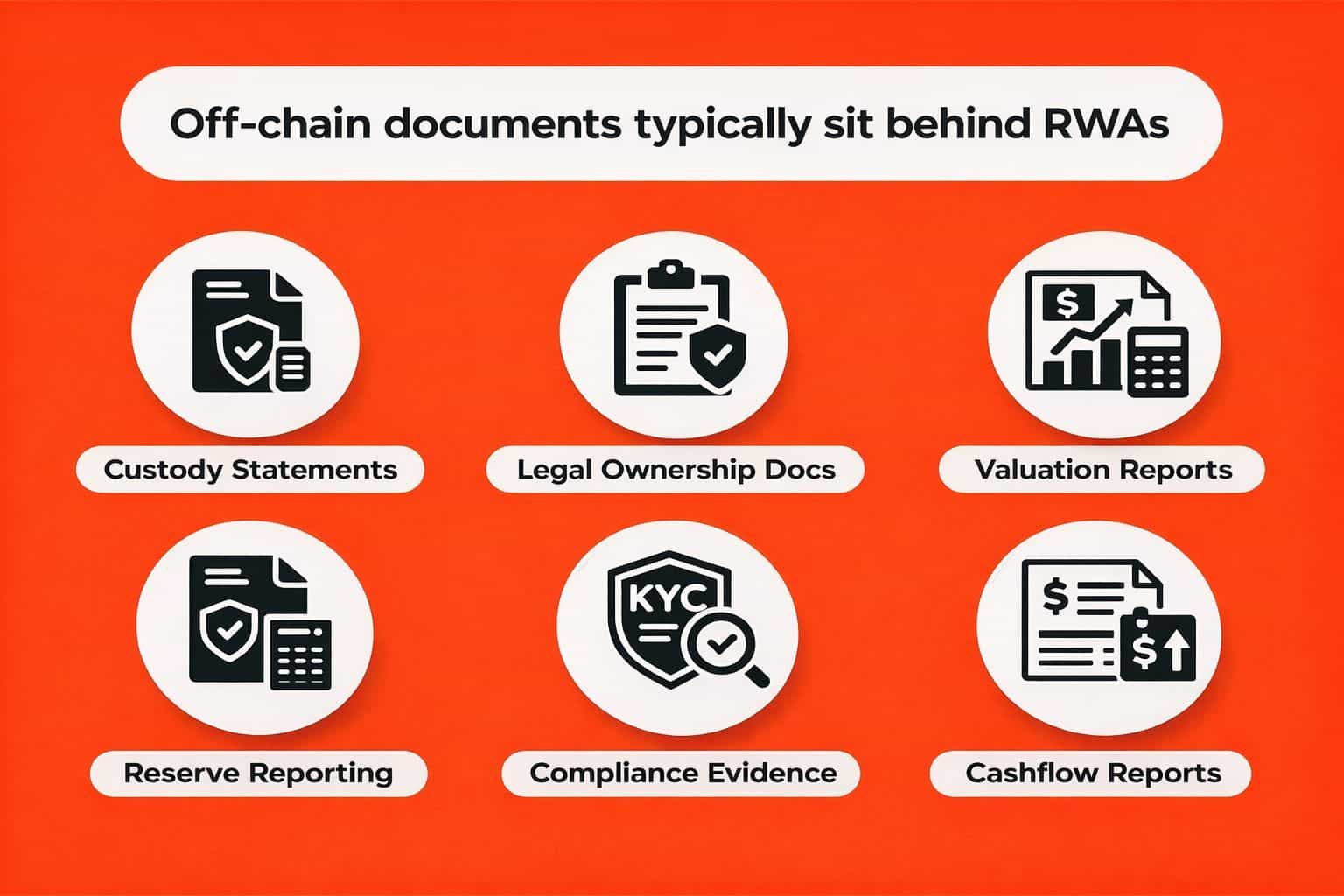
If those artifacts are editable without detection, late, or incomplete, the token becomes a promise instead of a verified claim. That is why RWA protocols that treat documentation as a first-class product surface tend to integrate faster.
Why is document integrity the bottleneck for RWA protocols today?
Tokenization improves settlement and composability, but it does not fix the weakest part of the stack: evidence production. Most proofs of ownership, reserves, and valuations still arrive as PDFs and spreadsheets. They were built for periodic review, not continuous verification.
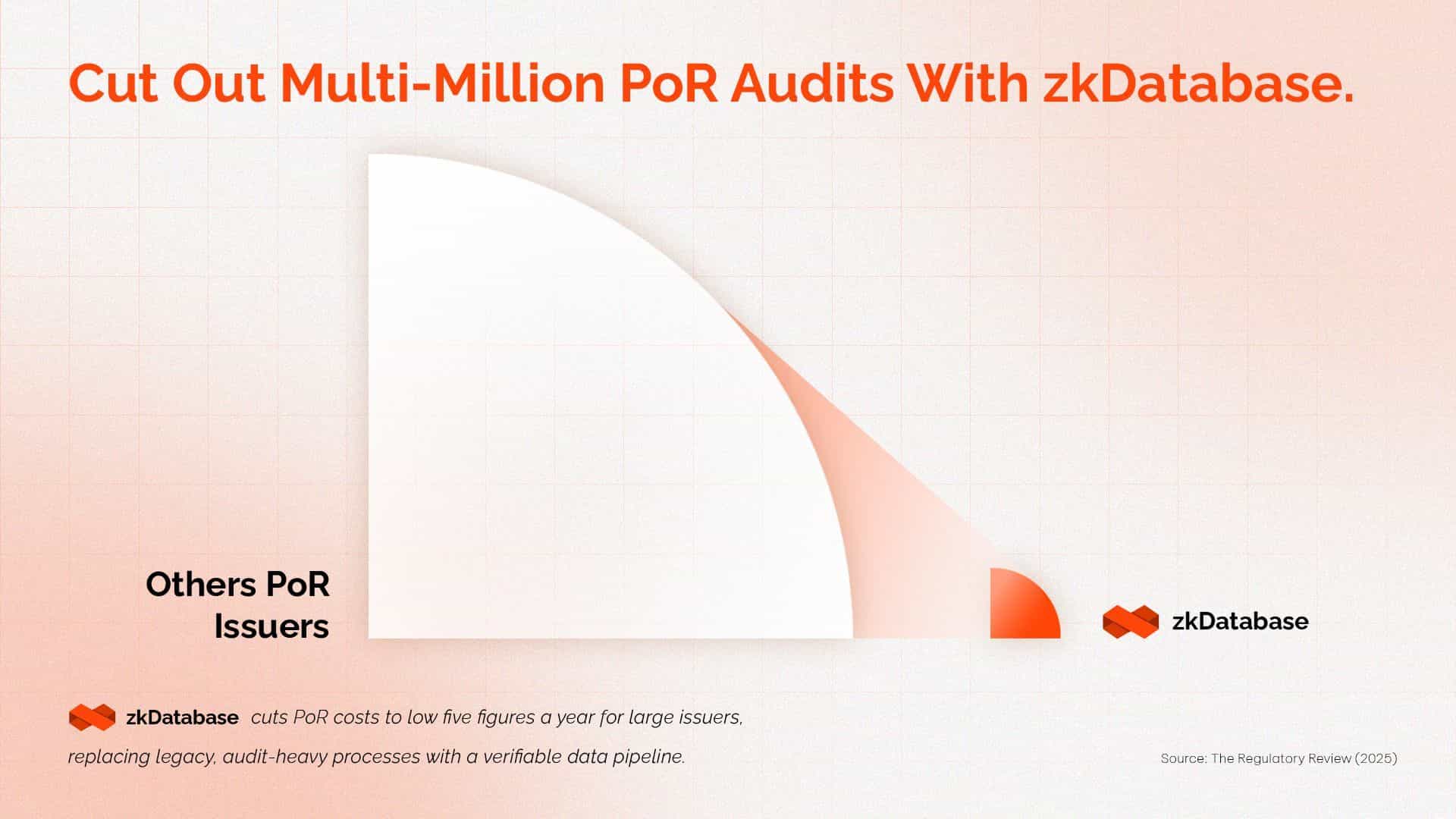
Stablecoin reporting shows the same failure mode. Research describing USDC’s model notes that monthly attestation reports are retrospective checks verified by a third party, and that assurance depends on issuer and auditor honesty. Reuters reported Tether pursuing a long-promised reserve audit with a Big Four firm. On the cost side, a November 2025 Regulatory Review analysis cites industry auditing cost estimates of $1.8M to $6M annually for large issuers. The Financial Stability Board’s October 2025 thematic review also notes that while regulation is progressing, gaps and inconsistencies remain, including around global stablecoin arrangements.
Where do integrity failures show up first?
- Source fragmentation: custodians, administrators, and issuers each hold a slice of the truth.
- Version drift: the “latest” document is often just the last file shared.
- Lag: attestations land after the period closes, not when risk changes.
- Weak trails: edits and approvals are not cryptographically bound to time and identity.
- Privacy constraints: sensitive legal and investor data cannot be made public.
This is why many RWA launches feel “on-chain,” but operate “off-chain.”
How does zkDatabase prove document integrity without revealing sensitive data?
Zero-Knowledge Proofs (ZKPs) are cryptographic receipts, prove a statement is true without revealing the underlying data. In document workflows, that statement might be “this reserve report matches the latest custody state” or “this NAV output was computed from the signed inputs.”
zkDatabase applies ZKP to the data layer. zkDatabase docs describe retrieving ZKPs that verify database operations without revealing sensitive data, including fetching proofs tied to rollup steps. At a product level, zkDatabase as a provable database designed for verifiability at the point where off-chain systems typically leak trust.
For RWA protocols, this matters because most integrity failures happen at the data boundary. If the system can produce verifiable proofs of reads, writes, and state transitions, document workflows stop being “audited later” and start being verifiable by design.
What does privacy-preserving verification mean for document workflows?
It usually means three things:
- Sensitive document content stays private, while integrity claims remain verifiable.
- Critical computations (PoR, NAV, reconciliation) can produce proofs of correctness.
- External parties can verify proofs without privileged database access.
That is the difference between “trust my report” and “verify my state.”
How can RWA protocols build a provable document pipeline with zkDatabase?
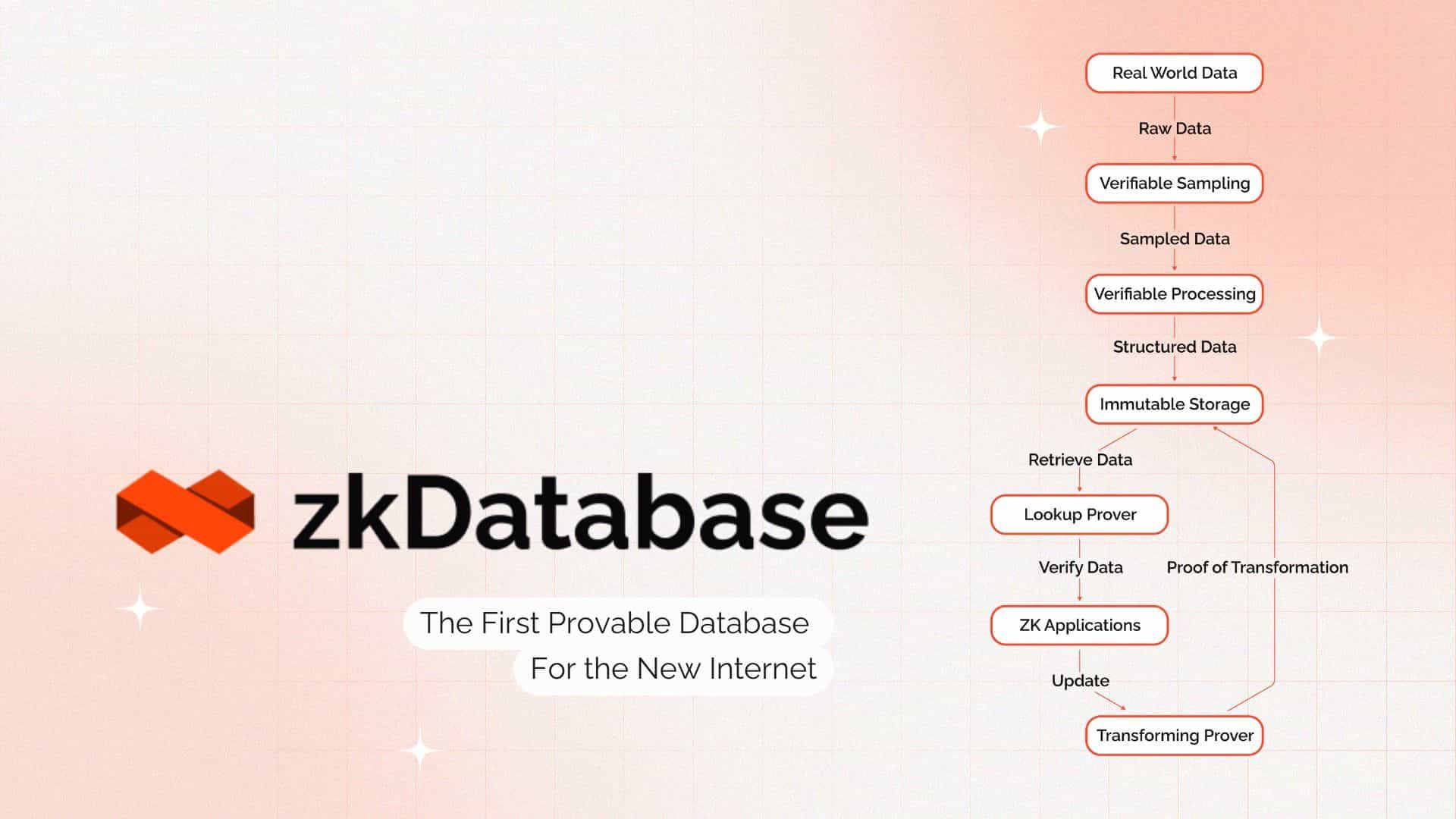
A provable pipeline is state plus rules plus verification. The goal is that every meaningful change and every reported result can be traced to a verifiable history.
What are the minimum steps in a zkDatabase-based integrity pipeline?
- Ingest documents and normalize metadata (issuer, asset, period, signatures).
- Define integrity rules (who can update, required sign-offs, valid revision paths).
- Commit state changes with strict versioning, not ad hoc file replacement.
- Run report queries and computations (reserves, NAV, exceptions).
- Generate proofs that bind results to a specific database state.
- Publish verification endpoints for partners, auditors, and smart contracts.
- Export an audit package: proofs, timestamps, lineage, and policy logs.
Done well, auditing becomes faster because the system is already producing verifiable evidence.
Where do RWA protocols apply document integrity proofs in real workflows?
Start where document drift has the highest blast radius and the clearest business payoff.
Tokenized Treasuries are a good example. RWA.xyz shows tokenized U.S. Treasuries around $8.84B, and the Financial Times reported strong growth in tokenized Treasury and money market funds through 2025.
Proof of Reserves as a verifiable claim tied to a timestamped custody state
RWA protocols can turn PoR from a static PDF into a proof-backed reserve claim that can be verified without exposing raw statements.
- Prove a reserve report is consistent with custody data at a specific timestamp
- Publish the proof without publishing raw bank or custodian statements
- Keep sensitive reserve details private while making integrity independently verifiable
- Move PoR from “PDF evidence” to a state-bound verification artifact
Verifiable NAV and valuation documents bound to signed inputs and reproducible rules
RWA protocols can make NAV outputs verifiable by binding each result to signed inputs, pricing sources, and timestamped positions.
- Bind NAV outputs to signed input sets, pricing sources, and timestamped positions
- Prove the valuation followed defined rules when challenged
- Preserve confidentiality by proving correctness without revealing the full portfolio
- Improve auditability through reproducible outputs tied to verifiable document lineage
Custody reconciliation with exception proofs for mismatches
RWA protocols can make reconciliation a verifiable workflow that proves matches and isolates discrepancies without disclosing full internal ledgers.
- Prove internal ledgers reconcile with custodian statements for a defined period
- Generate exception proofs that surface mismatches and their scope
- Maintain privacy by avoiding full ledger disclosure while enabling verification
- Replace ad hoc reconciliation with repeatable, proof-driven integrity checks
How can you audit RWA protocols’ documents for verifiability before integration?
Before integrating, check whether the document system is designed for independent verification or for periodic persuasion.
What are the common "red flags" when RWA protocols claim verifiability?
Not all claims of verifiability are created equal. In RWA systems, weak verification often hides behind familiar artifacts and trusted processes, rather than independently checkable proofs. The following red flags signal when “verifiable” is being used as a label, not a guarantee.
- “Verifiable” means a logo on a PDF, not a proof that can be checked.
- Prior versions can be overwritten or deleted.
- Verification requires private keys or privileged API access.
- The system can state the number, but cannot prove why it is correct.
If the answer is still “we can share the latest PDF,” the integration risk remains high.
How can RWA protocols deploy verifiable document integrity using zkDatabase?
Orochi Network positions zkDatabase as part of a broader Verifiable Data Infrastructure aimed at making off-chain data integrity provable across systems. The zkDatabase docs show that database operations can be accompanied by Zero-Knowledge Proofs, enabling verification without revealing sensitive data. That aligns directly with the document integrity problem in RWA issuance, reporting, and integration.
For builders, the practical value is straightforward: zkDatabase turns “show me the paperwork” into “verify the paperwork,” without forcing every counterparty to receive the paperwork.
Explore zkDatabase and try it!
- Start with one workflow: PoR reporting, NAV snapshots, or custody reconciliation.
- Define the claims that must be verifiable, then bind them to database state and proofs.
- Share proofs and verification paths with partners, so due diligence becomes faster and less subjective.
Conclusion
RWA protocols will not differentiate on token mechanics alone. The real differentiator is whether their documents, calculations, and disclosures can withstand continuous scrutiny as asset value scales. Document integrity is no longer a reporting concern; it is an operational requirement.
Proof-based data pipelines resolve the long-standing trade-off between privacy and verifiability. They enable RWA protocols to prove correctness on demand, without exposing raw documents or sensitive counterparty information. This is the problem space that zkDatabase is designed to address at the data layer.
Orochi Network develops zkDatabase as part of a broader effort to make verifiable data usable in real institutional workflows. As RWA adoption moves from pilots to production, document integrity will quietly become part of the default stack, alongside custody, pricing, and compliance systems.
FAQs
Question 1: What does document integrity mean for RWA protocols?
Document integrity in RWA protocols ensures that custody, Net Asset Value (NAV), and Proof of Reserves (PoR) records are tamper-evident and versioned. It establishes a cryptographic audit trail, allowing stakeholders to independently verify the authenticity of off-chain data without relying on centralized trust.
Question 2: How do RWA protocols use zkDatabase to verify off-chain documents without exposing data?
zkDatabase utilizes Zero-Knowledge Proofs (ZKPs) to validate database queries and state changes. This allows RWA protocols to prove document validity and compliance to external partners while keeping sensitive fields private, effectively bridging the gap between transparency and data confidentiality.
Question 3: How can RWA protocols be audited for document verifiability?
Auditing involves verifying immutable version history, document provenance, and reproducible PoR/NAV outputs. A verifiable RWA protocol must provide a cryptographic path that allows auditors to confirm the state of off-chain documents without requiring privileged access to the underlying sensitive raw data.
Related toReal - World Assets