Research
Market Outlook 2026: Crypto Grows Up
February 1, 2026
14 mins read
Market Outlook 2026 examines Stablecoins, RWA, AI, and why Orochi Network’s zkDatabase is critical for verifiable data infrastructure.


As we move through 2026, the landscape of decentralized technology has undergone a profound transformation. We have shifted from a period of intense experimentation and speculation to an era defined by production-grade infrastructure and regulatory compliance. The “wild west” of crypto has matured into a sophisticated digital economy where the primary bottlenecks are no longer transaction throughput alone, but whether the data fueling these systems can be trusted.
This year represents a definitive transition. Privacy regulations have tightened globally, Real World Asset (RWA) tokenization has moved from pilot programs to institutional mandates, and the rapid rise of AI-driven economic agents has created demand for data that is not just accessible, but provably correct. In this 2026 outlook, the market’s success hinges on the integrity of its data infrastructure, an emerging layer now being built by verifiable data platforms such as Orochi Network, which focus on proving data correctness, integrity, and privacy at scale.
What Defines the Crypto Market Outlook in 2026?
The 2026 market is characterized by the "invisibility" of blockchain technology. It is fading into the backend, becoming the plumbing for global finance and data services.
Why Are Stablecoin Becoming the Internet’s Settlement Layer?
In the 2026 market landscape, stablecoins have successfully decoupled from crypto-native speculation to become a core pillar of global financial plumbing. No longer viewed simply as trading pairs, stablecoin transaction volume is on track to reach an annual pace of $20–$25 trillion this year, rivaling or even surpassing the annual volumes of traditional giants like Visa.
This shift is driven by a massive transition in corporate treasury and B2B operations. Cross-border B2B stablecoin payments have accelerated to an annualized run rate of $36 billion, as enterprises seek to bypass the inefficiencies of correspondent banking. By utilizing stablecoin rails, businesses are reducing average remittance costs from the traditional 5% to approximately 2.5%, while slashing settlement times from the industry-standard T+2 days to near-instant (T+0) finality.
The institutionalization of this layer is supported by three major catalysts in 2026:
- Regulatory Graduation: With the full implementation of the EU’s MiCA and the U.S. GENIUS Act, stablecoins are now legally recognized as regulated payment instruments, mandating 1:1 liquid reserve backing and monthly third-party audits.
- Merchant Integration: Over 25,000 global merchants now accept stablecoins natively, supported by improved on/off ramps that make the underlying blockchain technology invisible to the end-user.
- Corporate Treasury Adoption: At least one Fortune 100 company has officially transitioned its global treasury operations to stablecoin-based liquidity management to eliminate the need for "dead capital" sitting in pre-funded accounts across multiple time zones.
Why Is Finance Moving Toward Programmable, Global Rails?
In 2026, the transition from legacy "siloed" ledgers to programmable, global rails has reached a critical inflection point. Traditional finance (TradFi) has moved beyond the pilot phase, recognizing that modernization is no longer a competitive advantage, it is a requirement for survival. The push is fueled by the realization that programmable money, specifically tokenized deposits, allows for the compression of the entire financial lifecycle into a single layer of code.
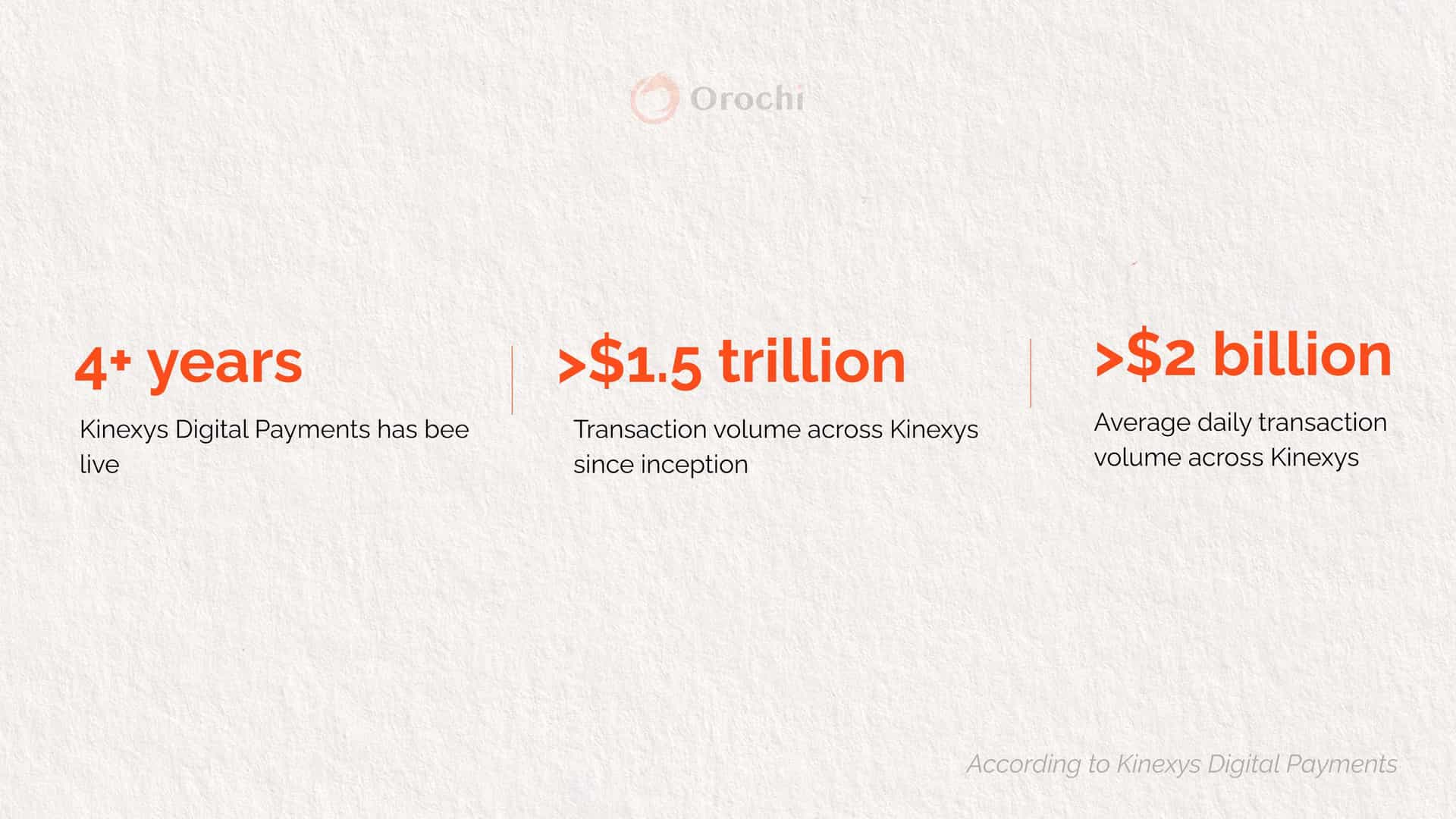
- J.P. Morgan’s Kinexys (formerly Onyx): As of 2026, the platform has processed over $1.5 trillion in notional value since its inception, with average daily transaction volumes exceeding $2 billion. More importantly, payment transactions have grown 10x year-over-year, demonstrating that institutions are now using these rails for daily operational liquidity, not just experimental trades.
The true power of 2026’s programmable rails lies in smart contract automation. By moving value into tokenized deposits, institutions are automating workflows that previously required hundreds of manual interventions:
- Automated Escrow: Funds for large-scale real estate or M&A transactions are now programmatically released only when specific off-chain conditions (verified via cryptographic proofs) are met.
- Real-Time Revenue Sharing: For complex global entities, revenue is now "streamed" to stakeholders and tax authorities in real-time, eliminating the need for monthly reconciliation cycles.
How Is Tokenization Evolving Beyond Simple Asset Wrapping?
In 2026, the tokenization market has fundamentally matured.() We have moved past "skeuomorphic" tokenization, simply creating a digital twin of a paper bond, toward crypto-native origination. Today, debt, credit, and real estate are increasingly "born on the ledger," with the global market for tokenized Real World Assets (RWA) projected to reach $16 trillion by 2030 (BCG & ADDX), a trajectory that has solidified in 2026 as institutions move from experimentation to commercial-scale deployment.
Why Is Crypto-Native RWA Tokenization Gaining Momentum?
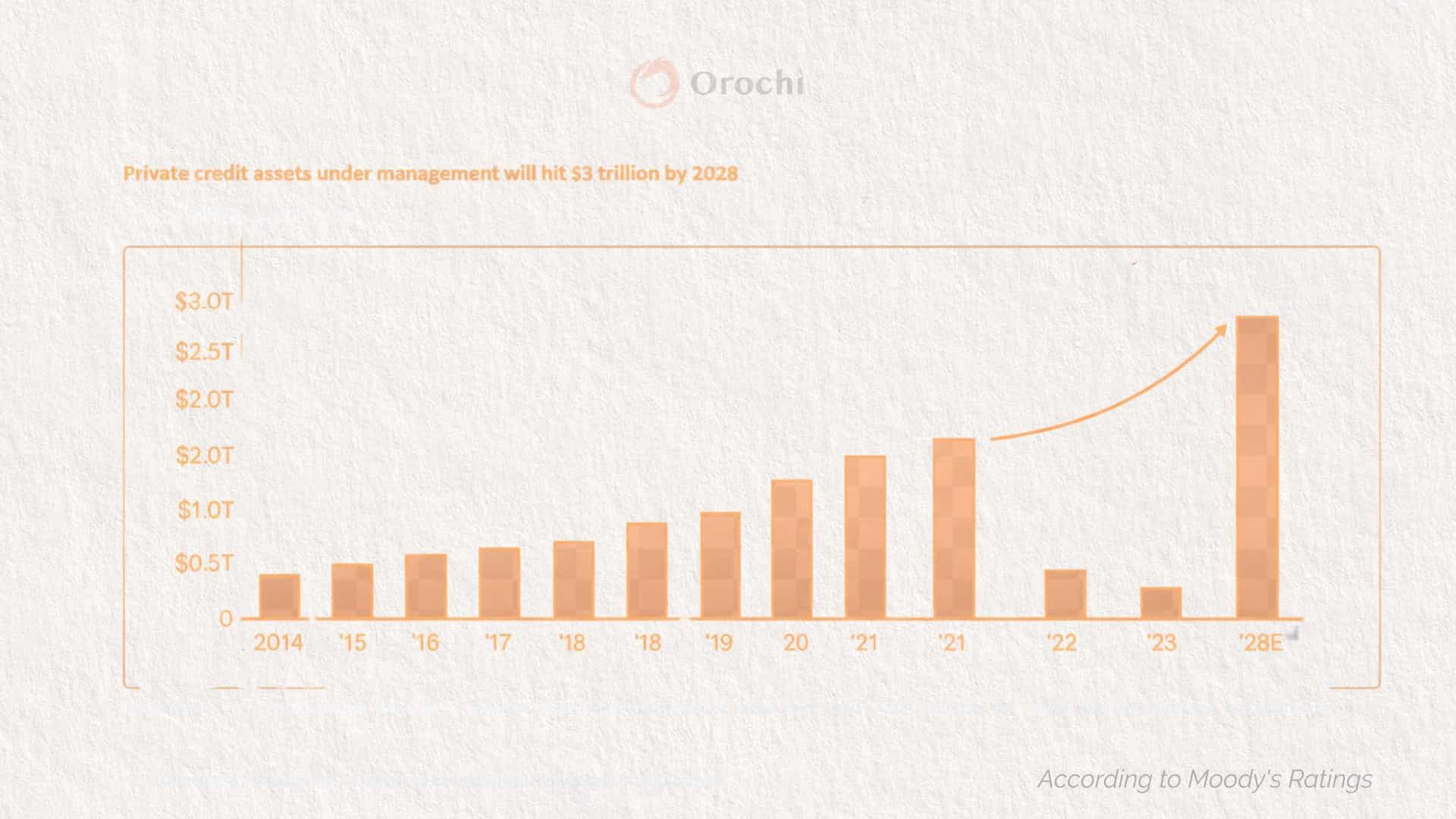
The momentum in 2026 is driven by the explosion of on-chain private credit, which has grown into a $2.5–$3 trillion market sector. Major financial players are no longer just testing the waters; they are operationalizing them.
- UniCredit and CDP recently structured the first fully tokenized minibond on a public blockchain, setting a precedent for European SME financing.
- J.P. Morgan successfully executed a landmark commercial paper issuance on a public blockchain, demonstrating that even the most conservative debt instruments now live on-chain.()
- Private Credit Dominance: Currently, private credit accounts for over 58% of the total RWA market share, surpassing even tokenized U.S. Treasuries. This surge is fueled by the need for fractional ownership and the ability to trade previously illiquid assets (like real estate debt or infrastructure financing) on global, 24/7 markets.
Why Does RWA Liquidity Depend on Verifiable Off-Chain Data?
The "Oracle Problem" has evolved into a "Solvency Risk." Trust-based documents do not scale in a $16 trillion market. If a tokenized building’s valuation is updated via a manual entry in a centralized database, the "on-chain" benefit is nullified.
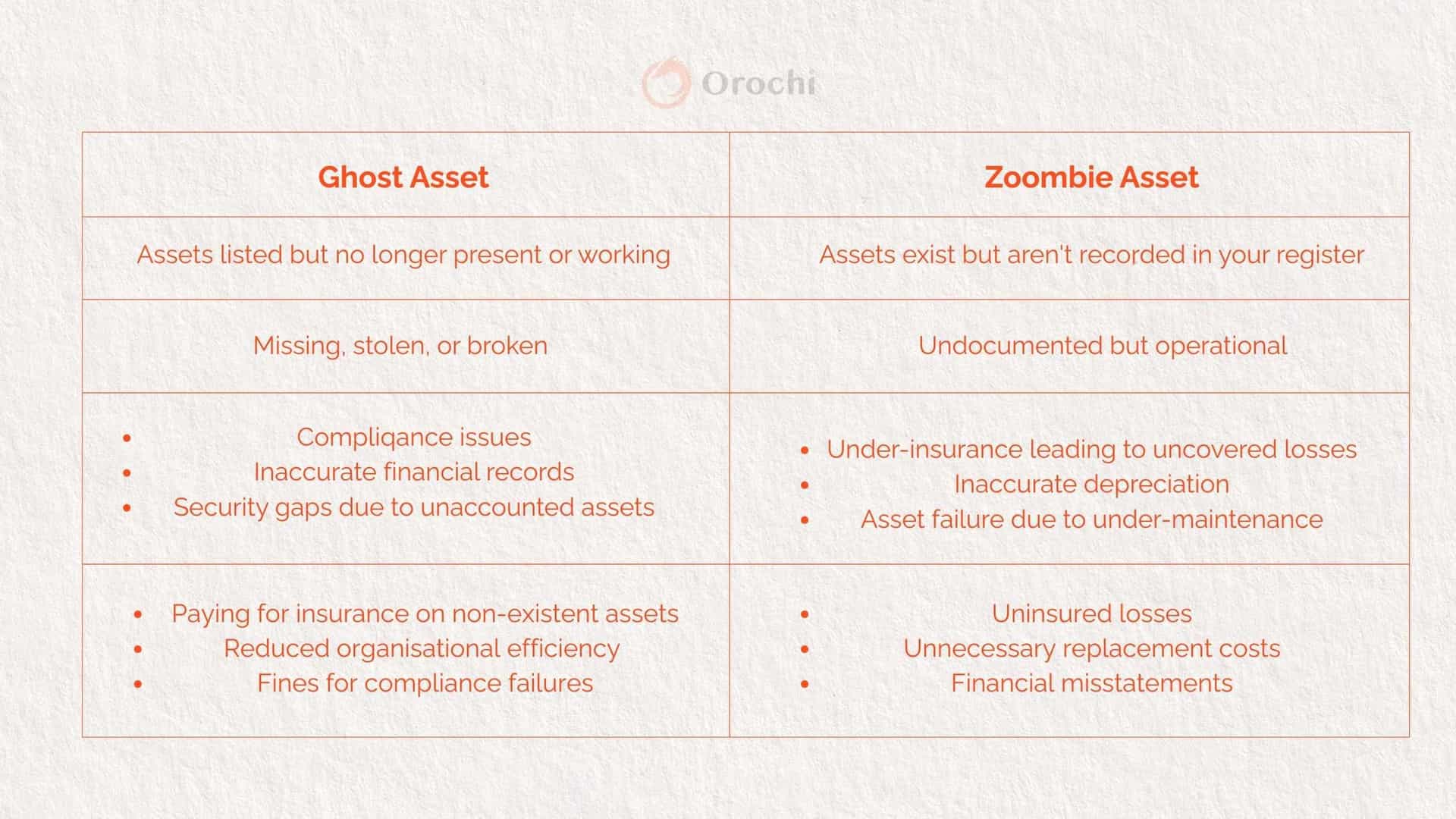
- The "Zombie Asset" Risk: Without real-time verification, there is a dangerous lag (often T+2 days or more) between a real-world event (e.g., a lien being placed on a property) and its reflection on-chain.() During this gap, a "zombie token" can be used as collateral, creating systemic risk for lending protocols.
- The Need for Data Authenticity: For RWA liquidity to flourish, the market requires cryptographic proof of asset state. Investors need to know that the yield they are receiving is backed by real-world cash flows that have been verified at the source, not just reported by a fallible intermediary. This demand is creating a massive market for infrastructure that can bridge off-chain legal realities with on-chain execution, without relying on blind trust.
This is where zkDatabase by Orochi Network becomes critical infrastructure.It acts as the "Truth Layer" for the tokenized economy. Unlike traditional oracles that simply ferry data from point A to point B, zkDatabase provides a cryptographic guarantee of the data's entire lifecycle.
Every piece of RWA data, whether it's a rental yield payment, a property audit, or a credit score update, is stored off-chain for efficiency but comes with a Zero-Knowledge-Proof (ZKP) on-chain. This proves the data is authentic without revealing sensitive commercial secrets.
Regulators and auditors can verify the integrity of the asset's history instantly. There is no need to subpoena a centralized server; the proof is on the ledger, immutable and transparent.
How Are AI Agents Changing Economic Activity in Web3?
By 2026, the "Agentic Economy" has moved from a niche concept to a dominant market force. AI agents are no longer just passive chatbots; they are autonomous economic actors capable of executing complex financial strategies. This shift has necessitated a new layer of identity and verification infrastructure.
What Does “Know Your Agent” (KYA) Mean for the Market?
In the traditional financial world, "Know Your Customer" (KYC) focuses on verifying human identity (passports, biometrics).() In the 2026 Web3 economy, the primary risk vector has shifted to autonomous software, giving rise to "Know Your Agent" (KYA).
- KYC vs. KYA: While KYC asks "Who are you?", KYA asks "What are you authorized to do, and who controls your code?" An AI agent in 2026 might be managing a $50 million treasury or executing arbitrage trades across five different blockchains.
- Agent Identity: We are seeing the standardization of Cryptographic Agent Identities, digital passports for software. These allow an AI agent to prove:
- Attestation: It is running a specific, audited version of its model.
- Authorization: It has been delegated specific spending limits by a human controller.
- Provenance: Its decision-making logic hasn't been tampered with since deployment. Without KYA, decentralized exchanges and liquidity pools would be vulnerable to "rogue agents", unverified bots that could execute infinite loops or malicious exploits at machine speed.
Why Do Autonomous AI Systems Increase Data Integrity Risks?
AI systems are voracious consumers of data. They ingest market feeds, social sentiment, and on-chain metrics continuously to make split-second decisions.
- Silent Error Propagation: Unlike a human trader who might question a sudden 90% price drop in an asset, an AI agent operating on defined parameters might instantly liquidate a position based on that false signal. If the input data is corrupted, the error propagates silently and instantly across the entire DeFi ecosystem.
- The Demand for Provable Pipelines: This risk has created a non-negotiable market demand for Provable Data Pipelines. In 2026, it is not enough for data to be available; it must be cryptographically verified at the source. AI agents will increasingly refuse to interact with data streams that do not provide a proof of correctness, effectively filtering out "untrusted" data from the institutional economy.
Why Is Privacy Becoming a Competitive Moat in 2026?
Privacy has evolved from a user preference to a core competitive advantage for enterprises. The "transparent by default" nature of early blockchains proved to be a barrier to institutional adoption, but 2026 has solved this through advanced cryptography.
Why Is Transparency No Longer Enough for Adoption?
For global enterprises and regulated institutions, total transparency is a liability.
- Public Data ≠ Compliant Data: A hedge fund cannot execute a proprietary strategy on a public ledger if it reveals their positions to competitors in real-time. A healthcare provider cannot settle insurance payments on-chain if it exposes patient metadata.
- The Institutional Block: Until recently, this "transparency paradox" kept trillions of dollars in traditional assets off-chain. Regulated markets require confidentiality, the ability to keep trade secrets and customer data private while still benefiting from the settlement speed of blockchain.
How Does Privacy-Preserving Verification Unlock New Markets?
The breakthrough in 2026 is Privacy-Preserving Verification. This allows entities to prove a statement is true without disclosing the underlying data.
- Proof Without Disclosure: A bank can prove it has sufficient reserves to back a stablecoin without revealing the exact list of its assets or counterparties.
- Selective Transparency: An enterprise can grant an auditor access to view specific transaction details while keeping them hidden from the general public. This shift positions privacy not as a tool for illicit activity, but as the enabler that allows compliant, regulated businesses to finally enter the Web3 ecosystem at scale.
Why Are Prediction Markets and New Use Cases Emerging Now?
Prediction markets have exploded in volume, driven by the convergence of better data availability and AI participation.
How Do Prediction Markets Intersect with AI and Crypto?
Prediction markets in 2026 function as the world's most efficient "Truth Machines."
- Markets as Information Aggregation: They aggregate millions of individual data points into a single probability score.
- AI as Analyst and Participant: AI agents are now the primary volume drivers in these markets. They analyze vast datasets to identify probabilities more accurately than humans, bringing massive liquidity and efficiency to the market.
- Trusted Inputs: However, for these markets to settle trillions of dollars in bets, the "resolution data" (the outcome of the event) must be unimpeachable. A disputed or manipulated outcome kills trust instantly.
Why Is Crypto Becoming Embedded Infrastructure for Other Industries?
We are witnessing the "invisibilization" of crypto.
- Backend Plumbing: In finance, data services, and AI workflows, crypto protocols are fading into the background. Users don't know they are using a blockchain; they just know their settlement happened in seconds, or their data integrity is guaranteed.
- Seamless Integration: The focus has shifted from "crypto-native" apps to "crypto-enabled" industries, where the technology serves as the robust, trustless infrastructure layer for the broader digital economy.
Does the 2026 Market Shift Expose a Data Integrity Gap?
By 2026, the crypto and digital asset landscape is rapidly transitioning from speculative trading toward institutional adoption, regulated products, and Real World Asset (RWA) tokenization. This maturation brings intense reliance on off-chain data, including valuations, proofs of reserve, compliance records, and identity attestations, to fuel on-chain logic and smart contracts.
However, most of this data still enters blockchains through trusted intermediaries or oracles without cryptographic proof of correctness. As capital flows into high-stakes use cases, this dependency exposes a critical vulnerability: systems are assuming data accuracy rather than proving it.
The result is a widening data integrity gap that threatens trust, scalability, and regulatory compliance just when the market demands stronger guarantees.
What Breaks When Off-Chain Data Is Still Trust-Based?
Despite the advanced on-chain logic, the system is brittle if the inputs are centralized.
- Stablecoin Reserves: If the bank API reporting reserves goes offline or is hacked, the stablecoin de-pegs.
- RWA Compliance: If the property valuation database is manipulated, the tokenized real estate becomes a fraud.
- AI Provenance: If an AI agent learns from poisoned data, its economic actions become destructive.
- Prediction Markets: If the oracle reporting election results is bribed, the market collapses.
Why Are Traditional Oracles and APIs No Longer Sufficient?
Traditional oracles act as couriers, they ferry data from A to B. But in 2026, we need more than a courier; we need a notary.
- No Cryptographic History: A standard API response has no memory. It doesn't prove how the data changed over time.
- No Provable Transformations: It cannot prove that a calculation (like a credit score or an index fund rebalancing) was performed correctly.
How Does Orochi Network Address These Market Outlook 2026 Needs?
Orochi Network serves as the foundational "Truth Layer" for the decentralized web, ensuring that the transition from speculation to production is built on mathematical certainty.
- Foundational Infrastructure Layer: Orochi Network does not operate as a niche application or dApp()()()(). Instead, it functions as a universal platform providing plumbing for Data Correctness, Integrity, and Privacy across multiple industries.
- Mission-Critical Data Integrity: The network is designed to ensure that the data powering the 2026 economy, from institutional stablecoins to autonomous AI agents is, is verifiable, immutable, and private.
- Scalable Trust: By utilizing Groth16, a high-performance Zero-Knowledge-Proof (ZKP) system, Orochi Network delivers the "on-chain practicality" required for production-level environments where proofs must be generated frequently and verified cheaply.
How Does zkDatabase Provide Practical Data Verification?
The core innovation is zkDatabase.
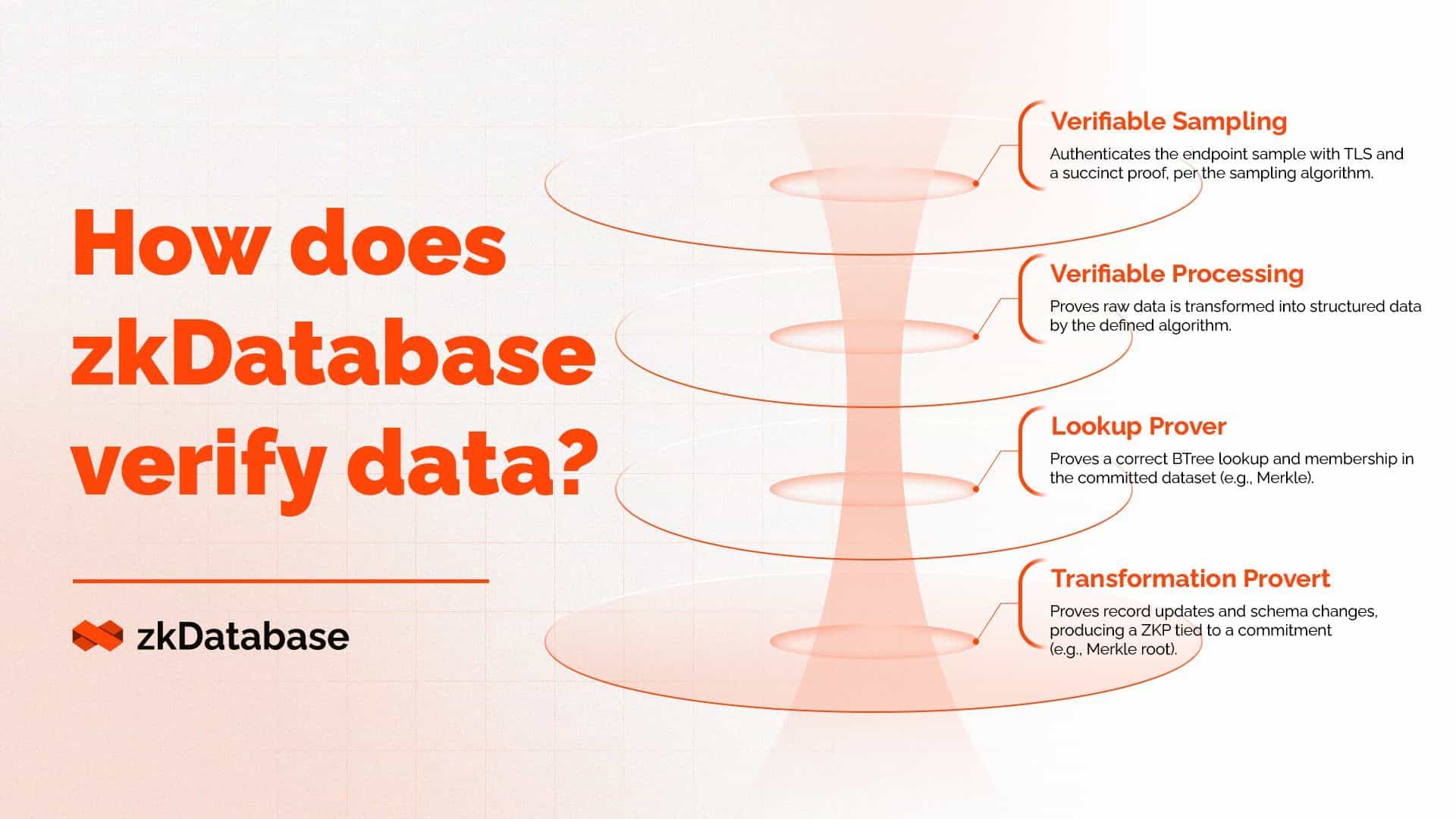
- The Concept: Keep the heavy data off-chain for speed and cost-efficiency, but store a Zero-Knowledge-Proof (ZKP) on-chain.
- Functionality: Whether you insert, update, or query data, zkDatabase generates cryptographic proof that confirms the action was valid.
- The Result: You get the performance of a traditional database with the security and trust of a blockchain, without the technical overload of building custom ZK circuits from scratch.
The 2026 market outlook is defined by the convergence of programmable finance, autonomous AI agents, and privacy-first systems. However, these innovations face a critical bottleneck: they cannot function reliably on unproven, "trust-me" data. Orochi Network bridges this gap by providing the verifiable data infrastructure necessary for the next generation of Web3.
Conclusion
As we survey the 2026 Market Outlook landscape, the pillars of the new economy, Stablecoins as the settlement layer, Tokenization bringing trillions in Real World Assets on-chain, AI Agents driving economic activity, and Privacy enabling institutional adoption all, all share a common foundation Data Integrity.
Without verifiable data, these systems remain fragile. zkDatabase emerges not just as a tool, but as a practical infrastructure necessity aligned with the 2026 outlook. It transforms data from a passive resource into a verifiable asset, ensuring that the digital economy of the future is built on truth, not just trust.
FAQs
Question 1: Is data integrity critical in the Market Outlook 2026?
In the Market Outlook 2026, crypto systems depend on off-chain data for stablecoins, RWA, AI agents, and compliance. Without cryptographic proof, trust-based data becomes a systemic risk. Verifiable data infrastructure ensures markets can scale securely.
Question 2: How does zkDatabase fit the 2026 crypto market outlook?
zkDatabase enables off-chain data to be used on-chain with cryptographic proof. In the Market Outlook 2026, it supports proof of reserves, RWA lifecycle verification, and trustworthy AI data without exposing sensitive information.
Question 3: Why are traditional oracles no longer enough in 2026?
Traditional oracles relay data but do not prove its history or correctness. In the Market Outlook 2026, systems require proof-based data verification, which zkDatabase provides through verifiable, auditable data operations.
Related toResearch