About zkDatabase
RWA Is Not Just Real Estate | Why Verifiable Data Is the Future of Tokenized Real-World Assets
November 4, 2025
7 mins read
zkDatabase and zkDA Layer offer cryptographic proof for RWA tokenization enabling scalable, verifiable data without relying on oracles.


When people hear Real World Assets (RWA), they usually picture buildings or land titles. But the reality is far broader. RWA refers to any off-chain asset with real-world value, from equities, intellectual property, and physical commodities. If it holds value off-chain, it should be able to exist on-chain, verifiably.
But here’s the truth: Despite the trillion-dollar potential, RWA tokenization hasn’t scaled the way it should. Why?
The Hesitation and the Hype Around RWA Tokenization
The global market for Real-World Asset (RWA) tokenization is estimated to reach trillions of dollars. From Singapore to New York, governments and enterprises are exploring on-chain representations of traditional assets. Yet adoption remains uneven, especially in Southeast Asia and emerging markets.

Trust in Data - Verifiability Is Missing
Tokenizing an asset is easy. Proving it exists, is legally owned, and has not been manipulated, that’s the hard part.
Most RWA systems depend on off-chain databases and intermediaries. But without cryptographic proofs, investors and regulators can’t be certain the data on-chain actually reflects real-world truth.
- Paper-based certificates and PDFs can be forged
Many asset issuers still rely on scanned documents or notarized attestations, which are easy to manipulate and impossible to verify on-chain.
- Centralized databases are vulnerable to tampering
If the source data resides in a private SQL server or Excel file, there’s no cryptographic proof that it hasn’t been changed, even after tokenization.
- Intermediaries introduce trust assumptions
Whether it’s a custodian, broker, or registrar, users are forced to trust third parties to “say” the data is accurate, without being able to prove it.
- No real-time transparency or auditability
Without on-chain verifiability, data updates are delayed, opaque, and often unverifiable, especially for dynamic assets like equities or IP royalties.
- Regulators require evidence, not promises
In regulated markets (e.g., Singapore, EU, UAE), token issuers must prove asset origin, legal ownership, and compliance. Without proof-based infrastructure, most RWA models can’t meet legal thresholds.
Oracles Are the Weak Link
Most RWA tokenization platforms rely on **oracles, **middleware that pulls external data onto the blockchain. But oracles do not prove data integrity, they simply relay information, often without transparency or cryptographic guarantees.
- Oracles are trust-based, not trustless
You're relying on a third party to provide accurate data, but there’s no way to independently verify whether it’s true or tampered.
- High costs and latency for real-time updates
Reliable oracle services like Chainlink can be expensive, especially for high-frequency data like supply chain records, stock prices, or IoT sensor feeds.
- Centralized architecture creates a single point of failure
Many oracles rely on permissioned nodes or fixed committees. If one is compromised, the data becomes unreliable, defeating decentralization.
- No cryptographic proof attached to the data
Oracle-delivered data lacks Zero-Knowledge Proofs or attestations that validate correctness, it’s taken at face value.
- Black-box processes limit transparency and auditability
You often don’t know how the data was sourced, processed, or validated. That’s a major issue for regulated industries like finance, healthcare, or IP.
- **Not scalable for enterprise-grade RWA **When tokenizing millions of real-world assets, relying on oracles becomes a bottleneck. The infrastructure simply wasn’t designed for verifiable data at global scale.

Over-Financialization - Tokenization Without Infrastructure
While many RWA initiatives focus on financial engineering, such as fractionalizing real estate or government bonds, they often overlook the core issue: verifiable off-chain data. Without a trusted data layer, tokenization becomes surface-level and fragile.
-
Many projects prioritize product design over data integrity, launching complex token structures without ensuring the underlying data is provable or auditable.
-
Blockchain is frequently used as a wrapper, not as a foundational infrastructure for trustless ownership, data integrity, and provenance.
-
Token mechanics often lack transparency, making it difficult to assess how values are derived, how assets are maintained, or how ownership is enforced.
-
Without continuous validation, tokenized assets can quickly become outdated or misaligned with their real-world counterparts, leading to compliance risks.
-
Each project builds bespoke integrations with off-chain sources, resulting in fragile, non-standardized infrastructure that doesn’t scale.
-
Regulatory and institutional participants require verifiable, audit-ready systems, which most current RWA tokenization frameworks fail to provide.
Regulatory and Legal Ambiguity
Proving asset ownership, provenance, or rights is not only a technical challenge, it’s a legal one. To move beyond hype, blockchain must evolve from being a wrapper to becoming infrastructure for enforceable trust.
-
In most jurisdictions, owning a token does not equate to owning the underlying Real-World Asset, legal rights remain ambiguous or unenforceable.
-
Many tokenization projects rely on SPVs (Special Purpose Vehicles) or custodians to "back" tokens, which reintroduces centralization and weakens decentralization claims.
-
Jurisdictional inconsistencies make cross-border asset representation complex, especially for real estate, equity, and IP rights.
-
The lack of standardized legal frameworks for tokenized assets hinders institutional adoption and regulatory approval.
-
Most blockchains are not equipped to provide legally binding attestations or proof-of-ownership mechanisms acceptable in courts or regulated markets.
-
Without an integrated legal and technical infrastructure, RWA tokens risk becoming symbolic, disconnected from enforceable asset rights.
The Real Value of RWA Is Verifiable Data
The goal isn’t to make ETFs out of houses. It’s to create a verifiable data pipeline that proves an asset’s existence, value, and origin on-chain, with cryptographic integrity, not paperwork or middlemen.

Orochi Network - Enabling Proof - Based RWA Infrastructure
At Orochi Network, we’re not here to tokenize real estate for clicks. We’re solving the underlying data integrity problem that holds back RWA from true scalability.
Here’s how:
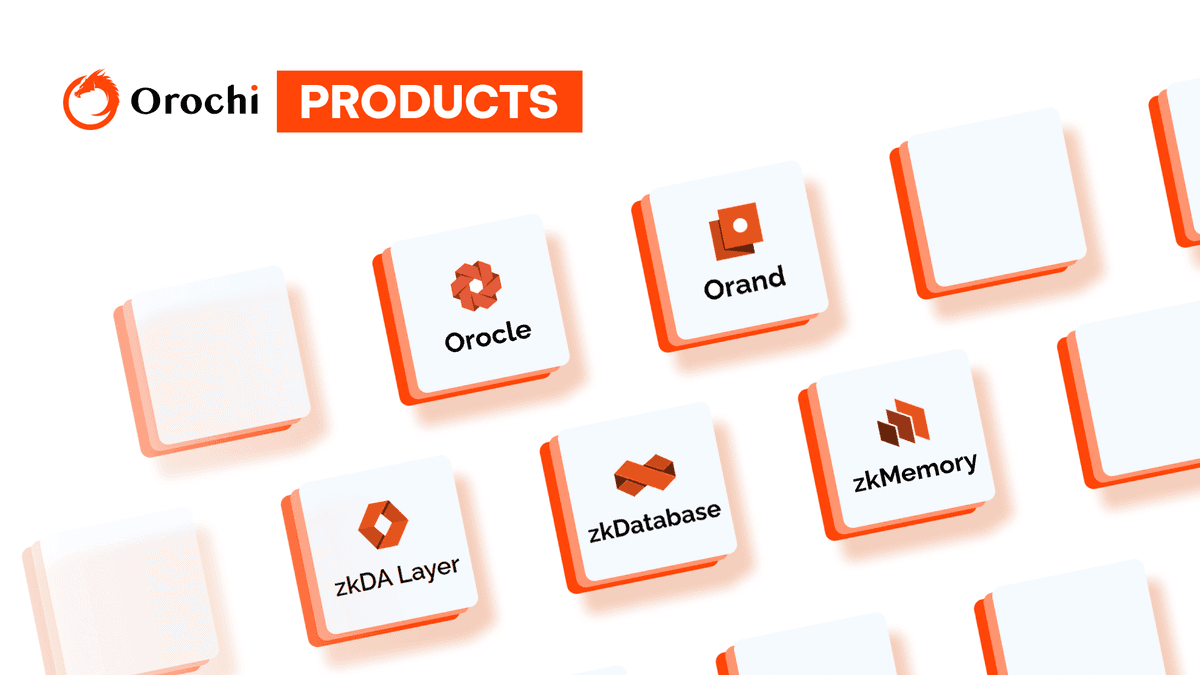
zkDatabase – A Verifiable Data Engine
No more blind reliance on APIs or off-chain SQL databases.
Orochi’s zkDatabase offers a fully zero-knowledge provable database that connects off-chain data to on-chain applications. Developers can query data, compute results, and produce Zero-Knowledge Proofs (ZKPs) that the data and computation were valid, without revealing the raw data itself.
✅ Replace Web2 infrastructure
✅ Data is programmable, auditable, and private
✅ No trust assumptions, just proofs

zkDA Layer – Redefining On-Chain Data Availability
Forget high-cost L1 or L2 data availability networks. Our zkDA Layer acts as a provable, low-cost alternative to traditional DA layers, tailor-made for RWA use cases. Whether you’re publishing IoT sensor data, asset registry logs, or legal attestations, zkDA makes them available, verifiable, and efficient on-chain.
No More Oracles - Only Proofs
We believe oracles are obsolete. With Proof-Carrying Data (PCD), every off-chain record you push on-chain includes a cryptographic proof of its correctness, generated via ZKPs. This enables oracle-free RWA, no middlemen, no unverifiable signatures.
The Future of Real-World Asset Tokenization Is Verifiable
A truly scalable Real-World Asset (RWA) economy depends on **Verifiable Data Infrastructure, **where data is cryptographically secured, transparently auditable, and independently provable.
-
**Oil production metrics **streamed on-chain from authenticated IoT sensors, verified via Zero-Knowledge Proofs.
-
**Gold bar custody records **cryptographically attested, no PDFs, no intermediaries, just truth anchored on-chain.
-
**Equity cap tables **updated in real time, with immutable audit trails accessible directly on-chain.
-
**Digital creative assets **(music, code, video) published with tamper-proof provenance and automated royalty disbursement.
This is not a future vision. This is the reality being enabled by Orochi Network, today.
Final Thoughts | RWA Must Be Provable
Real-world asset tokenization is not simply about putting assets on-chain. It’s about making them verifiably trustworthy, without relying on central authorities. With Orochi’s zkDatabase and zkDA Layer, real-world data is not just digitized, it’s cryptographically proven, audit-ready, and embedded with verifiable integrity.
We’re not building wrappers. We’re building the infrastructure of truth for the decentralized economy.
Related toAbout zkDatabase