Research
Building Enterprise Trust with Audit-Grade Data Integrity
November 11, 2025
8 mins read
Building trust with audit-grade data integrity using zkDatabase for secure, verifiable, and compliant enterprise operations.


Enterprises today face increasing demands for audit-grade data integrity to ensure trust, transparency, and compliance across critical operations. Traditional systems relying on centralized audits or manual verifications are slow, costly, and error-prone.
https://orochi.network/blog/what-is-zk-database-101-full-guide-for-beginners)and Verifiable Data Pipeline offer a new paradigm, cryptographically provable data that guarantees accuracy without revealing sensitive information. Using ZK-data-rollups, organizations can compress millions of operations into succinct proofs, enabling real-time verification. This approach empowers businesses to confidently share data with regulators, partners, and customers while maintaining privacy.
What is Audit-Grade Data Integrity?
Audit-grade data integrity ensures that enterprise data is accurate, complete, and tamper-proof across its entire lifecycle. Unlike traditional methods that rely on manual checks or centralized authorities, audit-grade systems provide cryptographically verifiable proofs of data authenticity.
Why Enterprises Need Audit-Grade Data Integrity
Regulatory Compliance: Financial, healthcare, and supply chain industries require verifiable data records for audits.
- Operational Trust: Data-driven decision-making depends on accuracy and reliability.
- Fraud Prevention: Immutable proofs reduce the risk of manipulation or malicious alterations.
- Transparency with Stakeholders: Partners, clients, and regulators can independently verify key data points.
For example: JPMorgan Chase implemented cryptographically signed transaction logs in some internal systems to prevent unauthorized modifications, reducing risk of internal fraud and errors in financial reporting.
The Orochi Network Solution
Orochi Network provides audit-grade data integrity through a suite of interlinked technologies designed for modern enterprise workflows.
zkDatabase - Provable Data
At the core of Orochi’s infrastructure is zkDatabase, a modular, proof-system-agnostic database that integrates Zero-Knowledge Proofs (ZKP) to cryptographically verify data operations. Enterprises benefit from:
- Recursive Proofs via ZK-data-Rollups: Millions of operations can be compressed into a single succinct proof, verified in ~500ms.
- Flexible Architecture: Supports key-value, document, and graph data models.
- Enterprise Applications: Ideal for financial services (KYC/AML), healthcare (patient privacy), and supply chain (product authenticity)
Verifiable Data Pipeline
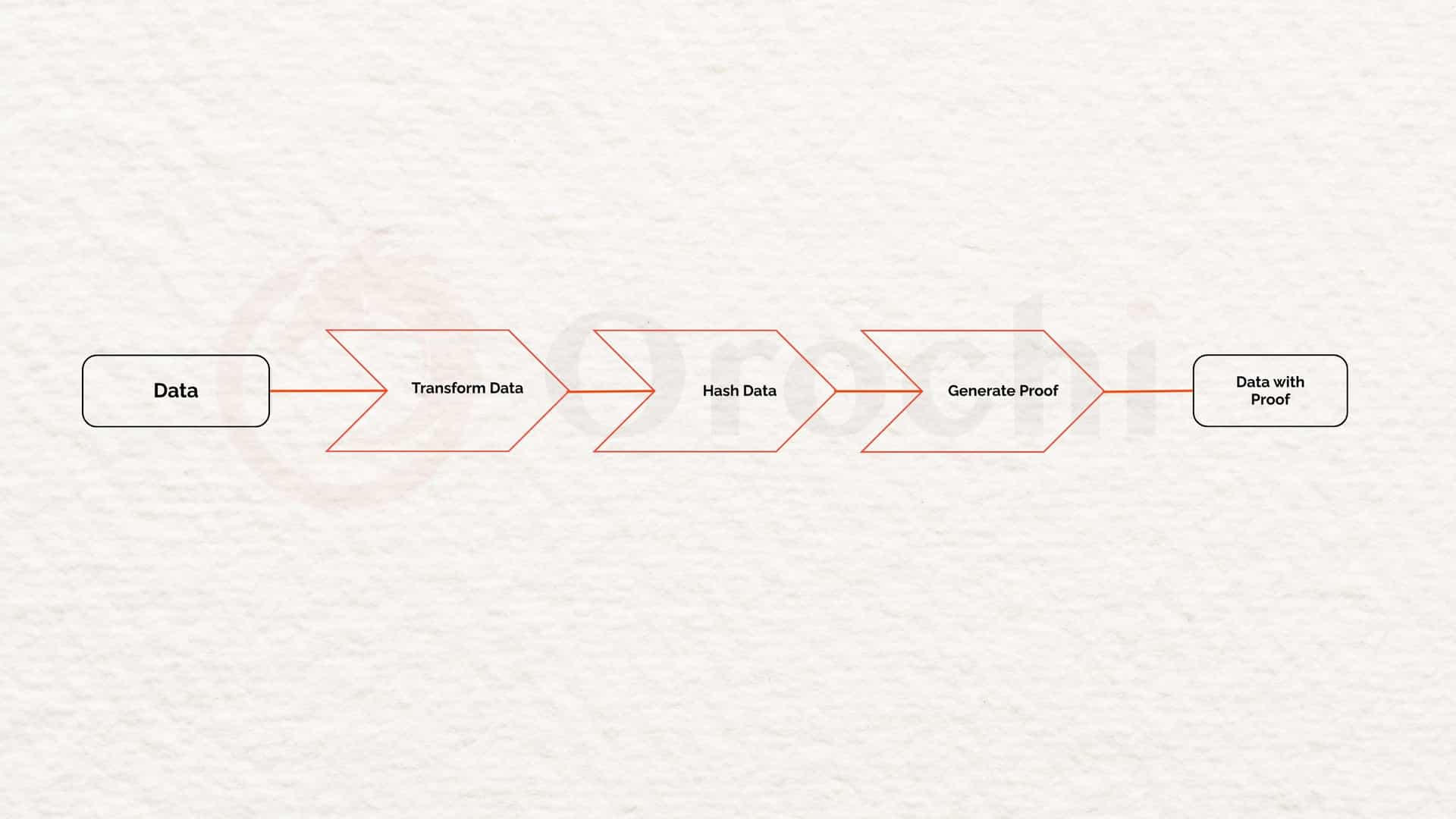
The Verifiable Data Pipeline complements zkDatabase by providing proofs at every step of data processing:
- Verifiable Sampling: Confirms raw data authenticity from endpoints like blockchain, API, or database.
- Verifiable Processing: Ensures accurate transformation of raw data into structured formats.
- Lookup Prover: Validates correctness of database lookups within committed structures (Merkle DAG).
- Transformation Prover: Verifies insertions, deletions, and schema changes while maintaining ZKP linkage
Key Enterprise Use Cases
Enterprises today face increasing pressure to ensure audit-grade data integrity, data accuracy, security, and transparency across complex ecosystems. Implementing audit-grade data integrity, enabled by Zero-Knowledge Proofs (ZKPs), Verifiable Data Pipelines, and immutable ledgers, allows organizations to maintain trust, meet regulatory requirements, and innovate with confidence.
By leveraging these technologies, enterprises can establish audit-grade data integrity across internal systems, partner networks, and customer-facing operations. The following use cases highlight how audit-grade data integrity is applied across different industries.
Real World Assets - RWAs
A finance firm tokenises real‑world assets (such as bonds, property or infrastructure) on a blockchain. For instance, the organisation MakerDAO has integrated tokenised U.S. Treasury bonds into its ecosystem-converting “real‑world assets” into on‑chain collateral.

This enables audit‑grade data integrity by anchoring every tokenised asset to verifiable on‑chain records that reflect ownership, valuations and transaction history.
By using oracles and immutable ledgers, enterprises can provide regulators, investors and auditors with real‑time proof that the backing assets exist and are accurately represented.
Example outcome: One platform issuing tokenised new‑energy assets in Hong Kong allowed transparent verification of revenue rights and asset performance.
Ensures that fractional ownership is backed by reliable data and traceable chain of ownership.Helps organisations meet compliance requirements since every step (issuance, transfer,valuation) is logged immutably.Reduces risk of mis‑representation, fraud or “shadow” assets being claimed without backing.
Stablecoin
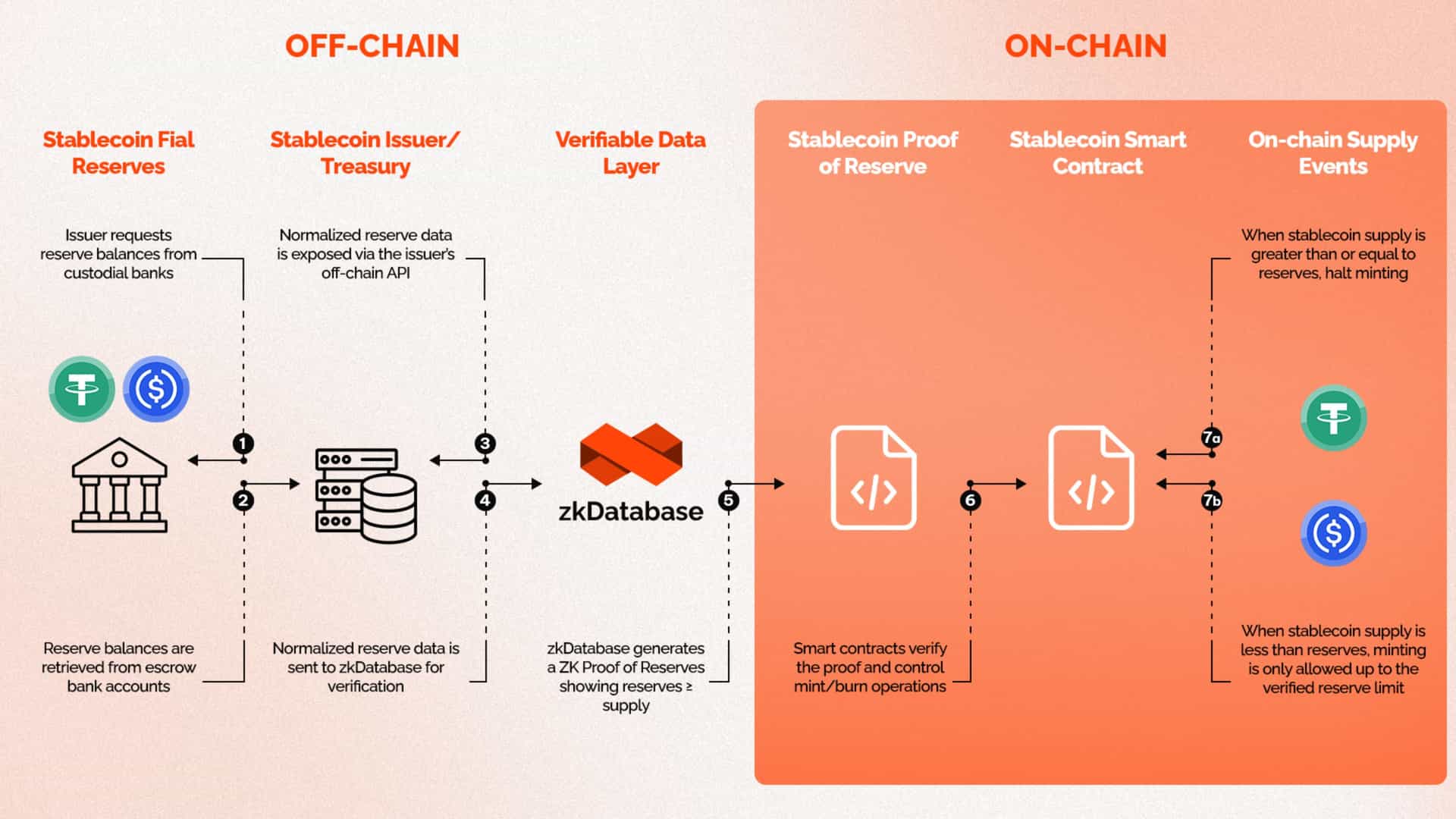
A stablecoin issuer implements rigorous auditing and smart‑contract controls to ensure the token’s backing and lifecycle are transparent and verifiable. For example, AllUnity (Euro‑backed stablecoin) had its smart contract suite audited for compliance (MiCAR‑compliant) to ensure integrity of roles, upgrades, blacklists and controls.
Audit‑grade integrity here means that the “reserve backing” claims, mint/burn events, and governance controls are all verifiable and auditable, reducing reliance on opaque monthly reserve reports.
-
For enterprise issuers and users, the transparency of on‑chain reserve proof and immutable logs increases trust among regulators and counterparties.
-
For financial services, payment providers and large enterprises using stablecoins, being able to present verifiable reserve and audit trails is critical for compliance and operational trust. It helps prevent manipulation of reserve data or hidden liabilities, thereby protecting stakeholders and reducing regulatory risk.
Artificial Intelligence - AI
An enterprise uses AI models that ingest large, complex datasets (for example in healthcare, supply chain, or finance). To ensure the data feeding and model decisions are trustworthy, they use a DLT (distributed ledger) to record data provenance, model lineage and decision logs. For instance, the Hedera Hashgraph platform‑case highlights how immutable, timestamped logs underpin trusted AI workflows.
Another vendor (Flexblok) describes how blockchain records data source, transformations, access events and model decisions - making the AI’s “black box” traceable and auditable.
This supports use cases such as: verifying that training datasets were not tampered with, tracking changes to model parameters, and showing how AI decisions were derived (audit trail) - thereby meeting regulatory or ethical governance requirements.
For enterprises relying on AI in regulated environments (finance, healthcare, insurance), being able to prove the integrity of the data and model results is becoming essential. Data integrity ensures that AI‑driven decisions are based on accurate, verifiable inputs rather than corrupted or manipulated data. Also supports transparency to stakeholders (clients, regulators) regarding how decisions were made and what data was used.
Future of Enterprise Trust with ZKP
As enterprises transition toward decentralized, data‑driven ecosystems, audit‑grade data integrity powered by Zero‑Knowledge Proofs (ZKPs) becomes not just an option, but a foundational pillar of trust and innovation.
ZKP technologies, such as Verifiable Data Pipelines and ZK‑rollups, allow organisations to automate audit workflows, enabling continuous, real‑time verification of critical data without revealing sensitive business information.
In recent industry commentary, companies deploying ZKPs report up to a 65% reduction in data breach risk and a 40% improvement in regulatory‑compliance efficiency.
They facilitate cross‑platform verification, helping multiple stakeholders (from internal teams to partners and regulators) independently confirm data authenticity while preserving confidentiality. Deployments have reportedly achieved audit‑time reductions of over 90% in supplier and internal audit processes.
By doing so, ZKPs meaningfully reduce operational risk and cost: fewer manual checks, fewer external audits, and fewer vulnerabilities to data‑tampering or fraud. For instance, one medium‑sized institution attributed a 28% cost reduction in compliance operations to ZKP‑enabled traceability. Perhaps most importantly for enterprises handling regulated, high‑value, or sensitive data, ZKPs enable privacy‑preserving scalability, letting businesses grow and share data across boundaries while keeping proprietary or personal data hidden.
Acknowledged as a key “privacy‑enhancing technology” by the World Economic Forum in 2019, ZKPs are increasingly seen as the cryptographic foundation for next‑gen enterprise trust.
In short, unless enterprises adopt verifiable cryptographic proof models like ZKPs, their trust architecture may lag behind their innovation agenda.
Conclusion
Audit-grade data integrity is no longer a luxury, it is a critical requirement for enterprises seeking to build trust, ensure compliance, and drive innovation in today’s data-driven world. By leveraging technologies such as Orochi Network’s zkDatabase, Verifiable Data Pipelines, and ZK-data-Rollups, organizations can establish cryptographically verifiable proofs of data accuracy, completeness, and authenticity across every operation.
From tokenizing Real-World Assets and maintaining transparent stablecoin reserves to ensuring AI models make reliable, auditable decisions, audit-grade data integrity underpins operational trust, reduces risk of fraud, and enables privacy-preserving scalability. Enterprises adopting these solutions gain the ability to share verifiable data with regulators, partners, and customers in real-time, dramatically cutting audit times and operational costs.
Looking forward, Zero-Knowledge Proof-based architectures represent the foundation of next-generation enterprise trust, ensuring that organizations can innovate confidently while maintaining verifiable, tamper-proof data across complex ecosystems.
FAQs
Q1: What is “audit‑grade data integrity” in this context?
It means enterprise data is cryptographically verifiable, tamper‑proof, and complete across its lifecycle. Using Orochi’s zkDatabase, Verifiable Data Pipelines, and ZK‑data‑Rollups, every operation can be proven without exposing sensitive information.
Q2: How do Zero‑Knowledge Proofs (ZKPs) improve compliance and trust?
ZKPs enable real‑time verification of data and processes while preserving confidentiality. Teams, partners, and regulators can independently confirm authenticity, cutting audit time by 90%, reducing breach risk, and strengthening governance for RWAs, stablecoins, and AI workflows.
Q3: What are practical enterprise use cases supported here?
-
RWAs: Verifiable on‑chain records for ownership, valuation, and history.
-
Stablecoins: Proof of reserves, mint/burn traces, and transparent controls.
-
AI: Immutable provenance, model lineage, and decision logs for regulated environments.
Related toResearch