Real - World Assets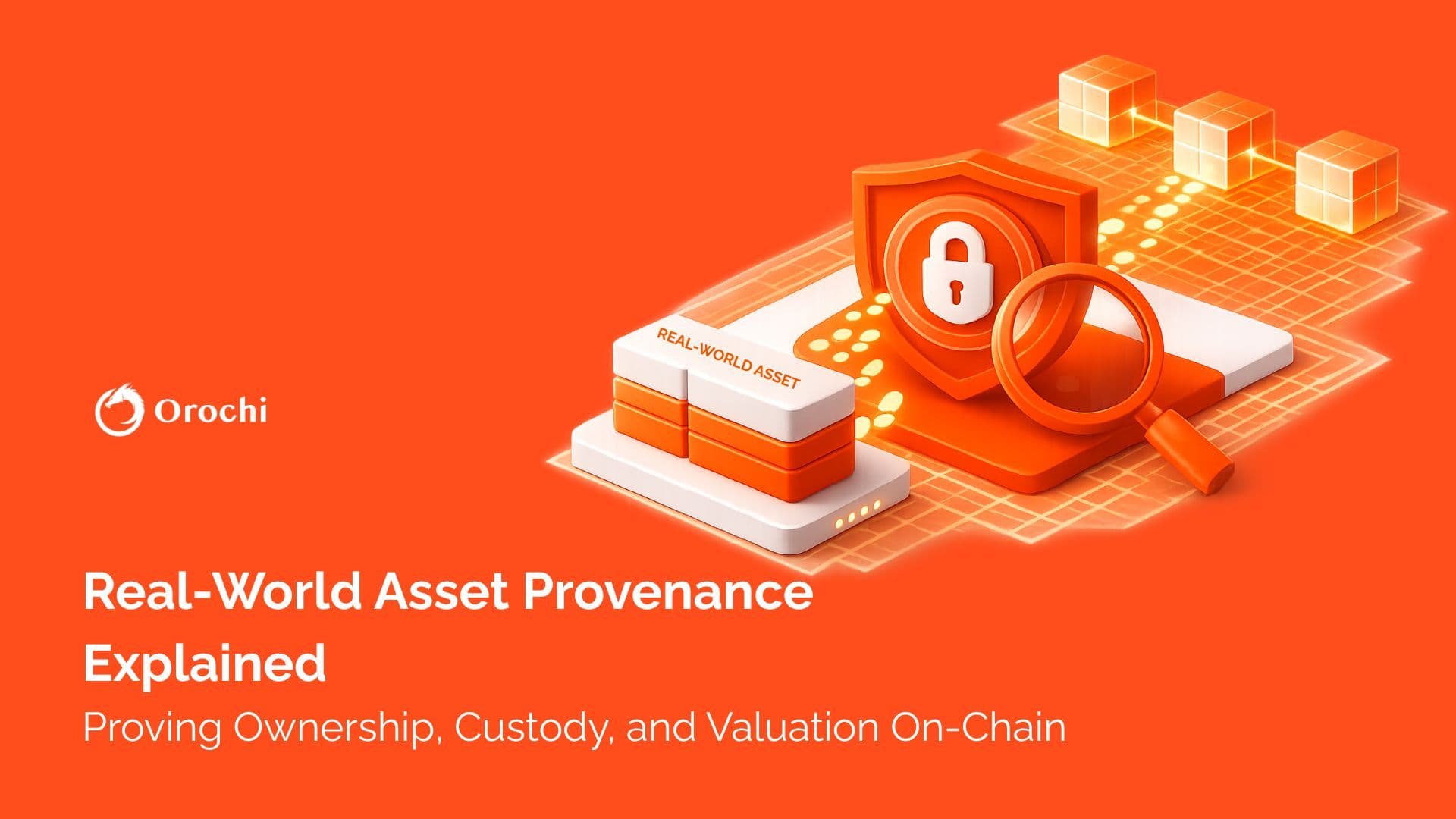
Real-World Asset Provenance Explained: Proving Ownership, Custody, and Valuation On-Chain
January 21, 2026
15 mins read
Real-World Asset Provenance explained for institutions: prove ownership, custody, and valuation on-chain with auditable records and privacy-aware verification.


Real-World Asset Provenance is the institutional-grade ability to prove who owns an asset, who holds it in custody, and how its value is derived, using a verifiable history that survives audit and dispute. In most real deployments, the blocker is not “can we tokenize” but “can we reconcile reality” because ownership records, custody statements, and valuation inputs live across fragmented systems that do not agree by default.
That fragmentation creates trust gaps, forces expensive off-chain reconciliation, and turns every exception into an operational fire drill. In 2026, tokenization is increasingly understood as financial market infrastructure, not speculation, and provenance is the layer that makes RWAs defensible at scale. This is also the lens Orochi Network leans into when it talks about verifiable data infrastructure for RWA workflows.
Real-World Asset Provenance in Financial Markets
Real-World Asset Provenance is the institutional-grade story of an asset, expressed as verifiable ownership, custody, and transaction history. The point is not to make a prettier dashboard. The point is to turn “we believe this is true” into “we can prove this is true” when money, liability, and supervision are involved.
In traditional markets, provenance is spread across custodians, transfer agents, administrators, and internal ledgers. Each party holds a slice of the truth, and integration happens through documents, reconciliations, and periodic attestations. On-chain asset provenance tries to compress that sprawl into a shared system of record where state changes are time-ordered, consistent, and queryable across participants.
This is where a useful distinction shows up: records of truth versus records of claim. A record of claim is a statement like “we hold the assets” or “NAV is X.” A record of truth is the underlying evidence trail that can be inspected, re-computed, and challenged. Real-World Asset Provenance is the difference between publishing a claim and carrying the proof-shaped history that makes the claim defensible.
The World Economic Forum frames tokenization as more than digitization because it can create a shared system of record with features like flexible custody and programmability. Those features matter because they shift the default from manual coordination toward system-level consistency.
Why Real-World Asset Provenance Matters for Institutional Adoption of RWAs
Real-World Asset Provenance only becomes “real” for institutions when it reduces operational ambiguity, not when it creates a new asset format. In practice, institutional RWA infrastructure succeeds or fails on whether ownership, custody, and reporting can stay consistent across multiple parties and across time. The fastest way to see the stress points is to separate the problem into two layers:
- The ownership and custody gaps that drive reconciliation and legal risk.
- How provenance supports trust, compliance, and scale when blockchain asset custody is part of the operating model.
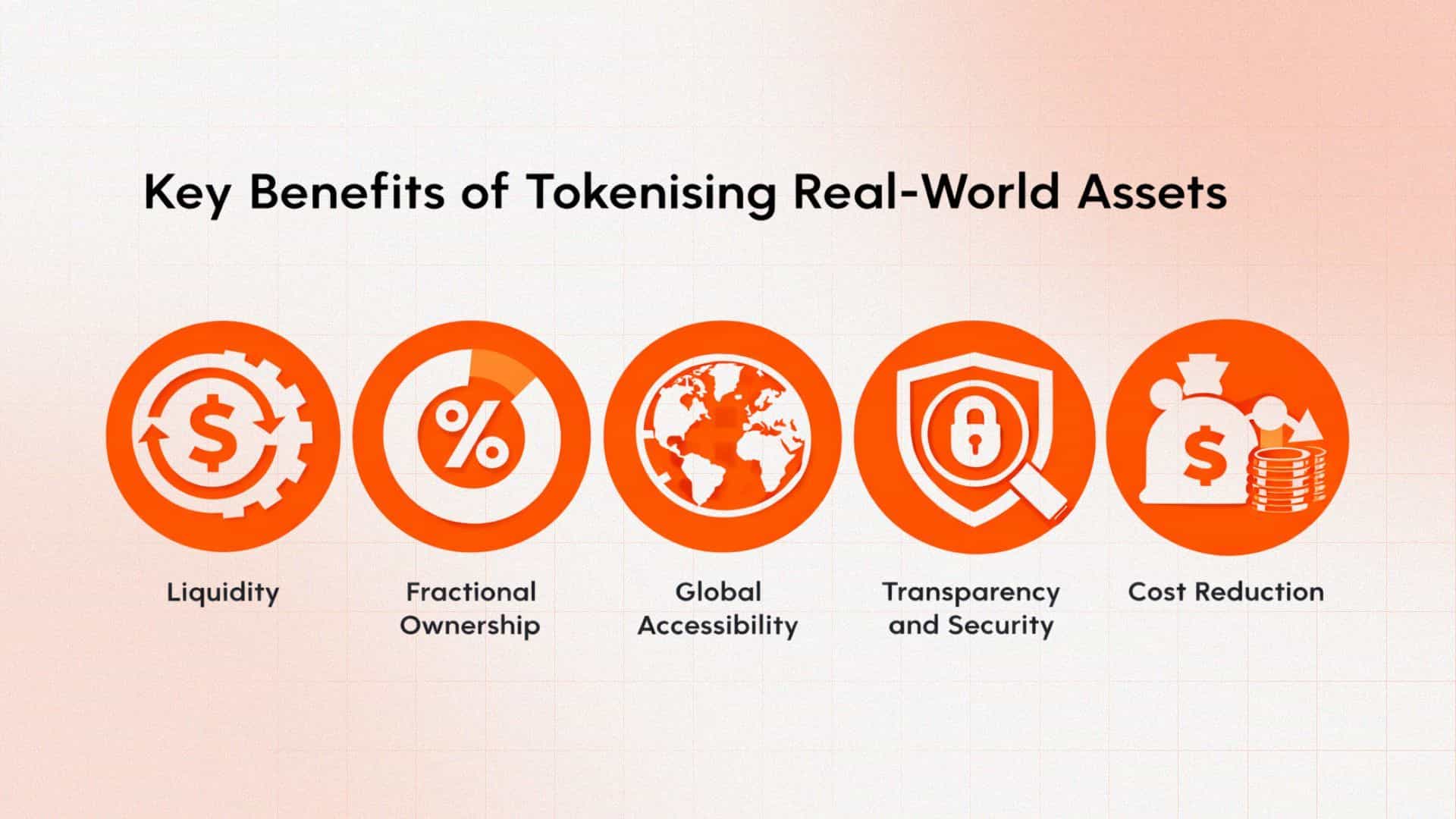
How do ownership and custody gaps limit institutional RWA adoption?
Institutions do not lose sleep over whether a token can move from address A to address B. They lose sleep over whether that transfer maps to enforceable rights, whether custody obligations are clear, and whether the operational chain can survive stress.
When ownership and custody data live in different places, ambiguity becomes a cost center. Legal ambiguity forces heavier documentation. Custody risk forces tighter controls and more counterparties. Reconciliation costs compound because every discrepancy triggers a workflow: investigation, exception reporting, potential trade breaks, and remediation.
This is why institutional RWA infrastructure tends to value boring virtues: auditability, enforceability, and operational predictability. Blockchain asset custody becomes attractive when it reduces the number of handoffs required to answer basic questions like “who holds what, under which rules, at what time.”
Provenance as the foundation for trust, compliance, and scale
Provenance is not just a historical log. It is a governance tool. It tells supervisors and counterparties that the system can explain itself. In high-trust markets, you still need to prove you behaved correctly, especially when the system scales.
Real-World Asset Provenance also travels well across jurisdictions because the core requirements barely change: demonstrate control, document obligations, preserve audit evidence, and support reporting without leaking sensitive data. The labels differ, but the institutional need for a defensible trail does not.
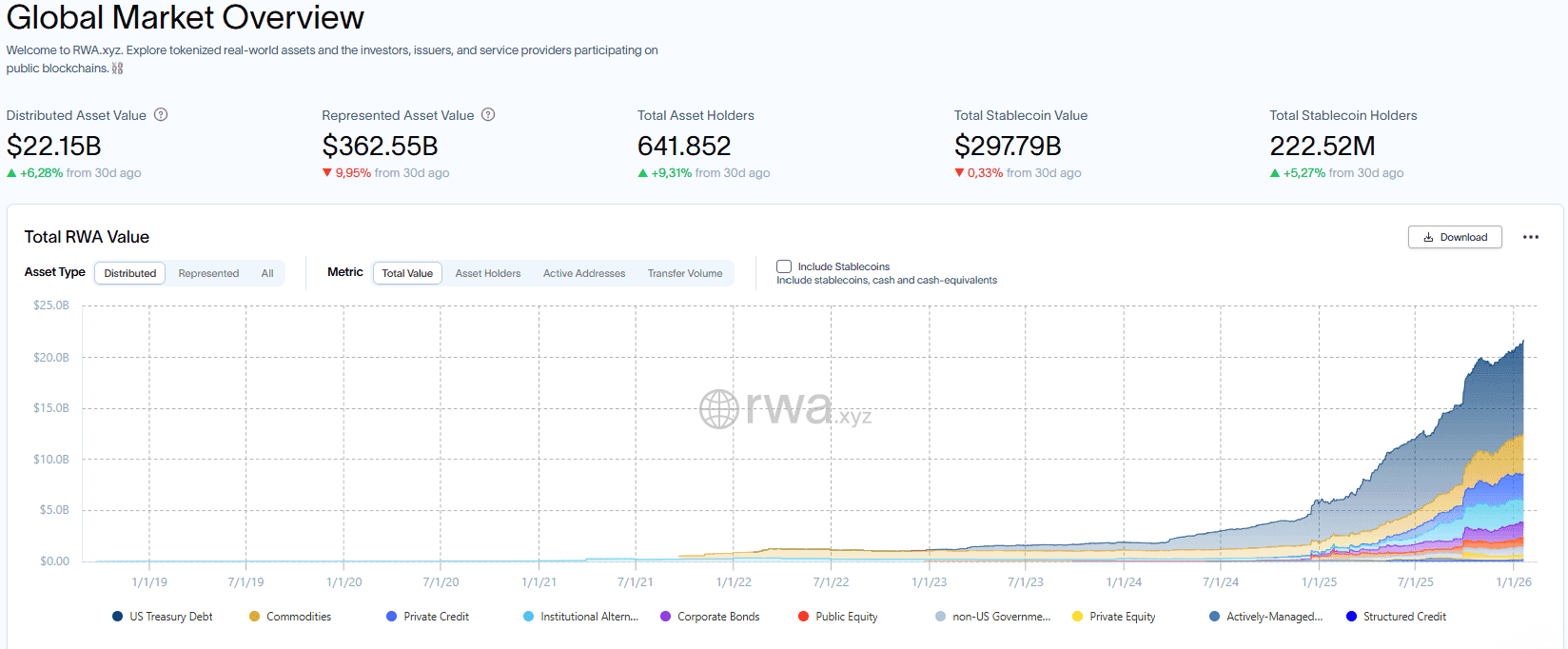
A practical signal of why this matters shows up in market data: RWA.xyz reports a Distributed Asset Value around $22.15B and hundreds of thousands of holders in its global overview. Even if you treat this as directional rather than definitive, the scale is large enough that provenance failures become systemic risks, not edge cases.
How Real-World Asset Provenance Works On-Chain
Real-World Asset Provenance works on-chain when ownership state, custody assertions, and lifecycle events are anchored into an auditable history that multiple parties can rely on. The key is not that “a blockchain exists,” but that the asset’s critical facts become consistent across stakeholders without endless bilateral reconciliation.
Shared system of record as the provenance backbone
A shared system of record is the part that changes the game operationally. Instead of each institution maintaining its own canonical view and reconciling later, participants reference a synchronized history of events: issuance, transfers, locks, burns, redemptions, and administrative updates.
This does not eliminate off-chain realities, but it reshapes them. Off-chain evidence still exists, but the on-chain trail can state what was known, when it was known, and who attested to it. That makes audit conversations faster because the system can answer time-based questions without assembling a puzzle from five inboxes.
The WEF also calls out “shared system of record” as a key differentiator for tokenization, alongside programmability and flexible custody. That framing matters because it links provenance directly to market infrastructure outcomes, not just token mechanics. (World Economic Forum)
How do programmable ledgers enable ownership and transaction proofs?
A programmable ledger for assets turns rules into enforceable constraints and verifiable state transitions. In plain terms, it can encode who is allowed to hold an asset, how transfers settle, what conditions freeze movement, and what events must be emitted for reporting.
From an institutional lens, asset tokenization provenance is strongest when the ledger helps produce three kinds of evidence:
- Proof of ownership continuity: the right holder at the right time, under the right conditions.
- Proof of transaction history: a time-ordered record of state changes and administrative actions.
- Proof of value lineage: the valuation inputs and outputs are traceable to approved sources and processes.
The reason this matters is simple: auditors and risk teams do not just ask “what is the value.” They ask “how did you get that value, and can you show the trail.”
Proving Ownership for Tokenized Real-World Assets
Ownership is where Real-World Asset Provenance starts to feel institutional, because this is the point where legal rights, operational controls, and audit expectations collide. A token transfer can be perfectly valid on-chain and still be economically meaningless if it does not map cleanly to enforceable off-chain rights. To make ownership defensible at scale, teams usually have to solve two problems in order: clarify what “ownership” means in a tokenized structure, then maintain that status consistently across issuance, transfer, settlement, and exit events.
Proof of ownership in tokenized systems
“Proof of ownership for tokenized assets” often gets misunderstood because there are two layers: legal ownership and technical ownership. Technical ownership is what the chain can show: the token sits under a key, and the rules define what that implies. Legal ownership is what the contract stack says: the token represents a claim on an off-chain reference asset under specific terms.
Real-World Asset Provenance becomes credible when the mapping between these layers is explicit. The token should not merely be transferable. It should be tied to a rights model that defines redemption, restrictions, corporate actions (if relevant), and dispute handling.
This is where “records of claim” show up again. A protocol can claim “token equals ownership,” but institutions want the supporting chain: issuance authority, custody model, legal wrapper, and lifecycle controls that keep the token and the reference asset from drifting apart.
Ownership status maintenance across the lifecycle
Ownership is not a moment. It is a lifecycle. The provenance of tokenized financial assets is strongest when the system can show continuity across:
- Issuance: who had authority to mint, and what evidence supported the mint.
- Transfer: which constraints applied, and whether the transfer complied with the rules.
- Settlement: what finality means in that venue, and how exceptions are handled.
- Redemption or burn: how the claim ends, and what evidence closes the loop.
This lifecycle view is what turns “token movement” into “ownership continuity.” It is also what makes verifying ownership of real-world assets on-chain practical during audits, disputes, and portfolio reporting.
Custody Models in Real-World Asset Provenance
Custody is where Real-World Asset Provenance stops being a conceptual debate and becomes an operating constraint. Institutions care less about the elegance of token mechanics and more about who is responsible for safekeeping, what happens in exceptions, and how custody evidence is produced on demand. If ownership answers “who has the claim,” custody answers “who controls the asset and under what controls,” and that relationship has to remain auditable over time.
Custody structures used by institutions
Custody is where institutional reality tends to dominate the design. At a high level, custody models often cluster into:
- Full custody: a qualified custodian controls the asset, while token ownership represents the claim.
- Shared custody: responsibilities split between entities, for example issuer controls some workflows while custodian controls safekeeping.
- Self-custody by a controlled entity: used selectively, typically where the operational model and risk appetite allow it.
The point is not which one is “best.” The point is whether the custody model is legible to risk teams and defensible under stress. Blockchain asset custody adds value when it makes the custody story auditable instead of interpretive.
On-chain provenance as a lever to reduce custody and settlement risk
On-chain proof of custody and ownership helps reduce settlement and custody risk when it shortens the gap between “what the ledger says” and “what the custodian holds.” It can also reduce reconciliation workload by making the event trail consistent and time-stamped.
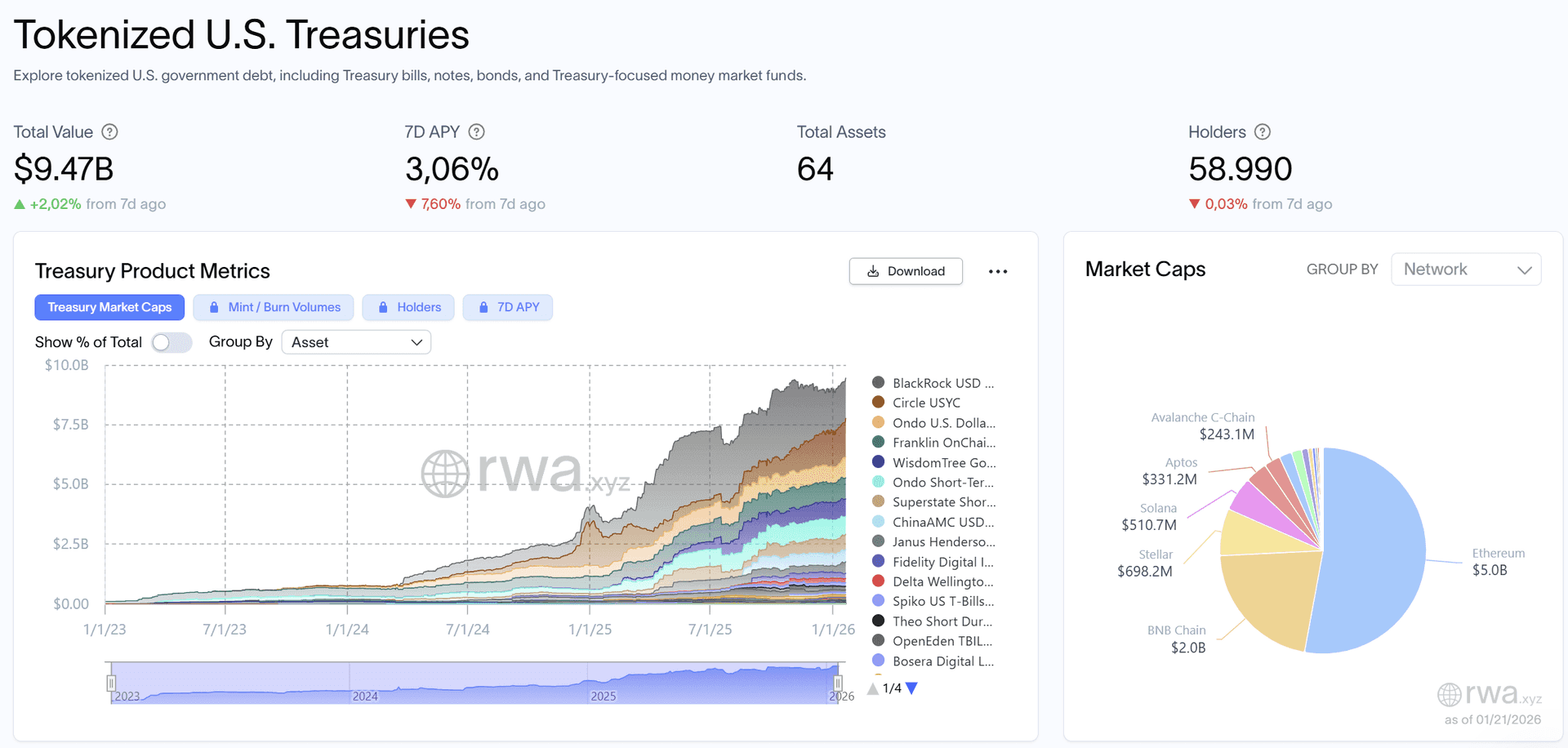
You can see the market pull toward this kind of clarity in tokenized treasuries. RWA.xyz shows tokenized U.S. Treasuries total value around $8.86B (as displayed on the treasuries page). Products at this scale force institutions to operationalize custody and reporting rather than treating them as pilot paperwork.
Valuation Traceability as Part of Real-World Asset Provenance
Valuation is where institutions test whether provenance is actually doing its job. A market can tolerate disagreement on narrative, but it cannot tolerate disagreement on what evidence produced a valuation at a specific time. Real-World Asset Provenance matters here because valuation is not only a pricing exercise, it is an accountability exercise: you need to show the inputs, the rules, and the state that made the number defensible.
Why valuation and provenance are inseparable
Valuation is not a number floating in space. It is an output of inputs, assumptions, and timing. Real-World Asset Provenance matters for valuation because valuation depends on who owned the asset, whether custody was valid, and what events occurred since the last mark.
When provenance is weak, valuation becomes fragile. You can still compute a price, but you cannot defend it under scrutiny. When provenance is strong, valuation becomes explainable: the system can show what changed, when it changed, and which inputs were used.
This is exactly why real-world asset provenance and valuation show up together in institutional conversations. The audit question is rarely “what is the value.” It is “can you demonstrate the value was produced from approved evidence and a consistent history.”
Reporting improvements without turning everything public
A common mistake is equating transparency with exposure. Institutions can improve reporting without broadcasting sensitive details. The goal is traceability: the ability to prove that reporting derives from consistent state and controlled inputs.
In practice, that means the system can produce audit-ready outputs like:
- Time-bound ownership state snapshots
- Custody status at time T
- Valuation lineage tied to approved data sources
- Exceptions and remediation events when drift occurs
This is where privacy-preserving methods become relevant: you want to prove the process, not leak the entire portfolio.
Institutional Requirements for RWA Provenance Infrastructure
This is the part where Real-World Asset Provenance meets procurement reality. Institutions do not buy narratives; they buy risk reduction, operational predictability, and audit resilience. If the infrastructure cannot produce verifiable answers under time pressure, it will fail internal reviews even if the tokenization story sounds compelling.
What institutions require from provenance infrastructure
Institutions are surprisingly consistent in what they ask for:
- Auditability: clear trails, time-stamped events, and explainable state changes
- Permissioning: controls that match investor eligibility and counterparty policies
- Interoperability: integration across systems and venues without rebuilding everything
- Data integrity: confidence that inputs, transforms, and outputs were not tampered with
These are not marketing bullets. They are procurement filters. Institutional requirements for RWA provenance are ultimately about reducing operational risk while maintaining enforceable rights.
How does provenance support compliance without exposing sensitive data?
Compliance teams want verifiable outcomes. They do not want a public dump of PII, counterparty identifiers, bank details, or private contractual terms.
The scalable approach is to prove statements about the asset and its lifecycle without exposing raw data. That includes proofs like eligibility validity, absence of restricted holders, custody status consistency, and valuation computed from approved inputs. In other words, prove the checks, not the secrets.
This is where modern approaches using Zero-Knowledge Proofs become relevant. Done right, they let institutions keep sensitive data protected while still producing verifiable audit evidence.
Implementation Challenges That Still Block Real-World Asset Provenance
Even good designs hit real-world friction. The challenge is not whether you can write events on-chain, but whether the evidence behind those events remains complete, timely, and enforceable when multiple organizations touch the workflow. Real-World Asset Provenance fails most often in the seams: where off-chain documents, operational processes, and governance decisions are still loosely coupled.
Off-chain dependencies and persistent data gaps
Even with a clean on-chain trail, off-chain dependencies do not vanish. Custody statements, legal documents, valuation reports, and corporate actions still originate in the real world. The gap shows up when off-chain updates arrive late, arrive inconsistently, or are hard to authenticate.
Oracles help with data delivery, but they do not automatically solve data integrity or provenance. The hard part is proving that the data feeding the system was authentic, timely, and consistent with policy. That is a different problem than just “getting a price.”
Infrastructure-First design versus token-first issuance
The fastest way to ship a token is to issue it and figure out everything else later. The fastest way to lose institutional trust is to do exactly that.
Real-World Asset Provenance tends to succeed when teams design the evidence pipeline first:
- What must be proven?
- What data is required?
- Who attests to which facts?
- How are exceptions handled?
- What does an auditor replay to validate the story?
Token issuance is the visible part. Infrastructure design is the part that survives the first real audit.
How Orochi Network Enables Real-World Asset Provenance with zkDatabase
This section is intentionally practical and infrastructure-focused. It treats zkDatabase as verifiable data infrastructure, not an application layer.
zkDatabase - Infrastructure for Audit-Grade Data Provenance
Real-World Asset Provenance breaks when off-chain evidence cannot be bound to on-chain state in a verifiable way. zkDatabase targets that seam by making data operations provable: you can commit to datasets, prove queries or transformations, and generate verification artifacts that counterparties can check.
The relevant idea is not “more transparency.” It is privacy-preserving verification. With ZKP-based workflows, teams can produce proofs about ownership continuity, custody status, and valuation lineage without publishing raw documents or sensitive fields. This is the type of design that aligns with institutional requirements for RWA provenance because it scales auditability without expanding breach surface.
- Pick one asset workflow (custody reconciliation, ownership snapshot, or valuation lineage)
- Define a handful of claims that must be proven at a specific cadence
- Run a controlled pipeline that produces repeatable proofs and audit artifacts
- Validate that third parties can verify outputs independently
Conclusion
Real-World Asset Provenance is foundational because institutions do not adopt RWAs on narrative, they adopt them on defensible ownership, custody, and valuation. The winners will be the teams that treat infrastructure as the product: shared records, auditable trails, and verification that works even when counterparties do not share trust assumptions.
Token issuance is easy. Provenance is the work. The path forward is designing systems that can prove the lifecycle without exposing sensitive data, and that is where zkDatabase fits as a verifiable, privacy-preserving RWA data infrastructure.
FAQs
Question 1: What is Real-World Asset Provenance and why does it matter?
Real-World Asset Provenance is the verifiable history of ownership, custody, and lifecycle events for a tokenized asset. It matters because institutions need auditability and enforceability, not just transferability. Strong provenance reduces reconciliation overhead, supports credible reporting, and makes disputes and supervision less dependent on fragmented off-chain documents.
Question 2: How do institutions verify ownership of real-world assets on-chain without legal confusion?
They separate technical ownership from legal ownership, then bind them through explicit rights, wrappers, and lifecycle controls. The chain can show who holds the token, but the legal stack defines what that token means. Verification becomes institutional when the system can replay issuance authority, transfer constraints, settlement logic, and redemption conditions as a continuous trail.
Question 3: How can provenance support compliance without exposing sensitive data?
By proving statements about the process and state rather than publishing raw inputs. Zero-Knowledge Proofs can be used to show eligibility checks passed, custody status was consistent at time T, and valuation followed approved methodologies, while keeping PII, counterparty identifiers, and private terms protected.
Related toReal - World Assets