Real - World Assets
Why Tokenized Assets Need a New Audit Model : ZKPs and Verifiable Data Infrastructure
January 26, 2026
10 mins read
Why Tokenized Assets need a new audit model, and how ZKPs and zkDatabase by Orochi enable secure, compliant auditing at scale.


In the digital asset era, the role of auditors is undergoing a structural transformation. Auditing is no longer limited to reconciling financial statements or validating periodic reports. Instead, auditors must answer a far more complex question: how can Tokenized Assets be independently verified as real, untampered, and compliant when critical data is fragmented across on-chain and off-chain systems?
According to assurance research from EY, next-generation digital assets, ranging from stablecoins and Real-World Assets (RWA) to tokenized securities, require a fundamentally new audit model. In this model, cryptography and mathematical proofs increasingly replace trust-based attestations and static PDF reports.
At the center of this shift are Zero-Knowledge Proofs (ZKPs), which enable verification without disclosure.
This article examines why verification has become a make-or-break issue for Tokenized Assets, how ZKPs are reshaping auditing, where current approaches still fall short, and why verifiable data infrastructure, such as zkDatabase, can act as a critical complementary layer rather than a competing solution.
The Rise of Tokenized Assets and the Verification Imperative
Tokenized Assets now span a broad and rapidly expanding spectrum. Cryptocurrencies like Bitcoin function as decentralized stores of value. Stablecoins provide transactional stability by referencing fiat reserves. RWAs digitize physical or financial assets such as treasuries, real estate, commodities, or private credit. Tokenized securities bring equities, bonds, and fund shares onto blockchain rails.
EY’s tokenization research highlights the upside clearly: improved liquidity, fractional ownership, faster settlement, and global accessibility. Yet these benefits introduce new verification challenges that traditional audit frameworks were never designed to handle.
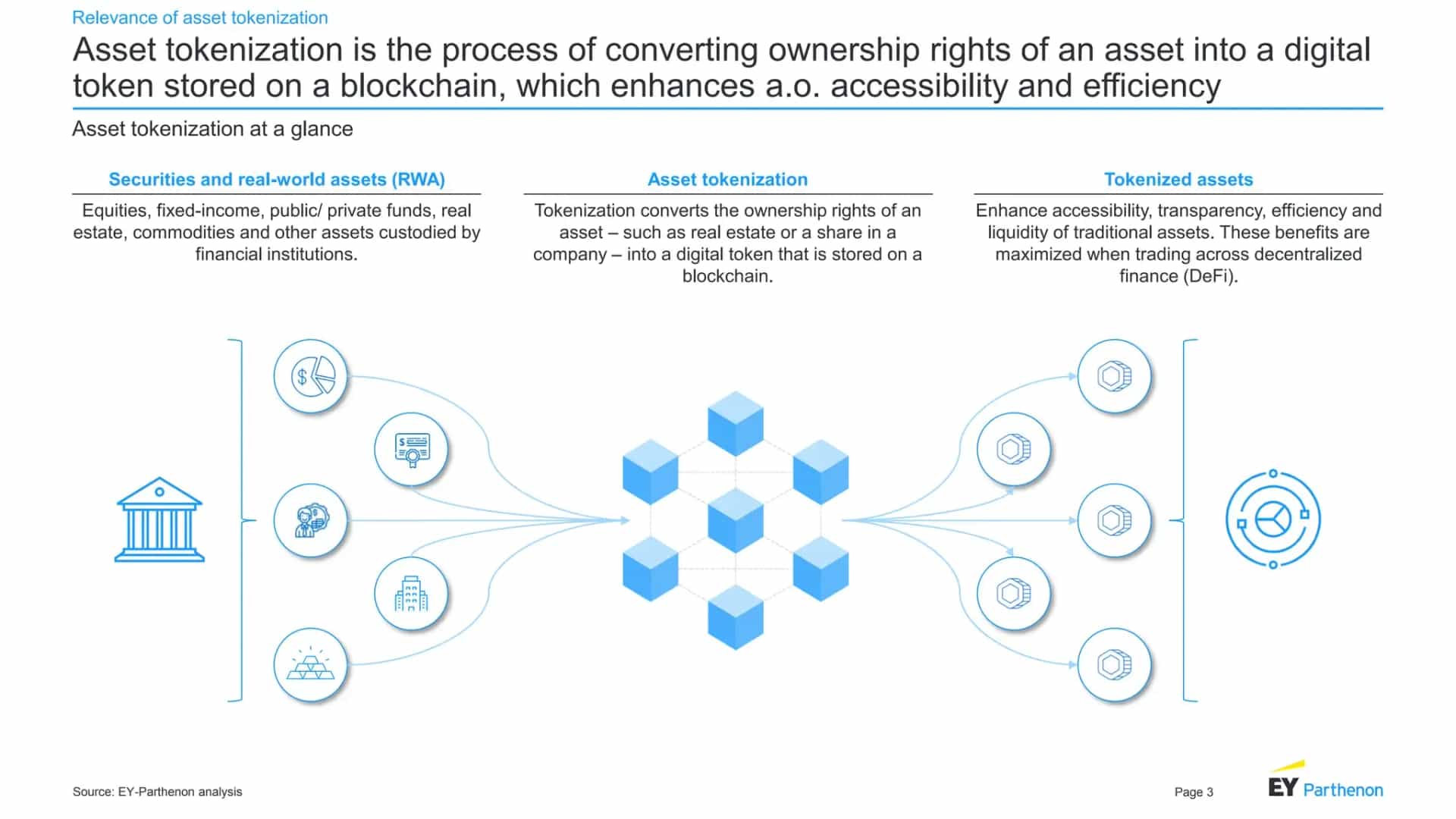 Unlike traditional assets held by centralized custodians, Tokenized Assets operate in pseudonymous, distributed, and programmable environments. Trust is not implicit; it must be proven. Smart contracts can contain logic flaws. Oracles can be manipulated. Off-chain data sources, custodians, banks, registries, valuation providers, remain opaque to public blockchains.
History has shown the consequences. High-profile failures, including multi-hundred-million-dollar exploits, demonstrate that a single unverified assumption in a data pipeline can cascade into systemic loss.
Unlike traditional assets held by centralized custodians, Tokenized Assets operate in pseudonymous, distributed, and programmable environments. Trust is not implicit; it must be proven. Smart contracts can contain logic flaws. Oracles can be manipulated. Off-chain data sources, custodians, banks, registries, valuation providers, remain opaque to public blockchains.
History has shown the consequences. High-profile failures, including multi-hundred-million-dollar exploits, demonstrate that a single unverified assumption in a data pipeline can cascade into systemic loss.As tokenization scales, these risks no longer affect only crypto-native users but institutional investors, regulated funds, and capital markets.
Regulatory scrutiny is therefore intensifying. Authorities demand transparency, yet accounting treatments for digital assets remain inconsistent across jurisdictions. Without rigorous verification mechanisms, Tokenized Assets risk eroding investor confidence before reaching their full potential.
The Promise of Tokenization: Efficiency Meets Scale
Research from EY consistently highlights the structural benefits of tokenization:
- Improved liquidity through fractional ownership
- Faster settlement cycles compared to legacy market infrastructure
- Global accessibility and near-24/7 market availability
- Reduced operational friction across issuance, transfer, and reconciliation These advantages explain why tokenization is increasingly explored by banks, asset managers, and regulated institutions, not just Web3-native projects.
However, the same features that make Tokenized Assets powerful also introduce new verification challenges that traditional audit and assurance frameworks were never designed to address.
Regulatory Pressure and the Verification Gap
Regulatory scrutiny around Tokenized Assets is therefore intensifying. Authorities demand transparency, auditability, and investor protection. Yet accounting treatments for digital assets remain inconsistent across jurisdictions, and legacy assurance models struggle to keep pace with programmable finance.
Without rigorous, scalable verification mechanisms, Tokenized Assets face a real risk: eroding institutional confidence before achieving full market maturity.
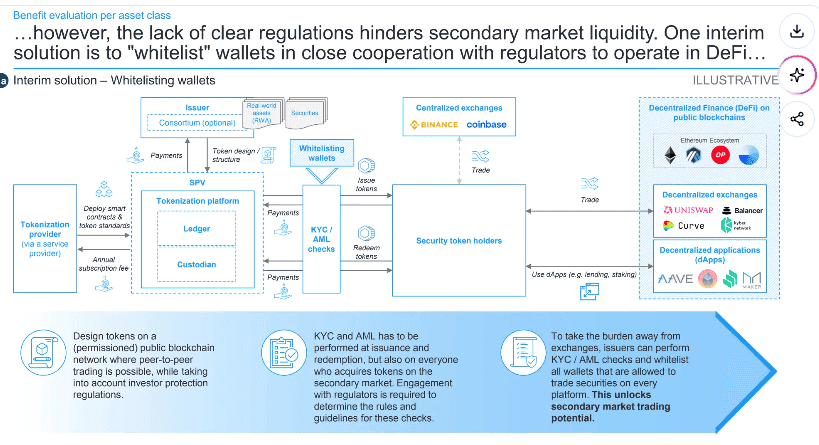
This verification imperative sets the stage for why cryptographic approaches, particularly ZKPs and verifiable data infrastructure, are becoming central to the future of auditing and assurance in tokenized markets.
Why Traditional Audit Models Break Down
Auditing Tokenized Assets is not merely a harder version of traditional auditing; it is structurally different. EY’s blockchain assurance research points to several core mismatches.
First, static versus dynamic systems.
Traditional audits examine snapshots in time, quarterly or annual financial statements. Tokenized Assets, by contrast, change continuously through smart contract execution, automated rebalancing, secondary market transfers, and real-time collateral movements.
Second, centralized evidence versus distributed truth.
Auditors are accustomed to centralized ERP systems and custodian confirmations. Blockchain-based systems distribute truth across nodes, contracts, and off-chain services, none of which alone represent the full picture.
Third, disclosure versus privacy.
Audits require evidence, but modern data protection regimes and commercial confidentiality prohibit unrestricted access to sensitive data such as bank balances, counterparty relationships, or proprietary valuation models.
Attempting to force Tokenized Assets into legacy audit workflows leads to delayed reporting, manual reconciliation, and fragile assurances. The result is higher cost, higher risk, and lower scalability.
Why Trust Is Not Implicit in Tokenized Systems
Unlike traditional financial assets held by centralized custodians, Tokenized Assets operate in pseudonymous, distributed, and programmable environments. In these systems, trust cannot be assumed, it must be proven.
Several structural risk vectors emerge:
- Smart contracts may contain logic flaws or unintended execution paths
- Oracles can be manipulated or rely on unverifiable off-chain inputs
- Off-chain data sources, custodians, banks, registries, valuation providers, remain opaque to public blockchains As a result, on-chain correctness does not automatically imply real-world correctness. A token may move flawlessly on-chain while referencing incomplete, outdated, or incorrect off-chain data.
ZKPs and the Shift to Proof-Based Auditing
To address these limitations, EY and other institutions have increasingly turned to ZKPs. Zero-knowledge auditing represents a fundamental shift: instead of trusting attestations, auditors verify cryptographic proofs.
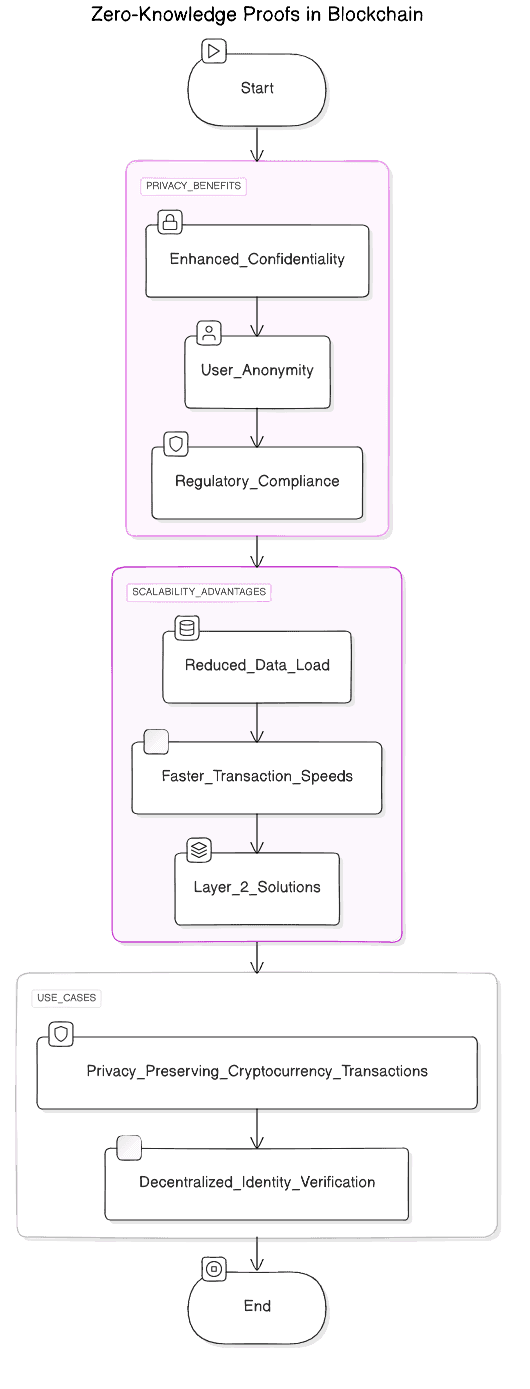 ZKPs allow auditors to mathematically confirm key assertions without accessing the underlying data. In practice, this enables verification of:
ZKPs allow auditors to mathematically confirm key assertions without accessing the underlying data. In practice, this enables verification of:- Existence – an asset or reserve exists at a given time
- Integrity – the asset state has not been altered
- Consistency – on-chain records align with off-chain systems
- Compliance – predefined rules (reserve ratios, custody constraints, regulatory thresholds) are satisfied
In stablecoin contexts, for example, ZKPs can demonstrate that liabilities are fully backed by reserves without revealing exact balances or banking relationships. In RWA and tokenized securities, ZKPs can confirm that tokens correspond to legally enforceable off-chain assets while preserving confidentiality.
This is a critical advancement. Trust shifts from institutions to mathematics. However, from a product and infrastructure perspective, ZKPs alone do not solve the entire problem.
The Limitations of Current ZKP-Based Auditing Approaches
From a technical standpoint, most ZKP deployments in auditing today operate at the assertion level, not the data infrastructure level.
ZKPs typically prove outcomes: a reserve ratio, a solvency condition, or a compliance check at a specific moment. What they often do not fully prove is the entire lifecycle of the data that produced those outcomes.
Key limitations include:
-
Fragmented off-chain data sources Data used in audits still lives across banks, custodians, registries, valuation systems, and internal databases. ZKPs may validate a computed result, but they frequently assume the correctness of upstream data handling.
-
Limited provenance and mutation tracking Auditors may know that a value is correct now, but lack cryptographic guarantees about how many times underlying data was modified, by whom, and under what rules.
-
Tool-level rather than infrastructure-level integration Many ZKP solutions function as specialized audit tools. They do not replace or harden the underlying data layer, leaving a residual trust gap beneath the proof. As a result, ZKPs significantly improve assurance, but they still rely on assumptions about off-chain data integrity.
zkDatabase as a Complementary Verifiable Data Layer
From the perspective of Orochi Network, this is where verifiable data infrastructure becomes relevant, not as a replacement for ZKP auditing, but as a foundational complement.
zkDatabase allows sensitive data, such as reserve attestations, ownership documents, compliance records, or valuation inputs, to remain off-chain while anchoring cryptographic commitments on-chain. This preserves privacy while ensuring immutability.
Instead of asking auditors to trust that off-chain databases are well governed, zkDatabase enables systems to prove that:
- Data exists and has not been tampered with
- Updates follow predefined rules
- Historical states cannot be silently altered
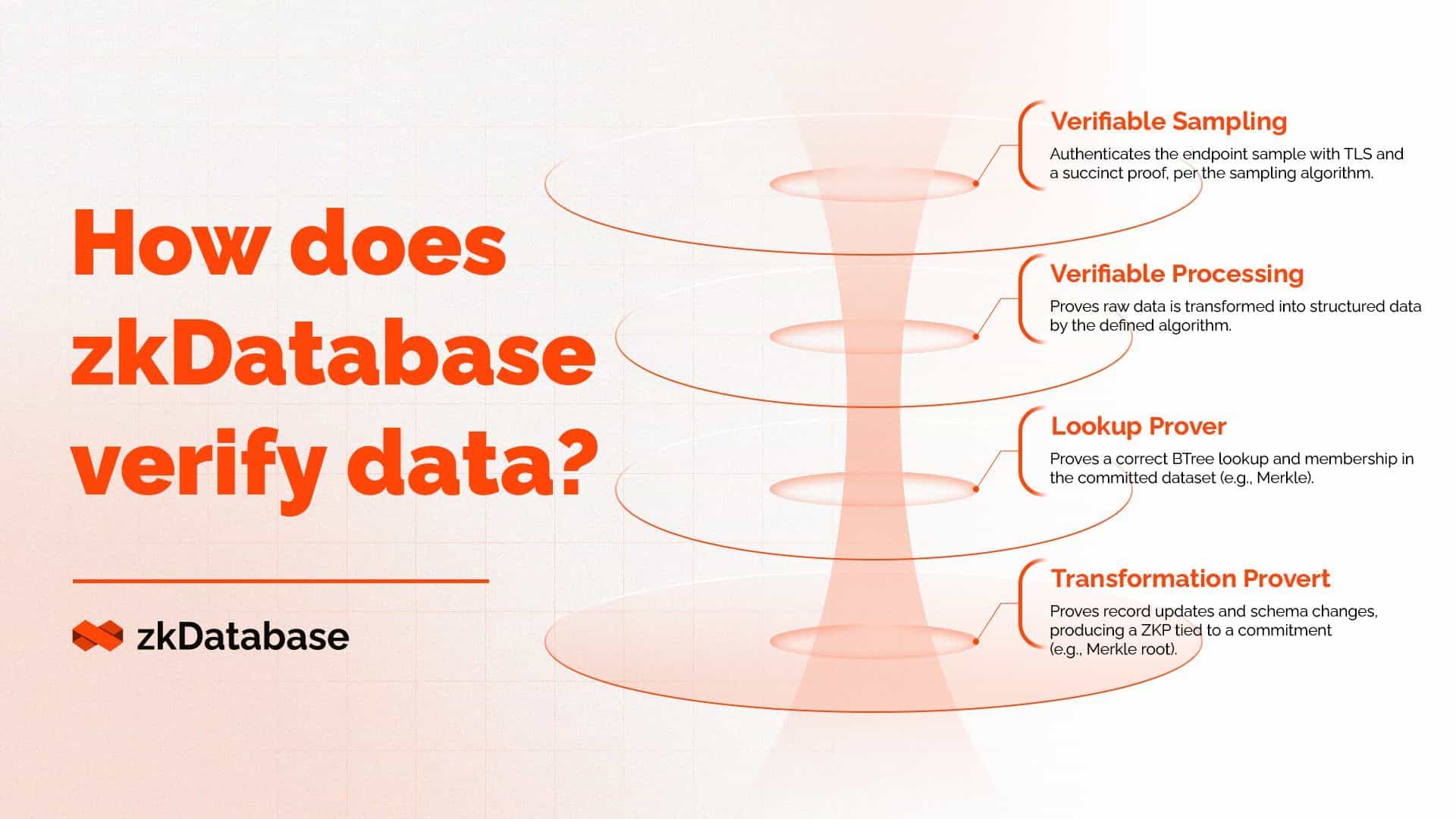 A key distinction is that zkDatabase generates proofs for data operations themselves:
 - Inserts
- Updates
- Queries This means auditors can verify not only a final assertion, but also the correctness of the data handling process that produced it. In practical terms, ZKP-based audits can rely on provable inputs, reducing residual trust assumptions.
Reducing Audit Risk at the Data Layer
Many failures involving Tokenized Assets stem not from smart contracts, but from flawed off-chain data pipelines or oracle dependencies. zkDatabase acts as a data integrity layer that strengthens these pipelines without exposing raw data.
For auditors and institutions, this translates into lower operational risk and higher confidence in continuous assurance models.
Practical Implications for Auditors and Capital Markets
When combined, ZKPs and verifiable data infrastructure unlock a more robust audit paradigm:
- Continuous auditability, rather than periodic attestations
- Early detection of inconsistencies, before they become systemic
- Jurisdiction-specific compliance proofs, adaptable across regulatory regimes
- Improved capital efficiency, as trust premiums and over-collateralization requirements decline For regulators, this enables a shift from report-based oversight to proof-based supervision. For institutions, it reduces counterparty and reputational risk. For markets, it restores confidence that Tokenized Assets are not only liquid, but legitimate.
Conclusion
EY’s work on ZKP-based auditing represents a decisive step toward the future of assurance for Tokenized Assets. Yet as tokenization expands across stablecoins, RWAs, and capital markets, verification cannot remain a layer applied after the fact. The next phase of adoption will require verifiable data integrity by design. Verifiable data infrastructure answers the deeper question, “Is the data behind this assertion trustworthy?”
zkDatabase is best understood, not as a competing audit solution, but as a supporting substrate, one that strengthens ZKP-based auditing by reducing trust assumptions at the data layer.
In an economy where assets are programmable, data is fragmented, and compliance is real time, verification is no longer a feature. It is the foundation on which scalable, institutional-grade Tokenized Assets must be built.
FAQs
1. How is zero-knowledge auditing different from traditional blockchain audits?
Traditional blockchain audits focus on reviewing smart contract code and validating balances or transactions at specific points in time. Zero-knowledge auditing, by contrast, enables auditors to cryptographically verify assertions—such as solvency, reserve backing, or compliance—without accessing sensitive underlying data. This shift replaces trust-based attestations and static reports with mathematically provable guarantees that scale to real-time, programmable financial systems.
2. Why are ZKPs alone insufficient for auditing Tokenized Assets at scale?
ZKPs are highly effective at proving outcomes, such as whether a reserve ratio or compliance rule is satisfied at a given moment. However, they often assume the integrity of off-chain data sources used to generate those proofs. Without a verifiable data layer, auditors must still trust that off-chain databases, registries, and valuation systems were not altered, misconfigured, or selectively updated. This leaves a residual trust gap beneath the proof itself.
3. How does verifiable data infrastructure reduce audit and compliance risk for institutions?
Verifiable data infrastructure strengthens assurance at the data lifecycle level, not just at the assertion level. By generating cryptographic proofs for data creation, updates, and queries, systems can demonstrate that sensitive off-chain data exists, follows predefined rules, and has not been tampered with over time. For auditors and regulators, this enables continuous, proof-based assurance, reduces reliance on manual reconciliation, and lowers operational and reputational risk in tokenized markets.
Related toReal - World Assets