Data Privacy
4 Strategic Privacy Predictions 2026: The Shift to Verifiable Infrastructure
February 27, 2026
7 mins read
Discover 4 Strategic Privacy Predictions 2026: From Agentic AI to global compliance. Learn why Verifiable Data Infrastructure is key for Web3 survival.


Privacy Predictions 2026 mark a historic inflection point: the decisive shift from experimental anonymity tools to essential Verifiable Data Infrastructure.
As the Agentic Economy and global compliance regimes converge, privacy is no longer an optional feature, it is a structural survival requirement. In this landscape, Orochi Network emerges as the critical foundation, enabling enterprises to solve the era’s central paradox: protecting proprietary trade secrets while proving absolute regulatory compliance without ever exposing raw data.
What Are the Top Strategic Privacy Predictions for 2026?
Strategic market analysis indicates that Privacy Predictions 2026 no longer revolve around the price volatility of privacy coins. Instead, the industry is fundamentally reshaping the structure of Web3 Privacy as an existential requirement for institutional survival.
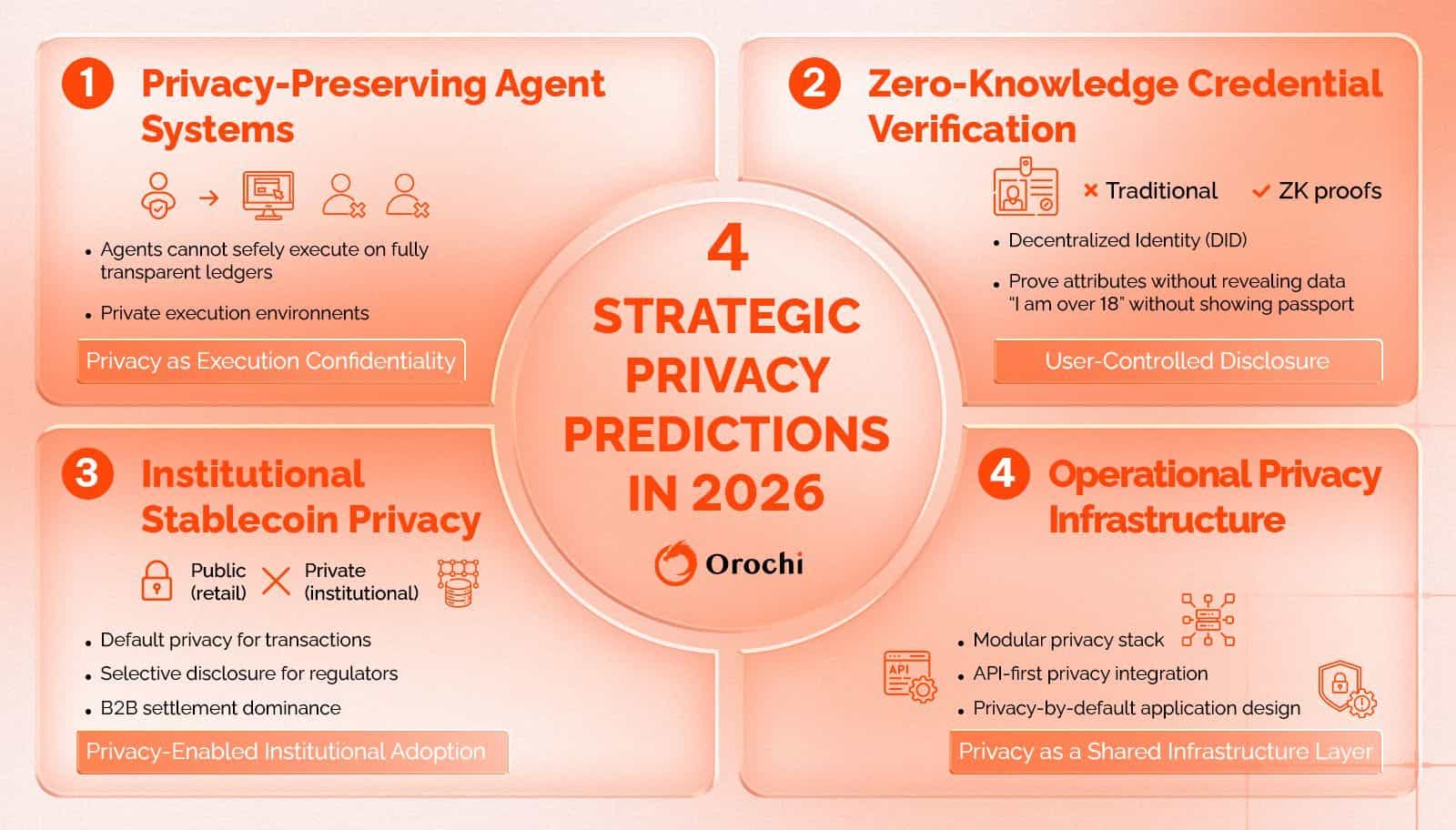
Here are the 4 macro-market shifts that every investor should follow:
1st Strategic: The "Agentic Economy" Takeover
The rise of autonomous systems and AI is creating a fascinating paradox: For machines to operate effectively on-chain, the chain must become less transparent.
- The Problem: Imagine an AI trading bot managing a portfolio that identifies an arbitrage opportunity. On a fully public blockchain, the moment the bot submits its transaction to the mempool, its strategy, volume, and logic are exposed. Rival MEV bots will immediately clone the strategy and front-run the trade.
- The 2026 Forecast: Privacy will shift its focus from protecting human identity to protecting machine logic. Autonomous agents will refuse to transact fully public ledgers. Instead, they will demand Private Execution Environments where the computation state is hidden, and only the final result is verified on-chain.
In the Agentic Economy, privacy is synonymous with intellectual property.
2nd Strategic: Identity Without Exposure: The Rise of ZK-Compliance
By 2026, current KYC (Know Your Customer) processes, where users upload passport photos and biometric data to third-party servers, will be viewed as obsolete and dangerous "honey pots" for hackers.
- The Shift: Under pressure from data protection laws and the threat of AI-generated deepfakes, the market will transition toward Decentralized Identity (DID) and "Encoded Compliance."
- The Mechanism: Instead of transmitting raw sensitive data, users will leverage Zero-Knowledge Proofs (ZKPs) to generate cryptographic proofs attesting to specific attributes (e.g., "I am over 18," "I am not on a sanctions list," "I am a unique human, not a bot") without revealing any underlying personal information.
Privacy becomes the tool that enables users to prove compliance safely while maintaining absolute data sovereignty.
3rd Strategic: The year of private stablecoins
In 2026, the Stablecoin market will bifurcate into two distinct streams: Public Stablecoins for retail, and Compliant Private Stablecoins for institutional and enterprise use. This is the missing piece for Wall Street capital to truly flow into Web3.
- The "Open Ledger" Barrier: The biggest hurdle stopping corporations from using stablecoins is excessive transparency. For example, a corporation cannot accept a scenario where competitors monitor their on-chain wallet to deduce exact costs of goods sold, supplier lists, and cash flow.
- The Solution: The next generation of stablecoins will feature "Default Privacy" (encrypted balances and transaction amounts) for the public, while retaining "Selective Disclosure" (viewing keys) for auditors and regulators.
Transaction volume for Private Stablecoins will flip traditional stablecoins in the B2B settlement sector by late 2026.
4th Strategic: Privacy will be industrialized
Gone are the days when privacy was a bespoke, expensive, and risky cryptographic endeavor reserved for experts. 2026 marks the era of Privacy Industrialization.
- The Shift: We are moving from a "Build-your-own" approach to a Modular Stack. Application developers will no longer need to write complex ZK circuits from scratch.
- Infrastructure as a Commodity: Privacy is becoming an infrastructure commodity. Developers will simply call an API or integrate an SDK from specialized networks (like Orochi Network) to add secure verification features to their apps.
Integration costs will drop by 90%, triggering an explosion of "Consumer Crypto" apps (social, gaming) that feature default privacy, where end-users won't even realize they are using ZK technology.
Read more: Why Privacy Is The New Competitive Moat
Which Technologies Will Power the 2026 Privacy Stack?
If 2024 was the phase of experimentation, 2026 is when the market consolidates around winning standards. There will be no single "silver bullet." Instead, we forecast the emergence of a highly specialized "Privacy Stack":
Zero-Knowledge Proofs (ZKPs):
The Standard for IdentityZero-Knowledge Proofs (ZKPs) will cement their dominance in Digital Identity. With the rollout of EUDI Wallets (Europe) and networks like World Network, ZKPs will become the default technology for verifying "Proof of Personhood." This allows billions of users to prove citizenship or credentials to access services without ever revealing biometric data or ID documents to third parties.
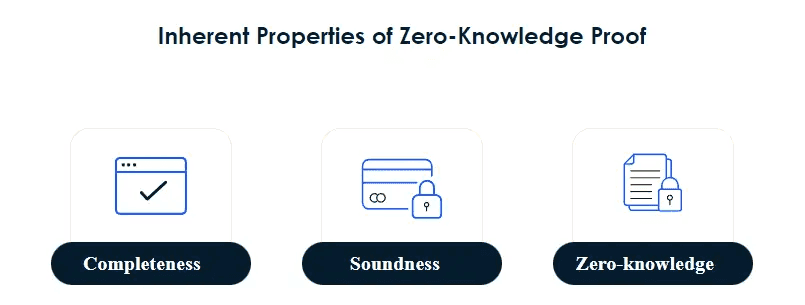 Read more about ZKP: Understanding Zero-knowledge Proofs & Its Role on Blockchain
Garbled Circuits (GC):
The Winner in High-Frequency Trading While Fully Homomorphic Encryption (FHE) often grabs the headlines, we predict that Garbled Circuits will be the quiet winner in low-latency DeFi. Being thousands of times faster than FHE for specific computations, GC will serve as the backbone for confidential Decentralized Exchanges (DEXs), where matching engine speed is critical for liquidity.
How Can Enterprises Prepare with Verifiable Data Infrastructure
The central paradox of 2026 is undeniable: Agentic AI demands confidentiality to compete, yet regulators demand transparency to verify.
Current infrastructure fails this dual mandate because public chains are too exposed to protect proprietary logic, whereas private servers lack the auditability required by law. To resolve this tension, enterprises must adopt a new architectural standard: Verifiable Data Infrastructure
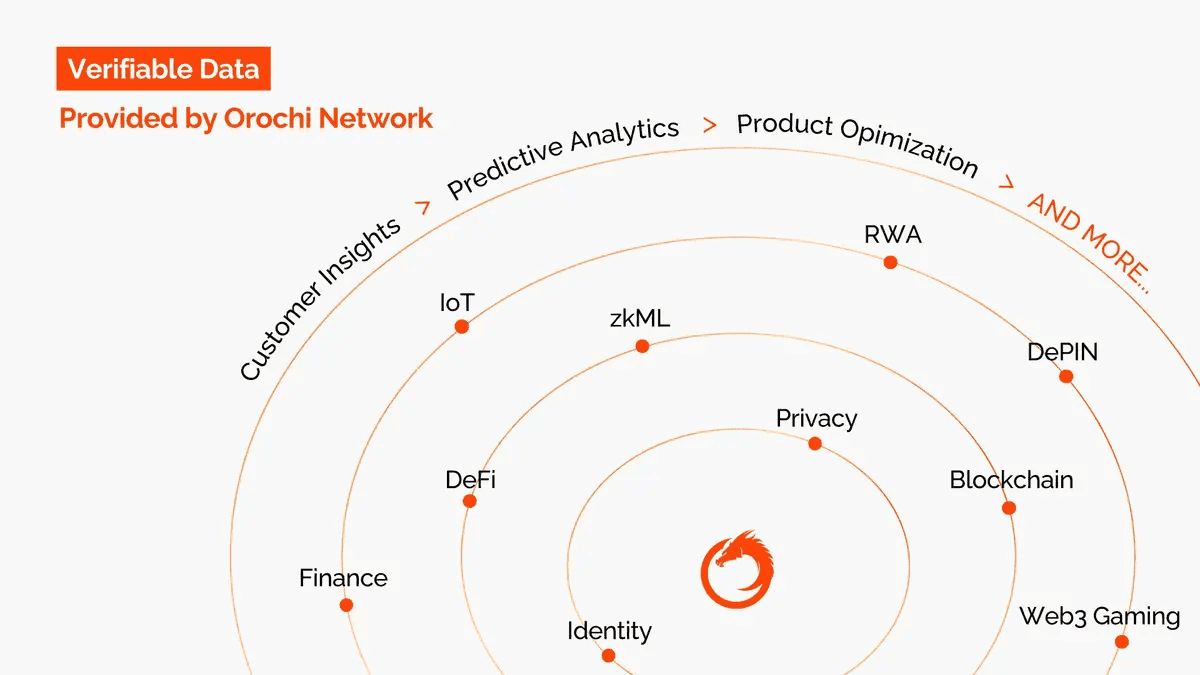
The Solution: Decoupling Execution from Verification This is the architectural thesis behind Orochi Network. Rather than forcing every computation on-chain, this approach focuses on separating two distinct layers:
- Computation & Storage (Off-chain): Heavy AI workloads and sensitive data processing occur off-chain in high-performance, private environments. This ensures the speed required by agents and protects trade secrets (such as trading algorithms).
- Verification & Settlement (On-chain): The result of that processing is cryptographically sealed and verified on-chain.
zkDatabase serves as the critical enabler in this stack. It allows enterprises to generate a cryptographic proof that states, "This data is accurate" or "This transaction complies with regulations," without ever revealing the underlying raw data to the public. This capability allows organizations to maintain their competitive "economic moat" while simultaneously satisfying the rigorous demands of the new regulatory era.
Learn more about: What Is Verifiable Data Infrastructure?
Conclusion
The winners of 2026 won't be the loudest projects; they will be the most provable. As AI Agents reshape the economy, the ultimate asset is no longer just data, it is verified confidentiality.
To survive the next cycle, enterprises must master the paradox of our time: protecting proprietary "secret sauce" off-chain while mathematically proving integrity on-chain. This is not merely a tech upgrade; it is the fundamental survival kit for the automated era.
zkDatabase offers the solution you need to build a trust layer where privacy and verification coexist.
FAQ
What are the 4 Strategic Privacy Predictions for 2026?
The article identifies four market-defining shifts:
The Agentic Economy Takeover: Autonomous agents will require private execution environments to protect their trading logic.
"Encoded Compliance" Replaces KYC: A shift from risky manual ID checks to cryptographic Zero-Knowledge Proofs (ZKPs).
The Year of Private Stablecoins: The rise of stablecoins with "selective disclosure" features for institutional B2B use.
Privacy Industrialization: Security becomes a modular, plug-and-play commodity rather than a bespoke build.
Which privacy technologies are predicted to dominate in 2026?
2026 will mark the transition of privacy tech from theoretical research to essential infrastructure. Key technologies include:
- Zero-Knowledge Proofs (ZKPs): The core mechanism for verifying truth without revealing data.
- Decentralized Identity (DID): Sovereign identity standards that eliminate reliance on central authorities.
- Selective Disclosure: Tools that allow data to be viewed by specific authorized parties (like auditors) while remaining hidden from the public.
What role does Orochi Network play in this infrastructure shift?
Orochi Network serves as the foundational layer for Verifiable Data Infrastructure. Through its zkDatabase solution, it allows enterprises to process sensitive data off-chain (ensuring speed and protecting trade secrets) while generating cryptographic proofs to verify the results on-chain. This enables businesses to solve the "Privacy Paradox": maintaining internal confidentiality while proving external regulatory compliance.
Related toData Privacy